The Sun and Shield of the Covenant
Psalm 84:11 ERV
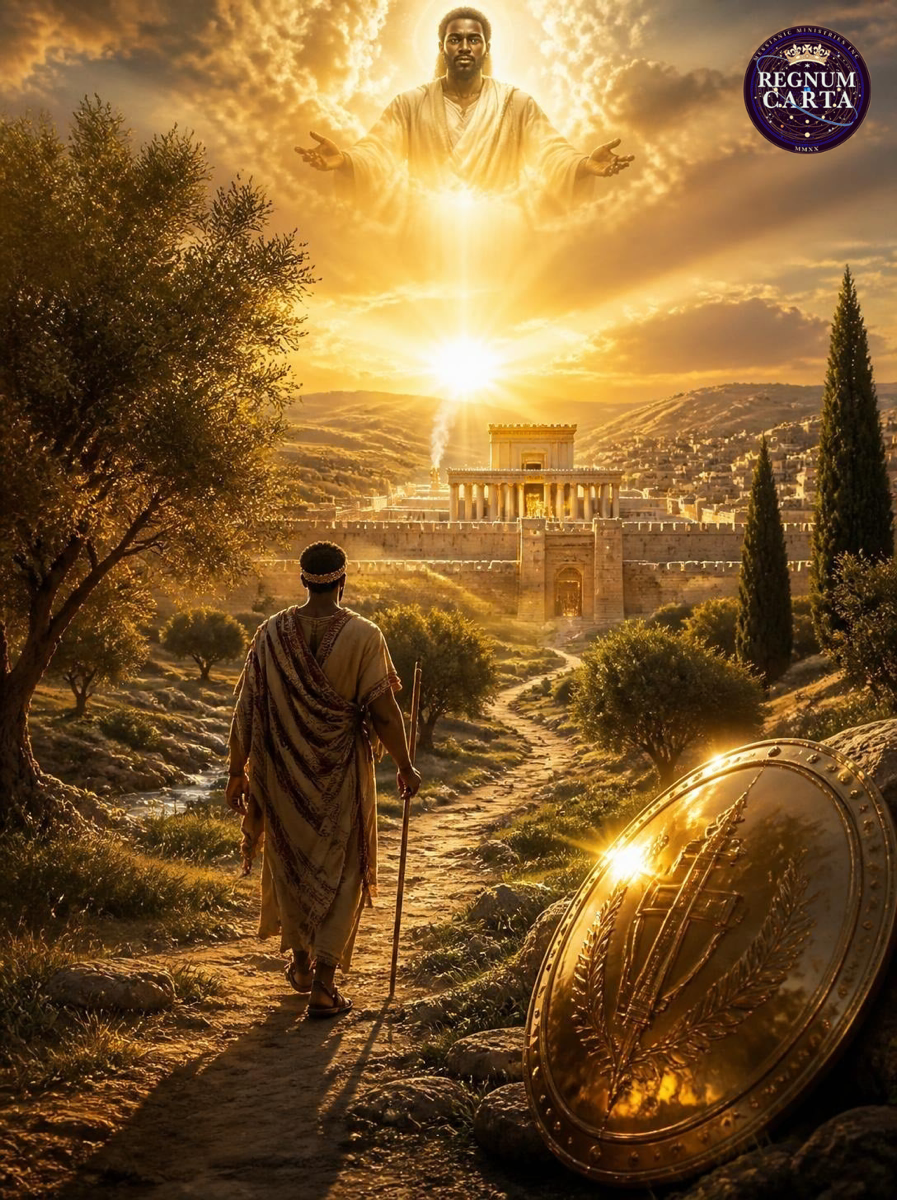
Central Text: Psalm 84:11 (ERV)
"The LORD God is like a sun and shield. The LORD gives us kindness and honor. He does not hold back anything good from those who live right."
Psalm 84 is regarded as one of the most significant pilgrimage psalms in Scripture. It commemorates the unparalleled delight of residing in God's presence and concludes with the covenantal promise of Psalm 84:11. The psalmist utilizes profound theological imagery by depicting Yahweh as both "sun" and "shield," illustrating Him as the origin of life, direction, protection, covenant fidelity, and eternal blessing. Although these metaphors directly relate to Israel's covenant experience, they eventually foreshadow its complete fulfillment in the Messiah, Jesus Christ, through whom every divine promise attains its culmination (2 Corinthians 1:20). Consequently, Psalm 84:11 serves not just as an encouragement for ancient pilgrims but also as a Messianic promise that reaches its full realization in Christ.
The assertion that "the LORD God is akin to a sun" is noteworthy, as Israel infrequently linked Yahweh with solar symbolism, partially to differentiate Him from neighboring pagan solar gods. In this context, the metaphor underscores that God is the one origin of spiritual enlightenment, covenant existence, and sustaining grace. Similar to how the sun eradicates darkness and sustains creation, God enlightens the hearts of His followers with truth and justice.
This imagery culminates in its Christological apex in Jesus Christ. He proclaimed, "I am the illumination of the world. “Whoever adheres to my teachings will not traverse in obscurity but will possess the illumination of existence” (John 8:12). Christ embodies the luminous essence of the Father's splendor (Hebrews 1:3), flawlessly disclosing the nature of God. The illumination foretold in Psalm 84 is completely realized in the person and work of Christ, who redeems humanity from the darkness of sin and guides believers into everlasting communion with God.
The subsequent metaphor depicts the Lord as a "shield. In the Old Testament, the shield represents divine protection inside the covenant partnership. Abraham initially received this promise when God proclaimed, "Do not fear, Abram. I am your shield" (Genesis 15:1). David consistently affirmed that God served as his protector during trials (Psalm 3:3; Psalm 18:2).
This promise is amplified in Christ. Believers attain complete spiritual security through His substitutionary atonement, resurrection, and ongoing intercession. Paul asserts that no charge can finally succeed against God's chosen, as Christ Himself intercedes on their behalf (Romans 8:33 and 34). The Messiah serves as both Protector and Savior, safeguarding His followers from punishment and ensuring their everlasting inheritance.
The promise persists by stating that "the LORD bestows upon us kindness and glory. The Hebrew notions behind these phrases convey covenantal grace and celestial splendor. Grace invariably precedes glory in God's redemptive framework. Depraved humanity offers no contribution to salvation. The favor of God derives solely from His covenantal mercy.
This development is exquisitely realized in the gospel. Adherents obtain grace by Christ's salvific sacrifice and are fated to partake in His glory (Romans 8:29 and 30). Peter similarly instructs that believers are summoned into God's everlasting glory through Christ (1 Peter 5:10). The Messiah forgives sinners and restores their dignity, enveloping them in His righteousness and preparing them for eternal relationship with God.
The most reassuring assertion is that God "withholds no good gift from those who lead a righteous life. This statement should never be construed as advocating for a merit-based system of works. Scripture consistently asserts that no individual is righteous without God's grace (Romans 3:10-24). Those who "live rightly" are individuals who walk by faith within God's covenant, trusting His promises and submitting to His transformative activity.
The New Testament indicates that this holiness is attainable just via communion with Christ. Believers are justified solely by faith and increasingly sanctified through the Holy Spirit. Thus, every genuine gift originates from the Father through the Son. James asserts that every beneficial and flawless gift originates from above (James 1:17), whereas Paul reminds the faithful that God "has already bestowed upon us all things in conjunction with Christ" (Romans 8:32). The paramount "good" assured in Psalm 84:11 is not material wealth but the unparalleled gift of Christ Himself and all spiritual blessings inherent in Him (Ephesians 1:3).
This promise also possesses deep eschatological significance. The blessings mentioned are partially enjoyed now but anticipate their fulfillment in the forthcoming reign of Christ. The depiction of divine illumination culminates in the New Jerusalem, where "the city requires neither the sun nor the moon to illuminate it. The splendor of God is its illumination, and the Lamb serves as its lamp" (Revelation 21:23). The Sun of Psalm 84 transforms into the everlasting light of the redeemed creation. The Protector who safeguards His people across history will be among them eternally, eliminating every danger, every sorrow, and every repercussion of sin.
Critical scholarship often understands Psalm 84 chiefly as a liturgical pilgrimage hymn that extols worship in the Jerusalem Temple. This historical analysis is significant as it underscores the psalm's original covenant context and its focus on temple theology. Nonetheless, a solely historical approach insufficiently addresses the canonical evolution of biblical revelation. The New Testament frequently depicts Christ as the authentic Temple (John 2:19-21), the manifestation of God's presence, and the consummation of Israel's worship. Therefore, Psalm 84 must be interpreted within the larger context of redemptive history, where its depictions of divine presence, protection, grace, and glory culminate in the figure of Jesus Christ. This canonical and Christocentric reading maintains the historical integrity of the psalm and its theological realization.
Concluding Encouragement
Psalm 84:11 encourages all believers to repose assuredly on the adequacy of God's covenant fidelity manifested through Jesus Christ. He is the genuine Sun that illuminates every heart, the impeccable Shield that protects every believer, the benevolent Savior who grants unmerited grace, and the illustrious King who will fulfill the job He has initiated. Consequently, the Christian existence is maintained not via human endeavor but through constant reliance on the Messiah, who grants no genuine good to His rescued followers.
In times of uncertainty, rely on His illumination. In perilous situations, take refuge behind His shield. In moments of vulnerability, accept His grace. In all situations, place your trust in Christ, for every divine promise is unequivocally affirmed in Him. The faithful individual who lives by conviction can assert with assurance that the Lord's benevolence is inexhaustible, His safeguarding is infallible, His kindness is unwavering, and His glory will ultimately be completely manifested in those who are united with His Son.
#Allnations #ame #apostolic #baptist #bible #bibleverse #catholic #christianity #christiantok # cme ##cog #cogbf #cogic #fgbcf #fght #foryou ##islam #jesus #messianicministriesinc #paw #prophetic #seventhdayadventist #tiktok #holyspirit #engagement #rastafari