
The Weight God Will Carry
Psalm 55:22

This passage is included in David's lament in Psalm 55, which is characterized by betrayal and internal conflict. The context illustrates his lament under the burden of betrayal, presumably from an intimate associate. Amidst the turmoil, David instructs you relinquish your burdens to the Lord. The Hebrew verb for "cast" denotes a purposeful act of release—projecting or throwing something away. The "burden" referenced is not a broad concern but rather a personal anguish—an overpowering, oppressive weight.
God does not guarantee the elimination of all adversity. Rather, He provides sustenance. The term "sustain" (Hebrew kul) signifies to nurture, support, or uphold. The certainty is not solely emotional; it is theological. God supports those who place their burdens upon Him. The virtuous are not guaranteed protection from assault, but they are assured resilience. “He shall never allow the righteous to be disturbed”—neither shaken, nor overthrown, nor put down.
This devotion needs a volitional act: a determination to entrust God with our burdens. The verse lacks emotional appeal. It necessitates action. Execute it. Do not assume the burdens He has given to shoulder. The promise is not abstract; it is personal—He will sustain you.
1. Burden Defined: The burden is a tangible and oppressive weight of distress, sorrow, treachery, or apprehension.
2. Action Required: The verse mandates casting. It presupposes intentionality and relinquishment.
3. Divine Function: He sustains—He provides assistance in times of adversity. He does not only alleviate the burden; He fortifies us in its presence.
4. virtuous Stability: The virtuous are assured not of evasion but of heavenly stability and security.
5. Personal Application: Are you bearing what God has instructed you to relinquish? Obedience entails ceding authority.
#Ministry #jesus #bible #worship #faith #hope #love #church #prayer #gospel #christian #family #motivation #inspiration #holyspirit #power #christ #jesuschrist #purpose #godisgood #inspire #instagood #outreach #evangelism #bibleverse #encouragement #dailyinspiration
Walking as He Walked
1st John 2:6

In this verse, the Apostle John delineates a fundamental characteristic of genuine discipleship: alignment with Christ’s life. "Abiding" in Christ signifies not sporadic recognition, but rather a persistent, life-sustaining communion. It denotes a steadfast existence—a spirit anchored in the essence and doctrines of Christ.
The ethical implication is evident. If one dwells in Christ, they are obligated to walk as He walked. The term "walk" in Johannine usage, as well as in Pauline thinking, refers to moral and spiritual behavior. Jesus' journey was characterized by total obedience, steadfast love, enduring suffering, and a reverent awe of the Father.
John’s charge is not to recreate miracles or emulate Christ’s divine prerogatives, but to embody His humility, submission, and sanctity. This criterion is not onerous, as the Spirit of Christ empowers the believer to live righteously (Romans 8:4). To walk as He walked entails emulating His disposition—how He interacted with others, reacted to adversity, and engaged with the Father.
This verse undermines nominal Christianity. The assertion to "abide" necessitates tangible evidence. It is insufficient to merely discuss Christ; we must follow His path. In Luke 6:46, Jesus inquires, “Why do you call me, Lord, Lord, and yet fail to do what I command?”
1. Abiding as a Living Union - Not a mere intellectual conviction, but genuine friendship with Christ.
2. Ethical Emulation of Christ - Authentic Christianity is a reflective journey.
3. Consistent Obedience Over Intermittent Enthusiasm — A steady existence, rather than erratic spiritual peaks.
4. The Spirit Facilitates the Journey - The life of Christ is manifested inside us by the Spirit (Galatians 2:20).
5. Faith Affirmed by Actions – The validity of our faith is linked to our behavior (James 2:17-18).
#Ministry #jesus #bible #worship #faith #hope #love #church #prayer #gospel #christian #family #motivation #inspiration #holyspirit #power #christ #jesuschrist #purpose #godisgood #inspire #instagood #outreach #evangelism #bibleverse #encouragement #dailyinspiration
The Resurrection and the Life
St John 11:25-26

Jesus utters these remarks to Martha in proximity to Lazarus's tomb. Her brother has been deceased for four days. The odor of death, the torment of postponement, and the acceptance of loss permeate the atmosphere. Jesus, however, contradicts her understanding of time, existence, and conclusiveness. He proclaims, “I am the resurrection and the life.” Not merely a forthcoming occurrence, not solely a belief system, but a current being to rely upon.
Through the Greek emphatic "egō eimi" ("I am"), Jesus alludes to the divine name disclosed to Moses in Exodus 3:14. He exists not merely as the Son of God but as God incarnate, wielding dominion over death itself. His declaration distinguishes believers from non-believers, basing eternal life on individual faith.
Observe the two clauses: • “Though he were dead, yet shall he live.” This confirms resurrection following physical demise. “Whoever lives and believes in me shall never perish.” This confirms a spiritual existence that is unbroken by death.
Jesus encourages Martha—and us—to place our faith in His character, not merely His capabilities. He concludes with an inquiry: “Do you believe this?” Faith beyond mere assent to reality; it involves placing one's confidence in the one who governs life and death.
• Christ as the Resurrection: He presents resurrection not merely as a future promise but as an immediate actuality through Himself.
• Faith as the Precipice: Eternal life commences presently for believers.
• Life Beyond the Grave: The physical demise of a believer does not conclude their existence.
• A Personal Inquiry: Jesus continues to pose the question, “Do you believe this?”—requiring an individual response.
• The Influence of Presence: Jesus enters, communicates, and transforms circumstances—even in the face of death.
#Ministry #jesus #bible #worship #faith #hope #love #church #prayer #gospel #christian #family #motivation #inspiration #holyspirit #power #christ #jesuschrist #purpose #godisgood #inspire #instagood #outreach #evangelism #bibleverse #encouragement #dailyinspiration
When God Hears the Righteous
Psalm 66:18-19

These verses delineate a distinct correlation between the state of the heart and the effectiveness of prayer. The psalmist contemplates a fundamental truth: God hears, yet not indiscriminately. Prayer is not a mechanical exchange; it is relational, ethical, and spiritual.
Verse 18 elucidates a spiritual principle: “If I harbor iniquity in my heart, the Lord will not heed me.” The Hebrew phrase translated as “regard” (רָאָה - ra’ah) signifies more than mere acknowledgment. It signifies the retention, affection, or favorable perception of sin. The concern lies not in the existence of sin, as all have sinned, but in the attitude towards it. If sin is nurtured, hidden, or rationalized within the heart, it creates a divide between the soul and God. Isaiah affirms this principle: “Your iniquities have created a divide between you and your God, and your sins have concealed His face from you, so that He will not listen” (Isaiah 59:2).
Verse 19 transitions to a reassuring declaration: “Indeed, God has heard me; He has heeded the voice of my prayer.” This transition attests to the psalmist's sincerity before God—he has not concealed wrongdoing, but has acknowledged it. The outcome is celestial vigilance. The Hebrew verb "attended" (קָשַׁב - qashab) denotes attentive listening with the intention to reply. God does not simply listen—He devotes complete attention.
This verse emphasizes that holiness is essential for effective prayer. It is fundamental. However, the tone is not characterized by legalism. Grace exists: where sin is acknowledged, God answers with mercy and presence. Psalm 66 asserts that God is simultaneously just and responsive, as well as holy and accessible.
⸻
• Spiritual Integrity is Crucial: The efficacy of prayer is contingent upon the state of the heart, rather than only the verbal expression.
• Sin Is Inexorable: God perceives what is valued in obscurity. Concealed wrongdoing suppresses the spirit before the altar.
• Confession Precedes Communion: The Divine acknowledges the contrite. Forgiveness facilitates the conduit of spiritual communication.
• Divine Presence Accompanies Grace: Upon the renunciation of sin, God not only listens—He intervenes. He engages in prayer.
• Personal Reflection Required: A thorough evaluation of the heart must precede fervent prayer.
This devotional encourages the reader to introspect, acknowledge any hidden transgressions, and confidently approach a God who listens to the righteous.
#Ministry #jesus #bible #worship #faith #hope #love #church #prayer #gospel #christian #family #motivation #inspiration #holyspirit #power #christ #jesuschrist #purpose #godisgood #inspire #instagood #outreach #evangelism #bibleverse #encouragement #dailyinspiration
Thou Compassest My Path
Psalm 139:37

Psalm 139 reflects on God's omniscience and profound awareness of human existence. Verse 3 asserts God's intimate engagement: “Thou encompassest my journey and my repose.” The Hebrew verb rendered as compassest (סָרַר, sārar) denotes encircling, sifting, or inspecting. David acknowledges that each step he takes and every minute of repose is subject to God's divine scrutiny.
The term "my path" denotes the endeavors of life—our journey, labor, service, and challenges. My reclining signifies repose, susceptibility, and intimate instances of inactivity. God is present in both motion and calm. The concluding clause—and art familiar with all my actions—asserts that nothing in our existence eludes God's awareness. This constitutes active observation. The term acquainted implies profound acquaintance, like one who possesses extensive knowledge.
David refrains from using abstract language. He use personal language: my journey, my repose, my methods. This transforms the concept of divine omniscience from an abstract theology to direct pastoral support. Divine knowledge is not generic; it is specific, individualized, and enduring.
This verse addresses the contemporary fixation with autonomy. We frequently oppose supervision, favoring autonomy. David derives solace from heavenly observation—not as oppression, but as assurance. For the believer, God's omniscient presence is not menacing—it is nurturing.
—
God encompasses every action and moment of repose - There exists no domain of existence devoid of God's presence.
Divine understanding is profound and comprehensive; He is not a remote spectator but an engaged Shepherd.
Assurance in Divine Observation - What disturbs the malevolent comforts the virtuous. The Christian is never solitary; whether in motion or repose, God is present.
This knowing necessitates sanctified living — God's omniscience demands integrity.
⸻
This solitary verse underscores that our existence is under God's vigilant oversight. In a realm characterized by solitude and estrangement, Psalm 139:3 reassures the faithful of a God who observes, comprehends, and remains.
#Ministry #jesus #bible #worship #faith #hope #love #church #prayer #gospel #christian #family #motivation #inspiration #holyspirit #power #christ #jesuschrist #purpose #godisgood #inspire #instagood #outreach #evangelism #bibleverse #encouragement #dailyinspiration
The Efficacy of Righteous Prayer
James 5:16

James communicates with pastoral clarity to the dispersed twelve tribes, urging the Church towards practical holiness. This passage discusses corporate duty and individual agency in prayer. His exhortation consists of two components: firstly, mutual confession and prayer among the congregation; secondly, the profound effectiveness of prayer conducted by the righteous.
The exhortation to “confess your faults one to another” serves not as a mechanism for public humiliation but as a call for reciprocal accountability and restoration. Sin engenders isolation. Confession rehabilitates. The restoration here encompasses both spiritual and bodily dimensions. By sharing one other's difficulties, the community grows more resilient.
James thereafter underscores the unparalleled spiritual potency of virtuous prayer. The term effective fervent (Greek: energeō) denotes prayer that is dynamic, vigorous, and unwavering. Not mundane or habitual, but vibrant and urgent.
The righteous individual is not devoid of sin but rather one who adheres to a covenantal relationship with God. His prayers are highly effective; they possess strength not due to their volume or eloquence, but because they are grounded on obedience, humility, and divine authority.
Elijah is cited in the subsequent verses as an exemplar—a man of similar emotions, who, through prayer, restrained the rain and then restored it. This indicates that spiritual strength is not exclusive to the exceptional, but is accessible to those who conduct themselves virtuously and engage in sincere prayer.
This verse deconstructs passivity in one's prayer life. It is a summons to combat, responsibility, and closeness with God and each other. Healing occurs where confession is sincere and prayers are earnest.
—
• Reciprocal Confession: Fosters trust and promotes spiritual restoration within the Christian community.
• Zealous Prayer: Prayer should be purposeful, fervent, and unceasing – rather than merely routine.
• Righteous Living: Holiness enhances prayer efficacy. In the absence of righteousness, prayer diminishes in significance.
• Restoration through Community: Physical and spiritual healing frequently arises from relational accountability.
• Influence in the Mundane: Elijah was a man "subject to similar emotions" — yet his supplications altered nations.
May this verse transform our perspective on prayer. Not as a ritual, but as a heavenly act. Not via individual endeavor, but through collective strength. Prayer transcends mere supplication. It is converging. When the virtuous unite, significant achievements are realized.
#Ministry #jesus #bible #worship #faith #hope #love #church #prayer #gospel #christian #family #motivation #inspiration #holyspirit #power #christ #jesuschrist #purpose #godisgood #inspire #instagood #outreach #evangelism #bibleverse #encouragement #dailyinspiration
Fear Bot: God Is With You
Joshua 1:9

Paul addresses the Philippians with a tone of endearing confidence. His faith resides not in human strength or will, but in God's steadfast commitment. The text emphasizes a divine assurance: what God initiates, He completes. The term “good work” encompasses not only initial conversion but also the complete process of sanctification, which is the continual transformation of believers into the likeness of Christ.
The term "being confident" (Greek: peithō) signifies established conviction. It is not mere optimism; it is grounded in the trustworthiness of God's covenant. The initiated "good work" is not our responsibility to finish. God is the Originator and Completer (Hebrews 12:2). He does not forsake His artistry. Similar to a master potter, He persistently molds, refines, purges, and perfects until the "day of Jesus Christ"—the eschatological return of our Lord and the ultimate manifestation of our exalted existence.
Paul's pastoral tone conveys encouragement and stability. His theology is based on divine initiative. God starts, sustains, and completes. This mitigates any inclination to despair when confronted with our own fragility. We are ongoing developments, however God's advancement is never impeded by our constraints.
This fact emancipates us from performance-oriented Christianity. The guarantee is not the absence of effort, but the certainty that God's plan will prevail. Our spiritual development relies not alone on human tenacity, but on divine faithfulness. “Faithful is He who calls you, and He will also accomplish it” (1 Thessalonians 5:24).
During periods of stagnation or spiritual desolation, Philippians 1:6 serves as a reminder that God's influence remains active. The formation may be imperceptible, yet the assurance remains. He is neither absent-minded nor impetuous. He will persist in His efforts until His image within us is fully realized.
God commences the "good work" of salvation and sanctification.
• Our confidence is not in ourselves, but in the fidelity of God.
The effort is incremental and will be finalized upon Christ's return.
This verse promotes perseverance and alleviates spiritual despondency.
The assurance of God's ongoing presence fosters tranquility and repose.
#Ministry #jesus #bible #worship #faith #hope #love #church #prayer #gospel #christian #family #motivation #inspiration #holyspirit #power #christ #jesuschrist #purpose #godisgood #inspire #instagood #outreach #evangelism #bibleverse #encouragement #dailyinspiration
Confident Until Completion
Philippians 1:6

Paul addresses the Philippians with a tone of endearing confidence. His faith resides not in human strength or will, but in God's steadfast commitment. The text emphasizes a divine assurance: what God initiates, He completes. The term “good work” encompasses not only initial conversion but also the complete process of sanctification, which is the continual transformation of believers into the likeness of Christ.
The term "being confident" (Greek: peithō) signifies established conviction. It is not mere optimism; it is grounded in the trustworthiness of God's covenant. The initiated "good work" is not our responsibility to finish. God is the Originator and Completer (Hebrews 12:2). He does not forsake His artistry. Similar to a master potter, He persistently molds, refines, purges, and perfects until the "day of Jesus Christ"—the eschatological return of our Lord and the ultimate manifestation of our exalted existence.
Paul's pastoral tone conveys encouragement and stability. His theology is based on divine initiative. God starts, sustains, and completes. This mitigates any inclination to despair when confronted with our own fragility. We are ongoing developments, however God's advancement is never impeded by our constraints.
This fact emancipates us from performance-oriented Christianity. The guarantee is not the absence of effort, but the certainty that God's plan will prevail. Our spiritual development relies not alone on human tenacity, but on divine faithfulness. “Faithful is He who calls you, and He will also accomplish it” (1 Thessalonians 5:24).
During periods of stagnation or spiritual desolation, Philippians 1:6 serves as a reminder that God's influence remains active. The formation may be imperceptible, yet the assurance remains. He is neither absent-minded nor impetuous. He will persist in His efforts until His image within us is fully realized.
God commences the "good work" of salvation and sanctification.
• Our confidence is not in ourselves, but in the fidelity of God.
The effort is incremental and will be finalized upon Christ's return.
This verse promotes perseverance and alleviates spiritual despondency.
The assurance of God's ongoing presence fosters tranquility and repose.
#Ministry #jesus #bible #worship #faith #hope #love #church #prayer #gospel #christian #family #motivation #inspiration #holyspirit #power #christ #jesuschrist #purpose #godisgood #inspire #instagood #outreach #evangelism #bibleverse #encouragement #dailyinspiration
The Mind of Christ
1st Corinthians 2:12-16

The Apostle Paul articulates clearly that believers do not adhere to the same wisdom as that which the world provides. We have received something entirely distinct—the Spirit of God. This Spirit not only provides solace; He instructs, discloses, and enables us to comprehend the profound aspects of God.
Spiritual truth cannot be attained solely through study, eloquent discourse, or compelling reasoning. While those elements may hold significance, Paul cautions that the natural mind—specifically, the unregenerate human viewpoint—fails to comprehend spiritual reality. To such intellects, the gospel appears absurd. To such observers, the crucified Christ embodies frailty. To the spiritual individual, imbued with the Divine Spirit, it represents vitality, sagacity, and strength.
This chapter delineates a distinction between individuals guided by the Spirit and those influenced by the spirit of the world. The distinction is not theoretical; it is experiential. The individual guided by the Spirit perceives differently, evaluates accurately, and adheres to truths not apparent to the world.
Paul presents one of the most audacious declarations in Scripture: “We possess the mind of Christ.” He does not indicate that we will receive it later. He does not assert that it is exclusive to apostles or prophets. This constitutes a collective and inherent identity among all Spirit-filled Christians. We embody the outlook, ideals, and perspective of the resurrected Christ.
This does not provide a license to assert perfection. It is a call to adopt an alternative lifestyle—to contemplate in accordance with celestial principles rather than terrestrial ones. When the world misinterprets you, when culture equates light with darkness and truth with mistake, remember: you are not subject to their judgment. You are a member of Christ. You possess His intellect. His Spirit imparts insights unattainable through textbooks, lectures, or philosophies: the unmerited wisdom of God.
Therefore, proceed in accordance with the Spirit. Utilize spiritual terminology. Always remember: you possess the intellect of Christ.
⸻
The Holy Spirit discloses that which cannot be comprehended through natural means.
Spiritual truth is imperceptible to the natural individual.
Believers are instructed to evaluate all matters spiritually, rather than being assessed by secular criteria.
To possess the mind of Christ is to contemplate, perceive, and react in accordance with divine truth.
• This is an existing reality, not a prospective aspiration—“we possess the mind of Christ.”
#Ministry #jesus #bible #worship #faith #hope #love #church #prayer #gospel #christian #family #motivation #inspiration #holyspirit #power #christ #jesuschrist #purpose #godisgood #inspire #instagood #outreach #evangelism #bibleverse #encouragement #dailyinspiration
The Virtue of a Godly Mother
Proverbs 31:28

The significance of a virtuous mother cannot be exaggerated. Proverbs 31 presents a theological paradigm for femininity grounded in covenantal fidelity rather than a sentimental depiction. The mother in question is not only diligent; she is also sagacious, resilient, and devout. Her goodness beyond mere housekeeping skills; it emanates from spiritual commitment.
“Her children rise and call her blessed.” This phrase implies heritage. The children's commendation is not superficial adulation, but a testament to her character, discipline, and intercessory function. The Hebrew verb qāmû (to arise) signifies adoration. They rise in acknowledgment, akin to disciples before a venerated rabbi.
Her spouse commends her. This is not colloquial language; it is a formal proclamation. In Hebrew culture, a man speaking favorably of his wife at the gates (v. 23) signified honor and covenantal fidelity. He does not commend her beauty or allure, as such are superficial (v. 30), but rather her reverence for the Lord.
Motherhood, in the biblical context, is a divine mandate. It encompasses instruction (Proverbs 1:8), correction (Hebrews 12:9), safeguarding (Exodus 2:3), and influencing the fate of subsequent generations. Contemplate Hannah, whose supplication gave rise to a prophet. Or Mary, whose compliance gave birth to the Messiah. These women did not simply rear children—they executed divine commandments.
On this Mother’s Day, the Church should recognize maternal grace as transcending mere biological function. It is spiritual leadership supported by prayer, endurance, and prophetic discernment.
—
1. Divine motherhood constitutes a spiritual vocation rather than merely a biological one.
Children who honor their mothers adhere to Scripture (Proverbs 31:28).
Husbands are obligated to publicly acknowledge their wives, particularly in her capacity as a mother.
The reverence for the Lord constitutes the cornerstone of mother virtue (Proverbs 31:30).
Biblical mothers are collaborators in God's redemptive scheme, as evidenced throughout Scripture.
#Ministry #jesus #bible #worship #faith #hope #love #church #prayer #gospel #christian #family #motivation #inspiration #holyspirit #power #christ #jesuschrist #purpose #godisgood #inspire #instagood #outreach #evangelism #bibleverse #encouragement #dailyinspiration
The Indomitable Affection
Romans 8:35-39
The Apostle Paul concludes Romans 8 with a powerful affirmation of certainty. His tone is not conjectural. It is assertive. The rhetorical inquiry, “Who shall separate us from the love of Christ?” presents a forceful negation that anything within creation—whether visible or invisible—can sever the connection between Christ and His followers.
Paul enumerates the most adversarial circumstances a Christian may face: affliction, misery, persecution, starvation, nakedness, peril, and sword. Each represents a genuine and historical peril to first-century Christians—and continues to do so in other regions globally. Nevertheless, Paul’s conclusion persists: none of them can detach us from divine love.
Verse 36, referencing Psalm 44:22, recognizes the affliction of God’s people as anticipated rather than exceptional within the context of covenant history. The devout frequently endure hardship. However, verse 37 presents a resolute response: “No, in all these matters we are more than conquerors.” The Greek term ὑπερvικῶμεν (hypernikōmen) translates to "we are super-conquerors," indicating winners beyond the conventional understanding. Not by evading hardships, but by conquering them through Him who loved us.
The concluding verses (38–39) enumerate every imaginable existential category: life and death, angels and principalities (spiritual authorities), time (present and future), physical dimensions (height and depth), and any other creature. No entity constitutes a legitimate threat to the believer's position in Christ.
This chapter refutes the fallacy that suffering equates to abandonment. The love of God in Christ is resilient. It is not capricious. It is conclusive. The cross serves as evidence. The resurrection is a seal. The Spirit serves as a witness.
• Security in Christ: Salvation is rooted not on circumstances but in the unchanging love of Christ.
• Victory in Adversity: Adherents are not exempt from hardship but are transformed into victors through it.
• Extent of Divine Love: Neither the physical nor the spiritual sphere can separate the believer from God's love.
• Covenantal Assurance: Paul refers not to subjective emotions but to objective, covenantal truth.
• Christ-Centered Confidence: Our assurance is founded not on our capacity to cling to God, but on His steadfast grasp of us.
#Ministry #jesus #bible #worship #faith #hope #love #church #prayer #gospel #christian #family #motivation #inspiration #holyspirit #power #christ #jesuschrist #purpose #godisgood #inspire #instagood #outreach #evangelism #bibleverse #encouragement #dailyinspiration
Consider your Ways
Haggai 1:7-9

The prophet Haggai admonishes the returned exiles with a compelling directive: “Reflect on your actions.” The Hebrew term rendered as "consider" (שִׂ֥ימוּ לְבַבְכֶ֖ם, siymu levavkhem) literally translates to "set your heart upon." This is not a mere recommendation but a mandate for moral and spiritual reflection.
Sixteen years post-Babylonian exile, the inhabitants of Judah had reinstated their lifestyles, reconstructed their dwellings, and revitalized agriculture. Nevertheless, the Temple—God's abode—continued to lie in desolation. Despite their diligence, they encountered frustration: the harvests failed, and prosperity eluded them. Their economic adversities were not solely coincidental—they were fated. God Himself "blew upon" their endeavors (v. 9), rendering them unproductive. What is the reason? Because His residence was abandoned while their own needs were prioritized.
The directive in verse 8 is both pragmatic and religious. "Ascend the mountain, procure timber, and construct the dwelling." Compliance with this directive will exalt God. Worship must be fundamental, not ancillary. The populace's disorganized priorities exposed spiritual indifference and egocentrism. Haggai tells both them and us that God does not bestow blessings upon misguided devotion.
The communication continues to be urgent today. Numerous individuals prioritize personal achievement, comfort, and reputation, while God's objectives—His Church, His mission, His calling—remain overlooked. Our plans lack sovereignty. We must inquire: are we constructing God's abode, or simply embellishing our own?
• Divine Invitation to Introspection: “Consider your ways” serves as a call to assess one's reasons, values, and priorities in accordance with God's desire.
• Misplaced Priorities Result in Spiritual Frustration: The individuals suffered not due to accident, but as a consequence of divine punishment.
• The Glory of God Demands Obedience: Constructing His dwelling pleases Him and reveals His glory (v. 8).
• Worship Must Be Paramount: The Temple served not just as a structure but also as a representation of God's habitation. Neglecting it signified disorganized veneration.
• Action Is Imperative: Obedience necessitates movement—“go,” “bring,” and “build.” Devotion is not a passive state.
#Ministry #jesus #bible #worship #faith #hope #love #church #prayer #gospel #christian #family #motivation #inspiration #holyspirit #power #christ #jesuschrist #purpose #godisgood #inspire #instagood #outreach #evangelism #bibleverse #encouragement #dailyinspiration
Lifting The Soul To God
Psalm 25:1

Psalm 25 is an intimately personal composition by David, intricately blended with expressions of sadness and trust. In the initial stanza, the psalmist elevates his soul to the Lord—not alone as a poetic expression, but as a deliberate act of reliance. In Hebrew, to “lift up” one’s soul (נֶפֶשׁ, nephesh) denotes the act of giving one’s complete essence—thoughts, emotions, anxieties, and aspirations—to God. It is a spiritual act of surrendering oneself to God with complete understanding of His covenantal love.
David is not presenting a mere empty ritual; he is articulating a theological assertion of subjection. This elevation is not directed towards an idol, nor towards self-assurance. It is to Yahweh, the God who upholds the covenant. In this manner, he establishes the remainder of the psalm on this essential principle: life should be conducted in accordance with God's character and guidance.
The psalm's setting reveals that David confronts adversaries, humiliation, and inner turmoil. Instead of succumbing to fear, he exemplifies the essence of biblical faith—an intentional focus on the Divine.
This verse urges contemporary believers to embrace tranquil submission among the clamor of life. The elevation of one's soul transcends mere emotion; it involves situating the heart to receive from God, to trust His methods, and to adhere to His truth. It represents a stance of optimism. The poem conveys that, in all situations, the most true action is not to exert effort, but to yield.
Soul-Lifting is an Act of Faith: It is not a passive emotion, but a deliberate elevation of one’s being toward God.
Direction is Crucial: David elevates his spirit “unto thee, O LORD”—not towards human remedies, but towards divine adequacy.
Covenant Relationship: The passage assumes a pre-existing connection with God; the elevation of the soul is feasible due to God's prior self-revelation.
Preliminary to Petition: Prior to seeking direction or deliverance, David commences with worship.
Application: Commence your day by elevating your spirit to God—not with entreaties, but with faith and surrender.
#Ministry #jesus #bible #worship #faith #hope #love #church #prayer #gospel #christian #family #motivation #inspiration #holyspirit #power #christ #jesuschrist #purpose #godisgood #inspire #instagood #outreach #evangelism #bibleverse #encouragement #dailyinspiration
Perpetually Accessible
Psalm 139:7-10

This verse dispels any notion that we may ever evade God. The psalmist, David, is not pursuing escape but rather articulating reverence for God’s omnipresence. He contemplates the farthest extremes—heaven and hell—and deduces: God is omnipresent. The phrase “wings of the morning” denotes the speed of light at dawn, poetically expressing that no matter how swiftly or extensively I journey, You are present. The "uttermost parts of the sea" refer to the most distant, secluded locations on the planet. Nonetheless, God's hand guides, and His right hand—the hand of power and dominion—sustains.
David is not daunted by heavenly observation but reassured by divine presence. For the adherent, these words are not constraining but emancipating. God's presence is not a snare; it is a sanctuary. Despite emotional detachment, spiritual exhaustion, or physical separation from community, He remains present and engaged.
God's presence is not inert. He directs and maintains. This indicates caring, direction, and a close relationship. The theology of God's omnipresence is not theoretical; it is practical. The inference is not just that God is omnipresent, but that He elects to accompany us in all circumstances, including failure, doubt, or exile.
• The presence of God is unavoidable, yet not burdensome. It is a solace, not a limitation.
• Extremes do not preclude the existence of God. No realm, whether heaven, hell, distance, or despair, can place us beyond His reach.
• Divinity guides and sustains. His presence embodies guidance and fortitude.
• The believer is never solitary. Even in isolated locations, God's presence remains active and personal.
• Usage: No matter the challenges you encounter—be they geographical, emotional, or spiritual—you are not forsaken. His hand is present to direct and assist.
#Ministry #jesus #bible #worship #faith #hope #love #church #prayer #gospel #christian #family #motivation #inspiration #holyspirit #power #christ #jesuschrist #purpose #godisgood #inspire #instagood #outreach #evangelism #bibleverse #encouragement #dailyinspiration
The Invisible Weight of Glory
2nd Corinthians 4:18

The Apostle Paul, inspired by divine influence, articulates these sentiments within the framework of suffering, resilience, and eternal hope. The adherents in Corinth were experiencing tribulations, akin to those faced by Paul himself. This verse immerses them—and us—into the enigma of faith: the invisible is more substantial than the visible.
Paul juxtaposes the transient quality of observable pain with the everlasting essence of imperceptible glory. He is not endorsing escapism. Instead, Jesus is instructing the believer to direct their attention beyond the superficiality of this world. Suffering is genuine, although it is transient. In comparison, the weight of eternal glory is boundless. Although imperceptible to the naked sight, it is more significant and enduring than any tangible object.
The term temporal refers to all that is transient: suffering, loss, success, reputation, and even life itself. The term eternal pertains to God's promises, the resurrection, the kingdom, and the soul's ultimate unity with Christ. Faith perceives temporal dimensions. It elevates our gaze beyond the mundane and directs it towards the heavenly.
To "look" here signifies a deliberate and concentrated gaze, rather than a just cursory glance. The Greek verb skopeo, meaning "look," connotes examination and contemplation. Paul is advocating for the adoption of an everlasting worldview. Temporal challenges, when viewed from an eternal perspective, diminish their capacity to conquer us. They are consumed by grandeur.
⸻
Eternal Vision Is Deliberate. We must opt to perceive beyond the apparent. This constitutes the discipline of faith.
The Temporal Aspect of Affliction. Our suffering is transient. The glory of God endures beyond it.
The Unseen Is Not Illusory. Eternity is not merely symbolic; it is more tangible than our current reality.
Suffering Holds Significance in Christ Our tribulations, however distressing, yield a "eternal weight of glory" (cf. v.17).
Faith Restructures Our Priorities. Adherents must cease evaluating value based on the tangible and the immediate.
#Ministry #jesus #bible #worship #faith #hope #love #church #prayer #gospel #christian #family #motivation #inspiration #holyspirit #power #christ #jesuschrist #purpose #godisgood #inspire #instagood #outreach #evangelism #bibleverse #encouragement #dailyinspiration
Wilt Thou Be Made Whole?
St John 5:6

This verse encapsulates a crucial moment of spiritual questioning. The individual at the pool had been ill for thirty-eight years. His ailment had transformed into his identity. He awaited beside a pool he believed could provide healing—if only he possessed the strength or assistance to reach there promptly. Jesus knows his history. However, He did not inquire, “What brings you here?” or "What is the duration of your suffering?" Instead, He inquired, “Will you be restored?”
This question seems apparent, even bizarre, until we consider its depth. Christ was not solely alluding to corporeal healing. He was addressing the fundamental issue: the will. Following years of disillusionment, the man's aspiration may have diminished. Jesus discusses that matter. “Do you desire to be complete?” That question pertains to every wounded soul. Not merely "do you seek relief?" but "do you desire wholeness—spirit, soul, and body?"
Completeness necessitates transformation. It interrupts patterns. It contests passivity. It necessitates accountability. Some individuals favor the comfort of dysfunction to the unease of change. Christ confronts that lethargy.
The cure occurred not through agitated water, but through the incarnate Word. Christ circumvents the customary delay and communicates directly. "Arise, take up your bed, and walk" (v.8). The man complied—and was cured. Wholeness is always related to heavenly action and human response.
—
1. Christ Acknowledges Our Past – Jesus observed the man and recognized his prolonged presence. Your duration does not impede His intervention.
2. Wholeness Demands Willingness – The Lord addresses our desires, not only our circumstances.
3. Healing Is Individual — Jesus addresses him directly, not the multitude. The work of God is personalized prior to being institutionalized.
4. Obedience Initiates the Miracle - The man's cure was manifested upon his compliance with Christ's order.
5. Christ Substitutes Ritual with Relationship – Rather than awaiting agitated waters, the man encountered the Living Water.
#Ministry #jesus #bible #worship #faith #hope #love #church #prayer #gospel #christian #family #motivation #inspiration #holyspirit #power #christ #jesuschrist #purpose #godisgood #inspire #instagood #outreach #evangelism #bibleverse #encouragement #dailyinspiration
Compassion in the Depths
2nd Chronicles 33:10-17

Manasseh was the most malevolent monarch of Judah. He annulled the reforms instituted by his father Hezekiah, reconstructing idolatrous altars, engaging in witchcraft, and even spilling innocent blood. His insurrection incited divine retribution, prompting God to dispatch Assyrian commanders to apprehend him. The formerly esteemed monarch discovered himself shackled in bronze chains, enduring hardship in an alien territory.
However, in that locus of degradation, the narrative shifts. The man who had desecrated the temple and misled a people humbled himself before the God of his ancestors. He prayed—not insincerely, but with genuine humility—and the Lord responded. The scripture states, "He was beseeched by him." God did not simply endure Manasseh’s plea; He reacted, rejuvenated, and reinstated him.
This verse elucidates the transformative essence of divine kindness. Manasseh was unworthy of favor; still, God bestowed it upon him. He returned not just to his realm but also to his spiritual awareness. He obliterated the gods he had previously venerated and mandated Judah to worship Jehovah.
Divine justice humbled Manasseh, and divine mercy elevated him. The passage emphasizes that no degree of sin is beyond the possibility of repentance, nor is any exile too far for divine restoration. The pivotal moment occurred not within the dungeon's confines, but in a penitent heart.
⸻
1. Divine Warnings Ignored (v.10): God communicated, yet Manasseh remained unresponsive—divine quiet ensued after human defiance.
2. Judgment Executed (v.11): God employed foreign nations to chastise His covenant people.
3. Repentance in Affliction (v.12): Genuine repentance frequently commences in adversity.
4. God's Mercy Manifested (v.13): God not only listened but also rejuvenated.
5. Evident Outcomes of Repentance (vv.15–16): Manasseh eradicated idols and restored the altar—repentance engenders transformation.
6. Recognition of God's Sovereignty (v. 13b): “Then Manasseh recognized that the LORD was God.”
#Ministry #jesus #bible #worship #faith #hope #love #church #prayer #gospel #christian #family #motivation #inspiration #holyspirit #power #christ #jesuschrist #purpose #godisgood #inspire #instagood #outreach #evangelism #bibleverse #encouragement #dailyinspiration
The Way, the Truth, and the Life
St John 14:5-6

The context of John 14 is Christ's parting address. The disciples are distressed about Jesus' imminent departure. Thomas poses a query stemming from perplexity and trepidation—“how can we ascertain the path?” His inquiry encapsulates the human condition: disorientation, yearning, and a quest for assurance.
Jesus' reply is unequivocal and singular. He does not only indicate the path—He embodies the Path. He does not only articulate truth—He embodies Truth itself. He does not simply bestow life—He embodies Life itself. These three nouns represent tangible realities embodied in the person of Christ.
“I am the way” signifies that reconciliation with the Father is not one of many paths but rather a unique individual. "The truth" signifies Christ's function as the ultimate and complete revelation of God, in contrast to incomplete or distorted truths. "The life" asserts that eternal life is not merely a future prize, but a present reality attained via communion with Him.
The statement "no man cometh unto the Father, but by me" negates pluralism. It is not only an assertion of superiority; it is a proclamation of exclusivity. This assertion dismantles the belief that all spiritual journeys lead to the same deity. The words of Jesus are not conciliatory; they are definitive. In a relativistic era, this statement serves as a theological foundation.
Thomas' skepticism paves the way for one of the most unequivocal Christological assertions in the Gospel narrative. This chapter requires faith, not in a direction or idea, but in a Person—Christ Himself. The disciple's inquiry is our inquiry. Christ's response is eternal: He is the sole Path to salvation.
• Christ as the Sole Path: Access to God is unattainable without Christ (cf. Acts 4:12).
• Truth Embodied in Christ: Truth transcends mere propositions and is manifested in incarnation (cf. John 1:14).
• Life as Present and Eternal: Eternal life commences today through a relationship with Jesus (cf. John 17:3).
• Thomas as an Emblem of Genuine Doubt: Christ addresses earnest questioning with significant revelation.
• Theological Finality: Jesus asserts a singular claim that necessitates a definitive response.
#Ministry #jesus #bible #worship #faith #hope #love #church #prayer #gospel #christian #family #motivation #inspiration #holyspirit #power #christ #jesuschrist #purpose #godisgood #inspire #instagood #outreach #evangelism #bibleverse #encouragement #dailyinspiration
The Concealed Brook and the Invisible Hand
1st Kings 17:2-8

This verse commences Elijah's prophetic ministry in obscurity and alone, rather than in public recognition. God's directive to "conceal yourself by the brook Cherith" establishes a celestial paradigm: isolation precedes revelation. The prophet is obscured prior to his revelation. The brook transforms into a site of celestial sustenance and readiness.
The ravens—ritually impure avians according to Mosaic law—function as God's unconventional agents. This pertains not to nutritional standards but to divine authority. The identical deity who governs drought can instruct unclean birds to provide food and meat, both morning and evening. Elijah complies without dissent, so discovering that obedience precedes enlightenment.
However, the brook diminishes. What God grants for a season may terminate after its purpose is accomplished. Elijah remains composed. He remains in anticipation. Once more, "the word of the Lord was conveyed to him." This signifies an essential theological tenet: God's silence does not equate to His absence, and desiccated streams frequently herald fresh missions.
The excerpt emphasizes that divine sustenance is contingent upon divine placement. Elijah was sustained in that specific location. Location, obedience, and trust are interdependent in the framework of God's interactions.
Obedience precedes provision. The divine directive to depart was promptly adhered to (v.5).
The Divine employs improbable instruments. Ravens signify that nothing is outside His dominion.
Provision is contingent upon location. Elijah needed to be present for the ravens to locate him.
Temporary resources serve transient objectives. The creek fulfilled its purpose and thereafter dried up (v.7).
God communicates once again. Subsequent directives adhere to steadfast compliance (v.8). Divine concealment precedes divine manifestation. Isolation may serve as a pedagogical environment ordained by God.
#Ministry #jesus #bible #worship #faith #hope #love #church #prayer #gospel #christian #family #motivation #inspiration #holyspirit #power #christ #jesuschrist #purpose #godisgood #inspire #instagood #outreach #evangelism #bibleverse #encouragement #dailyinspiration
When The Divine Interrupts the Ordianry
St Luke 5:26
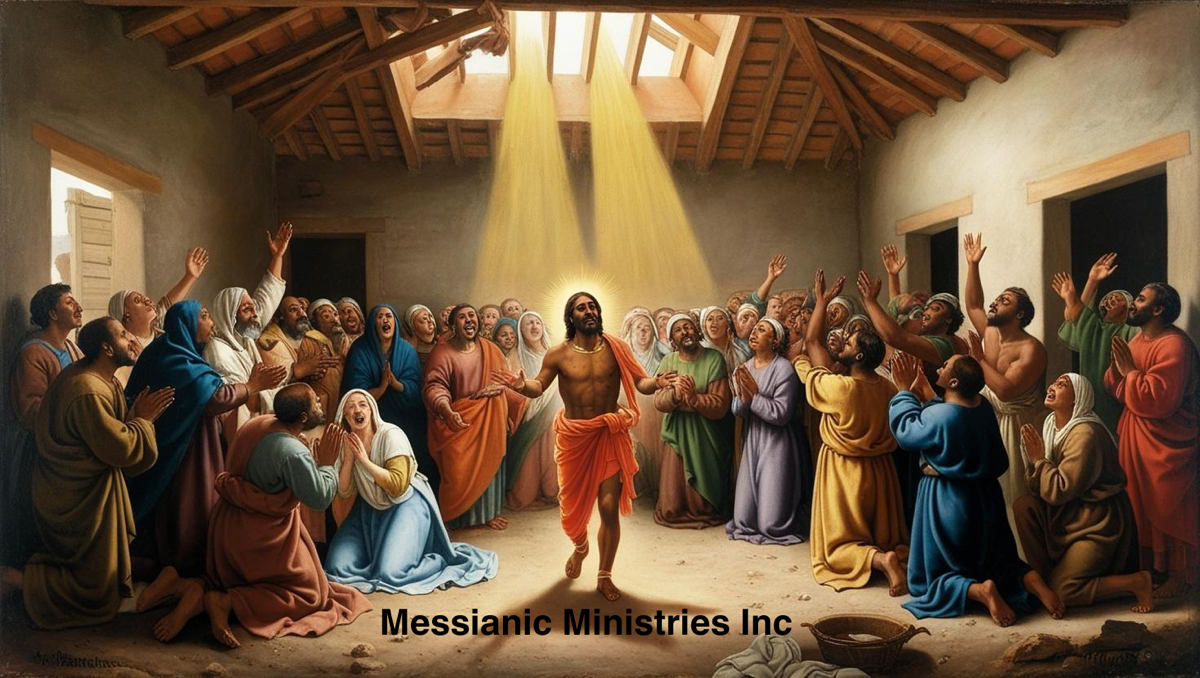
This moment signifies not just a mending but also a revelation. In the presence of Christ, the usual progression of events is disrupted. Jesus utters phrases that no individual would dare to articulate: “Your sins are forgiven.” Subsequently, He demonstrates His authority by instructing a disabled man to stand and walk. The audience's response is utter shock.
The expression "strange things" signifies phenomena beyond human comprehension. The Greek term paradoxa implies phenomena beyond our comprehension. They witnessed a man being lowered through a roof, granted forgiveness prior to healing, and then rising in the vigor of a restored physique. However, more than a miracle had occurred—they had observed divine authority manifesting on earth.
Observe their tripartite reaction: astonishment, veneration of the Divine, and trepidation. Authentic encounters with the Divine invariably elicit a definitive response. They elicit admiration and veneration, instilling a sense of reverence inside us. When Christ intrudes onto our day, it is not for amusement—it is to rouse us.
God frequently operates in manners that disrupt routine, circumvent religious structures, and confront constrained faith. The roof was damaged, the teachers remained silent, the crowd was astonished, and the man proceeded. All of this occurred due to the presence of Jesus.
⸻
• The presence of God disturbs the mundane: The miracles of Christ frequently interrupt the continuum of everyday existence.
Divine authority is unequivocal: Forgiveness and healing emanate from a singular source—Jesus.
True worship is an expression of reverence: The individuals exalted God not from obligation but from amazement.
• Faith engenders the extraordinary: The friends who transported the man facilitated the opportunity for divine intervention.
The fear of God is a profound reverence: Upon witnessing His power, we are rendered speechless and humbled.
#ministry #jesus #bible #worship #faith #hope #love #church #prayer #gospel #christian #family #motivation #inspiration #holyspirit #power #christ #jesuschrist #purpose #godisgood #inspire #instagood #outreach #evangelism #bibleverse #encouragement #dailyinspiration