
The King’s Highway
Isaiah 35:8

Isaiah 35 serves as a prophetic contrast to the judgments articulated in the preceding chapter. It unveils a Messianic promise that encompasses not just human regeneration but also a cosmic reconfiguration. Verse 8 emphasizes The King’s Highway, a hallowed path established not by human effort, but by the divine justice of God Himself.
This "path of sanctity" is not founded on moralism or theological frameworks. It is a designated route—reserved for the redeemed and protected from contamination. This illustrates the distinction between the sacred and the secular, a fundamental tenet in Levitical law and reiterated in Ezekiel’s visions of the restored Temple. The Messiah does not summon individuals to meander but to traverse—a distinct path, a consecrated way.
The expression "wayfaring men, though foolish, shall not err therein" offers significant solace. It eradicates elitism from sanctity. Individuals with minimal comprehension can comprehend if they submit to the Spirit. In this environment, wisdom is characterized not by intellectual mastery but by obedience.
This roadway symbolically represents Messiah Yeshua’s journey from Galilee to Jerusalem—He is the Way (John 14:6). It also foresees the ultimate assembly of the redeemed in the Messianic Age. Zion represents the destination, while holiness constitutes the pathway.
The impure cannot enter, not out of exclusivity, but because holiness inherently eradicates all impurity. Traversing this path results in transformation. It is a voyage of detachment, refinement, and compliance—toward exaltation.
* The Way of Holiness is Messianic: It constitutes not a moral rule but the essence and journey of Yeshua.
* Access is granted through Redemption: Only those redeemed by the Lord may traverse it (cf. Isaiah 35:9–10).
* Holiness is Directional: It signifies a journey towards Zion, distancing oneself from Egypt, Babylon, and the ego.
* The Simplicity of Obedience: Individuals considered unintelligent by society can navigate life securely when they surrender to God.
* The ultimate destination is glory: the journey culminates in eternal joy, exaltation, and the presence of the Lord.
#Christianity #jesus #christiantiktok #bible #foryou #cogic #cogbf #cog #apostolic #seventhdayadventist #messianicministriesinc #allnations #fgbcf #tiktok
The Sound of the Shofar
Psalms 81:3
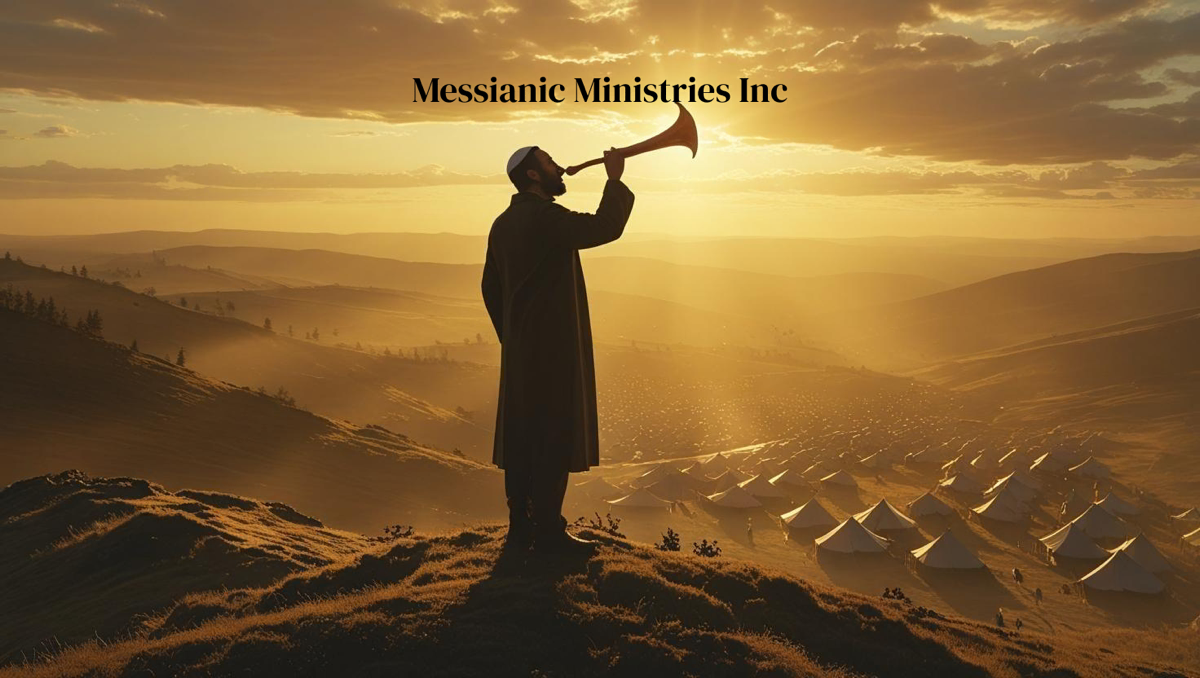
The sounding of the shofar is not simply a ceremony. It is a sacred call—an invitation to rouse the spirit and redirect the community towards adherence to the covenant. Psalm 81:3 is a directive associated with sacred time: new moon, designated festivals, solemn gatherings. These are not just ideas but sacred patterns established in Israel's calendar by the word of God Himself.
The Hebrew term for "blow" (taqaʿ) denotes a thrust or strike—powerful and unequivocal. The shofar, crafted from a ram's horn, recalls the ram ensnared in the thicket on Mount Moriah, the substitution offered for Isaac (Genesis 22:13). Each explosion serves as a reminder of that redemptive exchange and foreshadows the ultimate substitute in the Messiah.
For Messianic believers, the trumpet call represents more than mere commemoration. It presciently anticipates future events. Paul proclaimed, “At the final trumpet…the deceased shall be resurrected incorruptible, and we shall be transformed” (1 Corinthians 15:52). The Feast of Trumpets (Yom Teruah) serves as a precursor for the ultimate awakening upon the King's return.
However, the current demand is not solely eschatological. The shofar summons now—to repentance, to sanctity, to alignment. It disrupts complacency. It distinguishes the sacred from the profane. It encourages the listener to reaffirm the covenant.
Upon appropriate response, the remainder of Psalm 81 reveals: liberation from Egypt (v.6), sustenance in the wilderness (v.10), and the assurance of miraculous triumph (v.16). It commences with a sound—one that necessitates spiritual vigilance and sincere reaction.
• The shofar denotes divine appointment and sacred time.
• It serves as a prophetic summons for covenant remembrance and preparedness.
• The Messiah represents both the anticipated sovereign and the signified replacement.
• The contemporary shofar serves as a summons to sanctity, transcending mere historical significance.
• Individuals who listen and comply enter into heavenly sustenance and safeguarding.
#Christianity #jesus #christiantiktok #bible #foryou #cogic #cogbf #cog #apostolic #seventhdayadventist #messianicministriesinc #allnations #fgbcf
The Covenant Keeper
Deuteronomy 7:9

Deuteronomy 7:9 serves as a significant foundation for everyone who adhere to the covenant with the Holy One of Israel. This text underscores three immutable truths: God exists, God is faithful, and God honors His commitment. These are not abstract traits but tangible experiences, particularly for individuals who resonate with the Messianic vocation.
Moses emphasized to Israel that their connection with God was covenantal rather than commercial. He was not constrained by transient emotions or societal constructs. He was constrained by chesed—unwavering love—and by His inherent holiness. This covenant is not abrogated but rather enhanced in Messiah Yeshua (cf. Matthew 5:17). His blood confirms a renewed covenant, guaranteeing that God's loyalty now extends to us via grace and truth (John 1:17).
The statement "a thousand generations" is not only hyperbole; it is a Hebraic idiom denoting boundless continuation. God is not a temporary defender; He is an enduring guardian across generations. Despite Israel's failures, He maintained a remnant. Despite Judah's banishment, He remained faithful to His covenant with Abraham, Isaac, and Jacob.
This verse urges us to conform to covenantal living within the Messianic framework. It is insufficient to merely articulate grace; we must embody obedience. Yeshua stated, “If you love me, adhere to my commandments” (John 14:15). Love transcends mere emotion; it embodies steadfast devotion.
The covenant transcends mere historical commitments; it serves as a prophetic assurance. The identical God who maintained His covenant with Israel in the wilderness will uphold His covenant with the remnant in the final days. He will assemble His people from the four corners (Isaiah 11:12) and instill His Spirit within them (Ezekiel 36:27).
God's Faithfulness is Covenant-Based: He is obligated by His word, not our merit.
The Covenant is generational: God recalls His commitments to His people over millennia.
The Messiah Affirms the Covenant: Yeshua’s sacrifice does not supplant the covenant—it revitalizes and completes it.
Obedience signifies love: Genuine devotion to God is evidenced by living in accordance with the Torah via Yeshua.
The Remnant is Not Forgotten: In the final days, God will uphold His promise through restoration and redemption.
#Christianity #jesus #christiantiktok #bible #foryou #cogic #cogbf #cog #apostolic #seventhdayadventist #messianicministriesinc #allnations #fgbcf
The Stone Which the Builders Rejected
Ezekiel 37:26
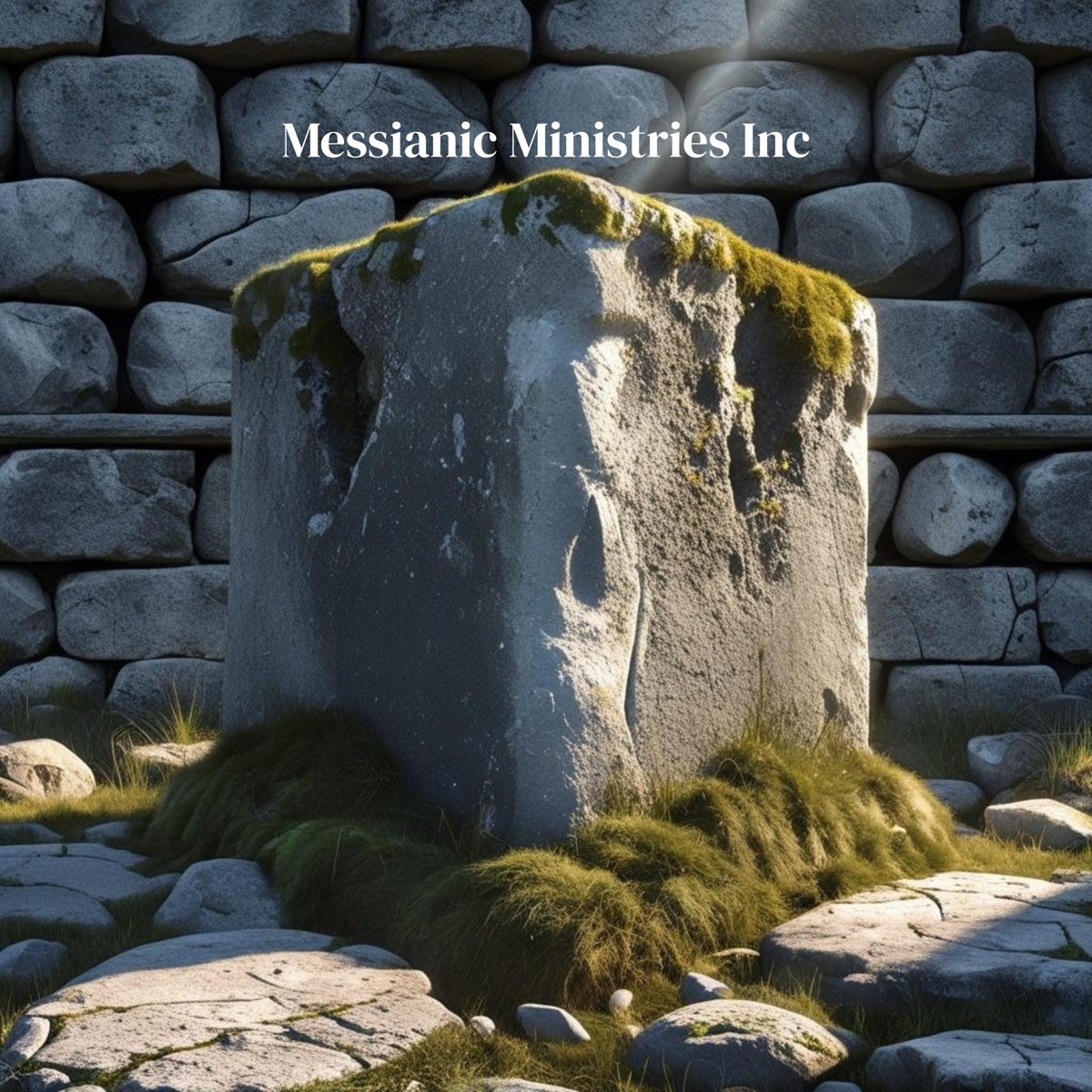
Psalm 118 includes both royal and messianic qualities. It addresses liberation, covenantal triumph, and divine justification. The preceding verse—“The stone which the builders rejected…”—was not solely poetic. It was prescient.
In its original context, this presumably pertained to Israel itself or to a Davidic ruler rejected by nations yet elevated by God. However, the Holy Spirit inscribed a profound mystery within it—the Messiah Himself. Yeshua explicitly used this passage in Matthew 21:42, designating Himself as the "rejected stone." The builders—Israel's religious elite—perceived no role for Him inside their framework. He did not meet their expectations. Thus, they disregarded Him.
In the divine economy, rejection precedes elevation. Mortality precedes revival. The crucified becomes into the cornerstone. Peter asserted in Acts 4:11 that this verse was realized solely in Yeshua. He is the principal cornerstone of a new spiritual edifice, constructed not by human hands, but by the divine will of the Father.
This verse confirms the primacy of Yeshua for the Messianic believer. Our faith is neither an adjunct to Judaism nor a syncretic religion. It is the old promise realized—the divinely selected and esteemed prophetic stone. All believers, whether Jew and Gentile, are now living stones, united in Him (1 Peter 2:4–6).
Rejection is an integral component of the pattern. Similar to how the builders rejected the Messiah, His adherents are frequently disregarded by institutional authorities. However, summon your courage. What humanity dismisses, the divine frequently elevates.
Messiah as Cornerstone - Yeshua serves as the foundation of God's redemptive scheme, as prophesied in Psalm 118 and corroborated in the Gospels and Acts.
Prophetic Fulfillment - This line prophetically discloses the contradiction of repudiation and elevation. The leaders' rejection of Yeshua was anticipated, and His elevation was predetermined.
Reversal of Human Judgment - What humanity deems insignificant, divinity regards as fundamental.
Identity for Believers – As Messianic believers, we belong to this new edifice established on the cornerstone—unified, sacred, and everlasting.
Rejection by others may ultimately facilitate our alignment with God's intended purpose.
The cornerstone was dismissed, yet selected. Rebuffed, yet elevated. This is the paradigm of the Kingdom. Are you prepared to be misinterpreted if it results in being positioned where God intends for you?
Allow the Messiah to be your foundational element. Your foundation is not merely an accessory.
The Covenant of Peace Shall Not Be Removed
Isaiah 54:10

Isaiah addresses a covenant community in exile—dislocated, persecuted, and uncertain about their future. However, the divine proclamation from the Lord signifies not annihilation, but rejuvenation. The scripture contrasts the volatility of creation with the steadfastness of divine mercy. Even if the mountains were to crumble, God's covenant shall remain intact. This represents chesed—unwavering affection. It is also shalom—a peace grounded on covenant rather than circumstance.
For the Messianic believer, this covenant of peace has its ultimate realization in Yeshua the Messiah, the Sar Shalom (Prince of Peace). His blood confirmed a superior covenant (Hebrews 8:6), uniting both Jew and Gentile into a singular entity (Ephesians 2:14-16). The Father's kindness is not contingent upon national security, moral accomplishments, or prophetic discernment. It is grounded in His immutable essence.
Today's devotion urges us to live in accordance with that covenant, rather than striving towards it. We do not strive to attain God's serenity. We are summoned to traverse it, even amidst the collapse of the surrounding mountains. If God's mercy remains with us, then our calling and inheritance also persist. The agreement remains in effect.
Unyielding Mercy: God's lovingkindness is more steadfast than creation itself.
Covenantal Peace: Shalom is founded on God's promise rather than on observable tranquility.
Messianic Fulfillment: Yeshua serves as the guarantor of a superior, eternal covenant.
Identity Rooted in Commitment: Our security is found not in the absence of adversity, but in the presence of covenantal grace.
Exhortation: Remain steadfast in His tranquility, despite the tumult of the world.
#Christianity #jesus #christiantiktok #bible #foryou #cogic #cogbf #cog #apostolic #seventhdayadventist #messianicministriesinc #allnations
The Covenant of Salt
Numbers 18:19

In ancient Israel, salt served not just as a preservative but also as a symbol of an everlasting, incorruptible covenant. The Lord proclaimed His assurance to the priestly lineage as a “covenant of salt,” underscoring permanence, purity, and steadfast fidelity. Salt, steadfast and perpetual, emerged as a metaphor for anything which remains unspoiled, unchanged, or impervious to deterioration.
This motif stretches prophetically into the Messianic era. Messiah Yeshua, by referring to His disciples as the “salt of the earth” (Matthew 5:13), was emphasizing their function in the preservation of the covenant. They were tasked not just with preserving the moral order but also with demonstrating God's unwavering fidelity to His Word and His people.
The priestly covenant bestowed upon Aaron and his descendants is reflected in the New Covenant via the Messiah's everlasting priesthood (Hebrews 7:24). As Melchizedek's successor, Yeshua perpetually ministers before the Father with an uncorruptible covenant. The covenant of salt is thus realized in Him—enduring, sacred, and obligatory.
Currently, every adherent integrated into the promises of Israel participates in this perpetual covenant. Just as salt seasons, preserves, and purifies, our conduct must embody the Messiah’s essence—unblemished, steadfast, and enduring.
Covenant of Salt: A Hebraic expression signifying stability, purity, and incorruptibility un divine commitments.
The Aaronic covenant is realized in the Messiah's everlasting priesthood.
Messianic Fulfillment: Yeshua represents the immutable covenant—steadfast till the conclusion.
Our Mandate: Believers are to embody salt—maintaining truth, safeguarding righteousness, and mirroring God’s constancy.
Prophetic Insight: The remnant in the final days will be characterized by this "salt"—those who uphold the covenant, undeterred by deterioration.
#Christianity #jesus #christiantiktok #bible #foryou #cogic #cogbf #cog #apostolic #seventhdayadventist #messianicministriesinc #allnations
A Father To The Fatherless
Psalm 68:5

Psalm 68 depicts God as a celestial warrior and covenant sovereign. In that grand context, verse 5 presents an unforeseen gentleness: “A father of the fatherless.” In ancient Israel, orphans and widows constituted the most vulnerable segments of society, lacking inheritance, protection, or social support. Nevertheless, the deity that traverses the skies does not neglect them. He associates with them.
The verse delineates God's essence in His "sacred abode"—encompassing both deeds of justice and relational compassion. The term father (אָב, av) is not used metaphorically in this context. It denotes provision, identity, nurturing, and legal power. In the Messianic context, this attains its culmination in Yeshua the Messiah, who said, “He that hath seen me hath seen the Father” (John 14:9).
The Messiah not only draws us closer to God but also reinstates the familial connection. The adoption we obtain through Him is both legal and spiritual, not only symbolic. In Messiah, the bereft are no longer isolated. The widow is no longer vulnerable. The outcast is now identified.
Currently, several individuals exist as spiritually orphaned—alienated from the covenant, detached from their origins, and uncertain over their inheritance. This verse redirects our focus: God's holiness is not remote. It approaches to rehabilitate families, to provide shelter for the unprotected, and to reintegrate the marginalized into heritage. God's holiness encompasses His compassion for the vulnerable.
He is not only like to a father—He is a Father, particularly to the fatherless.
In Yeshua, the orphan spirit is eradicated and authentic sonship is reinstated.
The bereaved, abandoned, and neglected are divinely acknowledged.
Holiness is not distant—it descends, embraces, and safeguards.
#Christianity #jesus #christiantiktok #bible #foryou #cogic #cogbf #cog #apostolic #seventhdayadventist #messianicministriesinc #allnations
The Greater Than Solomon Is Here
St Luke 11:31

Yeshua admonishes His generation for dismissing heavenly wisdom when it was present before them. The Queen of Sheba traveled from distant lands, compelled by admiration for Solomon's renown. However, the individuals of Yeshua's era, beneficiaries of the covenant, did not acknowledge the manifestation of all wisdom and splendor present among them.
Solomon represented a prototype, an archetype. His wisdom was bestowed; Yeshua's wisdom is inherent. Solomon articulated proverbs; Yeshua embodies the Word incarnate. Solomon constructed a temple; Yeshua represents the temple not fashioned by human hands. The Queen sought illumination; Israel's authorities rejected it.
This passage illustrates a notion of messianic judgment. The "queen of the south" will serve as a testament—a Gentile who pursued knowledge in contrast to the covenant people who repudiated it. This reversal is prophetic for our era. Who venerates the wisdom of the Messiah in contemporary society? Who embarks on a spiritual journey, irrespective of distance or tradition, to listen to Him?
The theme of becoming "greater than Solomon" is not simply comparing; it is enlightening. It reveals the preeminence of the Messiah over all preceding monarchs, philosophers, and prophets. In this day of theological ambiguity, the Ruach ha’Qodesh urges us to refocus our faith on the lordship of the Messiah, rather than on historical hierarchy.
He continues to speak. His wisdom remains accessible. Will we acknowledge Him in the simplicity of a quiet voice, a prophetic admonition, or a pertinent message delivered through inconspicuous individuals?
Messiah’s Supremacy: Yeshua surpasses those who came before Him, including Solomon.
Prophetic Reversal: The Gentile's yearning for truth frequently exceeds the complacency of the covenant.
The Urgency of Acknowledgment: The generation that neglects to revere the Messiah will be evaluated by those who did.
Wisdom Embodied: The Messiah is not simply wise; He is the embodiment of Wisdom (Proverbs 8; Colossians 2:3).
Invitation to Seekers: Wisdom presently calls out fervently. Shall we embark on an introspective trip to listen to Him?
#Christianity #jesus #christiantiktok #bible #foryou #cogic #cogbf #cog #apostolic #seventhdayadventist #messianicministriesinc #allnations
The Watchman’s Cry
Ezekiel 33:7

God designates Ezekiel as a watchman—an individual who perceives the Lord’s voice and carries the burden of divine admonition. This commission is not a mark of honor but a responsibility of accountability. In the Messianic context, the watchman serves as both a prophet and a herald of the Messiah, proclaiming the imperative of repentance and the proximity of redemption.
The prophetic responsibility encompasses two fundamental actions: listening and admonishing. The watchman does not fabricate his message; he heeds the word of the Lord. Upon receipt, he is obligated to convey it accurately, irrespective of its popularity or expense.
This corresponds with the ministry of Yeshua (Jesus), the paramount Watchman. He arrived not merely to caution but to salvage. He was not positioned on a wall, but elevated on a cross. His admonitions were coupled with solicitations: “Come unto me, all ye that labour…” (Matthew 11:28).
The role of the watchman persists in our current time. Every believer who embodies the prophetic spirit of the Messiah must be vigilant, unyielding, and prepared. We must detect the times, protect the congregation, and articulate what we receive from His mouth—without alteration.
This is not alarmism; it is affection conveyed via veracity. Warnings constitute gestures of compassion. The sound of the shofar serves not only as a warning of peril but also as a call to restore the heart to the covenant.
The sentinel listens before to articulating.
The prophetic obligation encompasses admonishing with compassion and immediacy.
The Messiah embodied the diligent Watchman, articulating what He received from the Father.
Contemporary adherents are summoned to maintain this identical stance: vigilant, compliant, and valiant.
The sound of the shofar serves as both an exhortation to repentance and a proclamation of the King's arrival.
#Christianity #jesus #christiantiktok #bible #foryou #cogic #cogbf #cog #apostolic #seventhdayadventist #messianicministriesinc #allnations
The Sure Mercies of David
Isaiah 55:3

Isaiah 55 presents an unreserved invitation to a divine covenant—a summons to accept something which cannot be acquired through monetary means or laborious effort. The "sure mercies of David" denote God's covenant fidelity, initially bestowed upon David, subsequently prophesied for the Messiah, and presently available to everyone who seek it.
David was a man aligned with God's heart, yet not due to his perfection. His existence was characterized by contrition, devotion, and reliance on divine grace. The commitment made to David—a perpetual kingdom—was ultimately realized in Yeshua the Messiah, the Son of David. These "mercies" were not solely for David, but for all who are united with his greater Son through faith.
The Hebrew notion of “sure mercies” (חַסְדֵי דָוִד הַנֶּאֱמָנִים) underscores unwavering love that is infallible. In Messiah, this covenantal love is not theoretical. It is intimate, sealed with blood, and presented gratuitously. He beckons us to listen, to approach, and to exist—not only endure, but to thrive in covenantal communion with Him.
The Messianic significance is profound: via Yeshua, the eternal covenant of royal favor, pardon, and presence is bestowed upon us. The assurance of David's throne serves as the cornerstone of our hope, security, and future sovereignty with the Messiah. The grace that safeguarded David now safeguards everyone who dwell in the Risen Son.
• Everlasting Covenant: God's commitments in the Messiah are perpetual and irrevocable.
• Davidic Lineage: Yeshua actualizes the royal covenant established with David. The covenant is offered to all who are willing to heed and comply.
• Covenantal Mercy: God's lovingkindness is steadfast and not contingent upon merit.
• Prophetic Fulfillment: Isaiah links the historical covenant to the forthcoming Messianic dominion.
#Christianity #jesus #christiantiktok #bible #foryou #cogic #cogbf #cog #apostolic #seventhdayadventist #messianicministriesinc #allnations
The Glory of the Latter House
Haggai 2:9

Haggai prophesied during a period of profound despondency. The exiles returned, although their reconstructed temple was tiny and unremarkable. In comparison to Solomon's Temple, it was devoid of apparent splendor. Nevertheless, the Lord provided this assurance: “The glory of this latter house shall surpass that of the former.”
The prophecy transcended architecture; it was Messianic in nature. The "latter house" signifies an impending reality in which divine glory is associated not with gold or cedar, but with the presence of the Messiah. Yeshua would thereafter enter the second temple, physically occupying the space prophesied by Haggai. That alone rendered it superior to Solomon's. However, the complete realization extends far beyond.
The authentic "latter house" is eschatological. It constitutes the Body of the Messiah, the spiritual edifice not constructed by human hands. The promised peace is not mere political tranquility but shalom—completeness, reconciliation, and repose. Peace is attained through the blood of His crucifixion (Colossians 1:20). This verse links the past, present, and future: the temple of old, the Messiah in our midst, and the forthcoming splendor.
The Messianic believer interprets this as a prophecy that has commenced but remains unfulfilled. During a period of upheaval (Haggai 2:6–7), the Lord is orchestrating the creation of a dwelling more magnificent than any human construction. The exhortation is to endure throughout the devastation, for what lies ahead will surpass what has been forfeited.
“Latter house” denotes the Messianic temple: initially in Yeshua’s terrestrial ministry, subsequently in the Body of Messiah, and eventually in the New Jerusalem.
The supreme glory is spiritual rather than architectural, focused on the indwelling presence of the Lord.
The promise of peace is realized in the Messiah's atonement, not in transient political tranquility.
This verse urges the remnant to advance in reconstruction, recognizing that the heavenly future exceeds the illustrious past.
• Haggai associates the Second Temple with the advent of the Messiah and the eventual restoration of all creation.
#Christianity #jesus #christiantiktok #bible #foryou #cogic #cogbf #cog #apostolic #seventhdayadventist #messianicministriesinc #allnations
The Spirit of Grace and of Supplications
Zechariah 12:10

Zechariah's prophetic declaration addresses the core of the Messianic revelation. This passage anticipates a forthcoming effusion of the Spirit upon the Jewish populace, coinciding with a collective acknowledgment of Messiah Yeshua — the One "whom they have pierced."
The essence of grace and supplications transcends mere emotional contrition; it is a supernatural revival. Grace is bestowed, not acquired. Petition emerges, not from trepidation, but from celestial disclosure. The pierced One serves as both the focal point of their sorrow and the origin of their salvation.
This piercing is not an abstract allusion. It explicitly references the crucifixion – the slain Lamb, now manifested in glory. Israel will grieve collectively as people, families, households, and a nation. This lamentation is both prophetic and redemptive, facilitating healing and alignment with the kingdom.
The passage possesses both eschatological significance and contemporary relevance. In recent days, the same Spirit is being disseminated among the global remnant—both Jew and Gentile—reviving hearts to the identity of Yeshua. The grieving signifies not despair, but the labor of renewal: Israel's return to her Redeemer.
This prophecy remains unfulfilled. It anticipates the moment when the obscurity is removed, and the covenant people see the One they previously repudiated — and accept Him. Until that time, we toil and advocate. The essence of grace and supplication must also be upon us, enabling us to serve as intercessors for Israel and proclaimers of the forthcoming King. The Spirit of grace is bestowed by heavenly means, rather than attained through effort.
• Supplication occurs subsequent to revelation – when Yeshua is recognized as the Messiah.
• The term "pierced One" directly alludes to the crucified Christ in a prophetic context.
• National repentance and revival will occur in Israel during the final days.
• Believers are urged to pray, remain vigilant, and prepare for this realization.
• The sorrow is sacred – it facilitates healing and restoration.
#Christianity #jesus #christiantiktok #bible #foryou #cogic #cogbf #cog #apostolic #seventhdayadventist #messianicministriesinc #allnations
He Shall Build the Temple of the Lord
Zechariah 6:13

The prophecy of Zechariah articulates a significant Messianic vision. In verse 12, the term "Branch" denotes the anticipated Messiah—Yeshua HaMashiach—who uniquely embodies the dual roles of King and Priest. The temple He constructs is not a physical edifice of stone, but a spiritual dwelling composed of living stones (1 Peter 2:5), a redeemed populace. He alone possesses the glory because He alone is deserving (Revelation 5:12).
The throne signifies His sovereignty—He governs with fairness and integrity. The priesthood refers to His intercession—He mediates with empathy and reconciliation. In contrast to the Levitical order, Yeshua’s priesthood is established in the order of Melchizedek—eternal, unified, regal, and redeeming (Psalm 110:4).
The "counsel of peace" transcends a simple diplomatic expression; it signifies the everlasting accord within the Godhead—Father, Son, and Spirit—regarding the Messiah's role in reconciling all things to Himself (Colossians 1:20). The amalgamation of monarchy and priesthood in a single individual eliminates the distinctions that separated Israel's historical narrative. In Messiah, the divine and the authoritative are unified.
This devotion resonates with us during the period of restoration. The Lord is constructing His Temple on earth—His Body. He urges us to acknowledge the magnificence of the One who constructs it and to yield to both His sovereignty and His mediation. As priests, we bear His name; as citizens, we exist under His authority.
Messiah as the Branch: A prophesied designation realized in Jesus, signifying His Davidic heritage and divine purpose.
Temple as His People: The authentic temple is the assembly of redeemed Christians, inhabited by the Spirit.
Dual Offices United: He concurrently holds the positions of Priest and King—roles that were never conjoined under the Old Covenant.
Counsel of Peace: Denotes divine accord and everlasting objective in the Messiah's redemptive endeavor.
Contemporary Application: As He constructs, we must synchronize with His authority and ministry, transforming into vessels of His glory.
#Christianity #jesus #christiantiktok #bible #foryou #cogic #cogbf #cog #apostolic #seventhdayadventist #messianicministriesinc #allnations
The Arm of the Lord Revealed
Isaiah 53:1

Isaiah 53 commences with a prophetic lamentation. The Servant of the Lord is presented not with honor, but with repudiation. The "arm of the LORD"—a metaphor for divine might and redemptive intervention—is paradoxically manifested via suffering and humiliation. The Messiah arrives not as a triumphant warrior but as the Suffering Servant, wounded for our transgressions.
In the Hebraic perspective, the term “arm” signifies deliverance via power, as exemplified in the Exodus. Here, Isaiah shifts expectation: the same arm that divided the waters now extends in vulnerability. The prophet's exclamation is nearly incredulous: Who will accept this account? The divine might of God is revealed not by spectacle, but through surrender, substitution, and suffering.
Perceiving the arm of the LORD in the Messiah necessitates spiritual discernment. The flesh perceives frailty; faith recognizes salvation. In Yeshua, the definitive manifestation of God is incarnate, and His outstretched arms on the cross symbolize the spread of divine kindness. This is the unveiled messianic enigma: divine power expressed through seeming frailty, restoration through suffering, and existence through mortality.
As adherents of the Messiah, we bear this testimony. We must inquire daily: Do we hold this belief? Shall we endure it, regardless of the world's derision or repudiation? The "Arm of the LORD" signifies divine intervention, manifested through the suffering of the Messiah. Isaiah 53 is a seminal Messianic prophesy that directly references Yeshua's redemptive mission.
* Acceptance of the report necessitates spiritual revelation.
* Earthly expectations will overlook the concealed magnificence.
* This forecast necessitates a response—not merely appreciation, but acceptance and loyalty.
* Our witness is prescient: to declare what many may dismiss, yet remains perpetually valid.
* Allow this truth to resonate today: The power of God is not always manifest or conspicuous—it frequently resides in what society scorns. However, for those who are perceptive, the arm of the LORD has been disclosed—and it remains extended.
#Christianity #jesus #christiantiktok #bible #foryou #cogic #cogbf #cog #apostolic #seventhdayadventist #messianicministriesinc #allnations
The Righteous Branch Shall Reign
Jeremiah 23:5
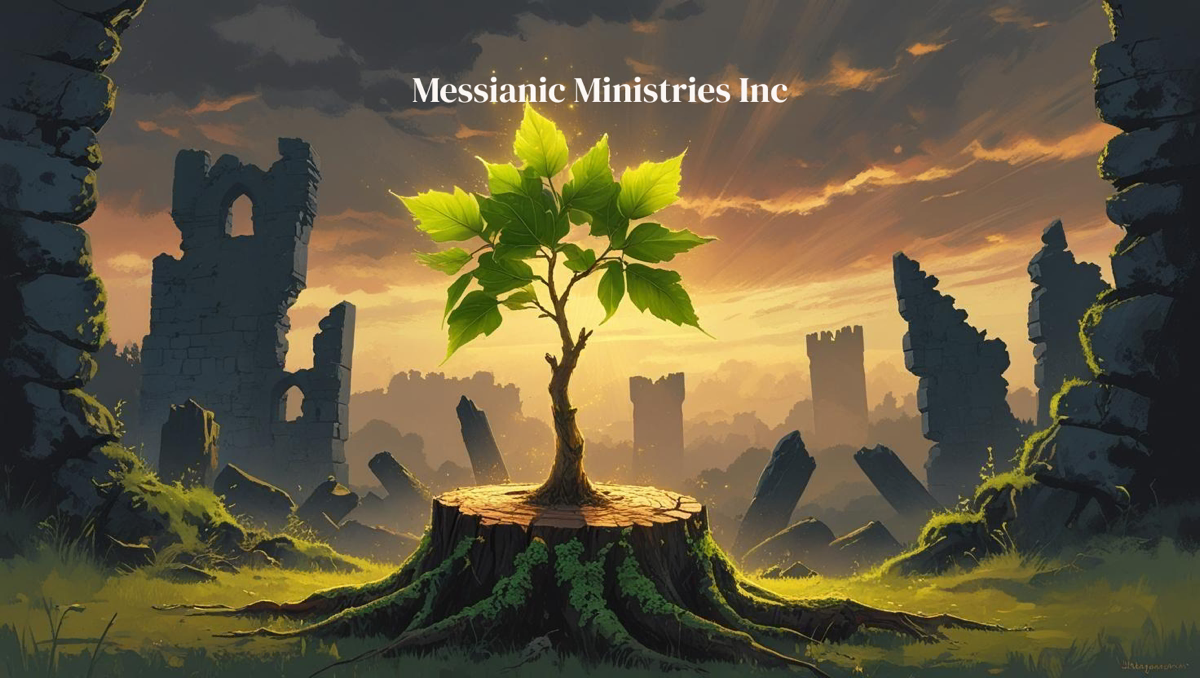
Jeremiah prophesied amidst political deterioration and spiritual insurrection. The kingdom of Judah was on the verge of disintegration. Amid approaching exile, the Lord articulated hope grounded in covenantal fidelity. The "righteous Branch" is not simply a metaphor; it is a messianic designation. From David's dismembered lineage, God pledged to elevate One who would govern with justice. This is not a monarch established by humanity, but One exalted by the Divine.
Yeshua HaMashiach represents the culmination. He is the Branch that sprung from the root of Jesse (Isaiah 11:1). His rule does not embody the flawed institutions of humanity. He rules with celestial sagacity, sacred equity, and unwavering compassion. His Kingdom is not abstract—it is manifesting presently in every heart yielded to Him.
The prophetic significance of this verse extends beyond exile, beyond Rome, and beyond contemporary politics. It describes a day when the Messiah will govern and thrive with manifest authority. This exists in a state of both presence and anticipation: spiritually engaged here, yet expecting complete fulfillment at His return.
This prophesy is fundamental for the Messianic believer. We do not await a political savior; we acknowledge that our King has already arrived and will return. His righteousness constitutes our hope. His righteousness rectifies the injustices within and surrounding us.
Messianic Fulfillment - Yeshua is the Branch from the lineage of David, the foretold King.
Present and Future Sovereignty - He currently reigns in hearts and will reign visibly in the forthcoming age.
Divine Origin - The Branch is established by God, not through human succession.
Judgment and Justice - The Messiah governs with righteousness and fairness.
Hope amid Chaos - Despite national collapse, God's promises remain steadfast.
#Christianity #jesus #christiantiktok #bible #foryou #cogic #cogbf #cog #apostolic #seventhdayadventist #messianicministriesinc
The Covenant Confirmed in His Blood
St Luke 22:20

This passage from Luke directs us to the essence of the Messianic covenant. The term "new testament" (Greek diathēkē) resonates with the prophet Jeremiah's proclamation of a new covenant (Jer. 31:31–34), inscribed not on stone tablets, but on hearts transformed by grace. When Yeshua elevates the cup and proclaims it to be “shed for you,” He articulates His role as both High Priest and Lamb. This is not merely symbolic; it is sacrificial. His blood fulfills and transcends that of the paschal lamb in Egypt.
At the Passover table, He reinterprets the meal—not discarding the old but elucidating its complete significance. The Exodus was not the pinnacle. It constituted a premonition. In Messiah, the supreme exodus—liberation from sin and death—is accomplished via His blood. This blood confirms the covenant, analogous to Moses sprinkling the book and the people in Exodus 24:8, proclaiming, “Behold the blood of the covenant.” What is the distinction? The blood of Yeshua is definitive, everlasting, and singular.
This is not simply doctrine—it is fate. Each time we partake of the cup in commemoration, we declare the truth of His death and the assurance of His return. The blood is not solely retrospective. It is prescient. It refers to a restored kingdom, a revitalized Israel, and a redeemed creation.
• The cup symbolizes the new covenant prophesied by Jeremiah and established by Yeshua.
• His blood actualizes the typology of the Passover lamb and the Mosaic covenant.
• This act is simultaneously sacrificial and prophetic—it proclaims current atonement and future restoration.
• The covenant is both personal (“for you”) and communal—uniting the redeemed of Israel and the nations.
• Messianic believers consume this cup with reverence and anticipation, seeing it as a testament to the Lamb who was sacrificed and who will return.
#Christianity #jesus #christiantiktok #bible #foryou #cogic #cogbf #cog #apostolic #seventhdayadventist #messianicministriesinc
The Anointed Shepherd-King
Ezekiel 34:23

Ezekiel's prophecy indicates the restoration of Israel under a singular real shepherd—God's "servant David." This does not pertain to King David literally, but to the anticipated Messianic King from David’s lineage: Yeshua HaMashiach. In the context of Israel's spiritual turmoil and deceitful leaders (Ezek. 34:1–10), God vows to choose a trustworthy shepherd who will nurture, protect, and unite His people.
Yeshua confirms this character in John 10:11: “I am the good shepherd; the good shepherd lays down his life for the sheep.” This benevolent shepherd does not take advantage of the flock. He sacrifices His life to redeem them. This scripture, within the Messianic framework, tells Israel and all included Christians that dispersed sheep will be reunited, covenant fidelity will be reinstated, and divine governance will be established in righteousness.
This prophecy is currently being realized through the redeeming work of Christ and will attain complete fulfillment upon His return to govern Israel and the nations (Isa. 11:10, Rev. 19:15). The Messianic shepherd delivers justice to the afflicted, solace to the shattered, and organization to the dispersed. He is not simply a guide but the covenant-keeping King designated by God Himself.
• Messiah as Shepherd: Jesus is the foretold shepherd from David's lineage (John 10:11; Heb. 13:20).
• Divine Appointment: The Shepherd is appointed by God, not by human agency.
• Restoration of Israel: This section foresees both national and spiritual rejuvenation.
• Consolidated Leadership: A singular shepherd supplants all deceptive ones. The Messiah is singular and preeminent.
• Current Guidance and Future Sovereignty: Jesus currently leads through His Spirit and will physically reign from Jerusalem.
#Christianity #jesus #christiantiktok #bible #foryou #cogic #cogbf #cog #apostolic #seventhdayadventist #messianicministriesinc
He Shall Bear Their Iniquities
Isaiah 53:11

Isaiah 53 represents the essence of Messianic prophecy. Verse 11 reveals a sacred transaction—Messiah, the Righteous Servant, carries the transgressions of many and, in exchange, provides justification. This represents not merely substitution but fulfillment: God is entirely content with the redemptive work of His Son. The "travail of his soul" refers to the profound nature of Christ's suffering, encompassing both bodily and spiritual dimensions—bearing anger, interceding, and reconciling humanity to God.
“By his knowledge” signifies not merely academic awareness, but profound, experiential compliance with the will of the Father (cf. Philippians 2:8). This compliance serves as the foundation for reasoning. The Hebrew term for "bear" (סָבַל, saval) denotes the act of lifting and transporting a substantial load. The Messiah did not merely see evil; He bore it as His own.
This verse affirms that Yeshua did not simply indicate the path—He embodied the Way. Justification is not a recompense for endeavor, but a consequence of the Messiah's suffering. He carried the transgressions of both Israel and the nations. This bearing is persistent in intercession and comprehensive in legal fulfillment.
• Messianic Identity: The "righteous servant" refers to the foretold Messiah, realized in Yeshua (Acts 8:32–35).
• Substitutionary Atonement: He suffered our sins, not His own. He is the Lamb of God (John 1:29).
• Satisfaction and Justification: Divine justice is completely fulfilled, and numerous individuals are deemed righteous by faith in Him (Romans 3:24–26).
• Prophetic Fulfillment: This verse serves as a fundamental element of the Messianic promise—encompassing both individual and national restoration via the Messiah's suffering.
• Application: Place your trust not in deeds or lineage, but in the completed work of the Suffering Servant who atoned for your transgressions and justifies you in the present.
#Christianity #jesus #christiantiktok #bible #foryou #cogic #cogbf #cog #apostolic #seventhdayadventist #messianicministriesinc
His Glory Shall Be Seen Upon Thee
Isaiah 60:1

Isaiah 60 commences with a directive: “Arise.” This is not a recommendation. It is a prophetic call to the covenant community of God—comprising both ethnic Israel and the incorporated believers through the Messiah. The context is eschatological: nations are enveloped in profound darkness, yet God's light illuminates His people.
The Hebrew term for "glory" in this context is kavod, signifying weight, honor, and divine presence. This refers to the revelation of YHWH's glory via His people in the final days. As judgment escalates globally, the remnant—those concealed in the Messiah—will exhibit a discernible differentiation. His presence will not only provide solace but will also bestow upon them palpable authority and favor.
This corresponds with the Messianic anticipation of the eschatological effusion of the Spirit (Joel 2:28–29), not alone as revival, but as divine coronation. Yeshua HaMashiach, the Light of the World (John 8:12), has illuminated the hearts of His followers. Isaiah urges us to transcend mere passive light; we are to radiate. This is a summons for active observation, courageous adherence to truth, and audacious prophetic existence.
At this moment, as systems disintegrate and deceit proliferates, the Body of Messiah is being distinguished for clarity, not seclusion. The splendor is not for adulation, but for purpose. The Hebrew calendar and the revelation of divine moedim (set times) indicate a rapid disclosure. The veil has been ripped apart. The glory must now be unveiled.
Prophetic Call to Action: “Arise” signifies a spiritual awakening rather than simple encouragement. It signifies motion under heavenly authority.
Visible splendor: The splendor of God is not abstract; it is manifested via concrete authority, wisdom, favor, and presence.
Messianic Fulfillment: Yeshua is the Light that has arrived. His inherent glory enables believers to mirror the Father’s brilliance.
Distinction in Darkness: Amidst global turmoil, God's followers will illuminate—characterized by clarity, conviction, and courage.
End-Time Mandate: This pertains not alone to individual illumination; it encompasses prophetic testimony to the nations during the time of visitation.
May this devotional function as both a caution and a commitment. Do not be complacent in spiritual lethargy. Awaken. The illumination has arrived. His glory will be seen upon you—provided you are prepared to bear it.
#Christianity #jesus #christiantiktok #bible #foryou #cogic #cogbf #cog #apostolic #seventhdayadventist #messianicministriesinc
The Appointed Time Is At Hand
Habakkuk 2:3

The Appointed Time Is At Hand
Habukkuk 2:3
The essential nature of Messianic hope is founded on divine time. Habakkuk's statements arise at a period of postponement and uncertainty, akin to our present circumstances. The Hebrew term translated as "appointed time" is moed, which is also utilized in Leviticus to refer to God's feasts. This ties time not just with chronology but also with the rhythm of divine covenant.
Messianic believers should view delay not as denial, but as arrangement. God's schedule operates within prophetic cycles and redemptive periods. The vision articulated here transcends personal ambition; it embodies the revelation of the Messiah's intentions. His initial arrival coincided with the feasts; His return will similarly fulfill all righteousness, not capriciously, but in perfect accordance with the Father's design.
Currently, several individuals remain in the suspense between expectation and realization. This text instructs a stance of prophetic perseverance: “Though it delay, await it.” In Hebrew thinking, waiting is not a passive endeavor. It denotes alignment, belief, and anticipation. In the Messianic vocation, waiting also signifies preparation—akin to trimming one’s lamp prior to the arrival of the Bridegroom.
Messiah Yeshua reiterated this when He stated, “My time has not yet arrived: but your time is always opportune” (John 7:6). His life exemplified the principle of divine timing. As our comprehension deepens, we must also submit our urgency to His sovereignty.
“Appointed time” (Hebrew: moed) links prophecy to the Feasts of the Lord.
Delay does not equate to denial; it evaluates and hones expectation.
Prophetic vision should be anticipated, not expedited.
Yeshua accomplished every statement "in due season."
Messianic believers must align with heavenly rhythm rather than succumb to cultural anxieties.
#Christianity #jesus #christiantiktok #bible #foryou #cogic #cogbf #cog #apostolic #seventhdayadventist #messianicministriesinc