The Narrow Gate and the Promised Messiah
St Matthew 7:13-14
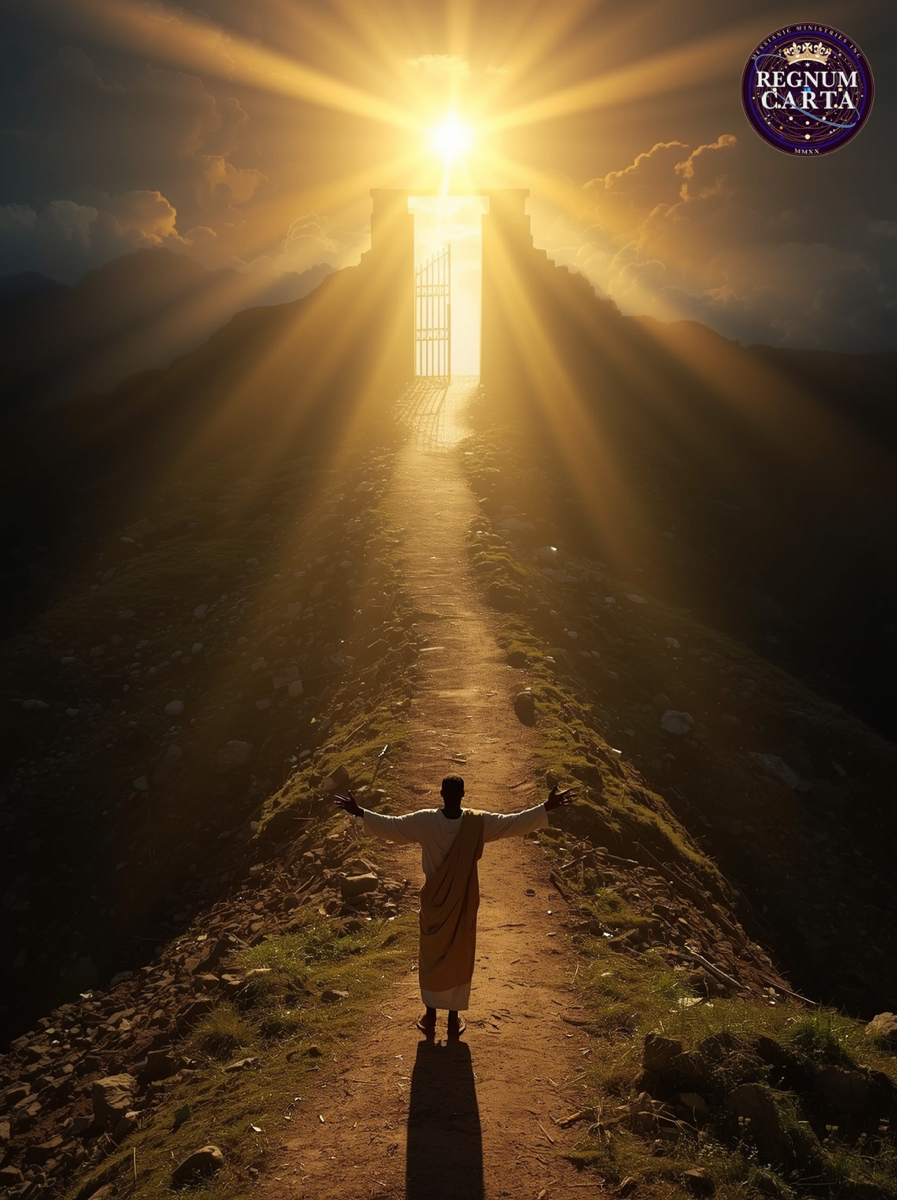
The statements of Christ in Matthew 7:13–14 provide one of the most explicit exhortations to covenant fidelity in the Gospels. At the conclusion of the Sermon on the Mount, Jesus presents each listener with an inescapable choice. There exist merely two gates, two paths, two fates, and finally two reactions to the Messiah. This excerpt transcends mere moral education. It is a Messianic invitation based on the promises of God realized in Jesus Christ. The narrow gate is not merely a challenging way of living. The Messiah Himself is the exclusive conduit through which sinners attain the covenant privileges of eternal life.
Throughout redemptive history, God pledged to furnish a Deliverer who would rectify the curse of sin. Scripture consistently indicates Christ as the sole Mediator between God and humanity, from the promise of the woman's Seed in Genesis 3:15, through the Abrahamic Covenant, the Davidic Covenant, and the prophetic proclamations of Isaiah and Jeremiah. Jesus asserts that access to God's kingdom is attained just through the narrow gate, as He uniquely fulfills every covenant promise.
Christ unequivocally articulates this reality when He asserts, "I am the way, the truth, and the life: no man cometh unto the Father, but by me" (Gospel of John 14:6). The small doorway signifies salvation via relationship with the crucified and resurrected Messiah, rather than through human endeavor. The challenge lies not in the inadequacy of grace, but in the resistance of sinful humanity to relinquish pride, self-righteousness, and worldly attachments in order to fully accept Christ.
Covenant theology enhances our comprehension of this passage. Within the Covenant of Grace, God's people are redeemed only by His benevolent provision in Christ. The small gate signifies entry into the covenant through faith rather than through deeds. Similar to how Noah accessed the ark by a designated entrance, and Israel obtained covenant inheritance by relying on God's promises, contemporary believers attain eternal life solely through Jesus Christ. The uniqueness of the gate signifies the exclusivity of God's covenant Mediator.
The broad path represents humanity's inherent defiance of divine authority. It is appealing due to its support for self-determination, religious pluralism, and moral autonomy. Scripture continually cautions that "There is a way that appears right to a man, but its end is the way of death" (Book of Proverbs 14:12). The wide path provides fleeting solace while obscuring everlasting ruin. In contrast, the narrow path frequently entails repentance, self-denial, persecution, and steadfast obedience, ultimately resulting in eternal communion with God.
The Messianic promise illuminates this admonition distinctly. The One who commands entry via the narrow gate is the embodiment of God's promise to assemble a redeemed populace from all nations. Isaiah prophesied the Servant who would serve as "a light to the Gentiles" and God's salvation "unto the end of the earth" (Book of Isaiah 49:6). Jesus accomplishes this goal by granting access to the Father through His redemptive sacrifice. His demise fulfills divine justice, His resurrection guarantees eternal life, and His continuous priestly ministry safeguards every believer who approaches through Him.
The believer's assurance is founded not alone on human endurance but on the fidelity of the covenant-keeping God. Individuals who enter via Christ are assured of their security, as the Good Shepherd neither forsakes nor loses His sheep. The narrow path may provide challenges, yet each step is upheld by divine grace and guided by the Holy Spirit.
Numerous biblical testimonies corroborate this magnificent reality. Genesis 6 indicates that there was an only divinely designated door to Noah's ark, exemplifying God's unique provision for salvation. Secondly, John 10:9 has Jesus proclaiming, "I am the door: by me if any man enter in, he shall be saved," designating Himself as the sole access to God's fold. Acts 4:12 asserts that there is no other name under heaven given to humanity by which we must be saved, emphasizing the sole sufficiency of Christ for salvation.
Contemporary readings sometimes construe the narrow path as merely ethical conduct or personal discipline, thereby diminishing the Christological focus of the text. Others see the broad and narrow paths as just emblematic of psychological well-being or social duty. Such interpretations neglect to consider the immediate context of the Sermon on the Mount and the overarching testimony of Scripture. Jesus does not offer a singular religious choice among numerous alternatives. He is proclaiming the unique requirements of the kingdom founded via His Messianic mission. Orthodox Christian theology accurately interprets these verses as an invitation to covenant faith manifested via repentance, faith, and exclusive obedience to Christ.
Every believer must consistently assess which route directs the heart. The narrow path urges us to renounce cultural conformity and adopt unwavering loyalty to Christ. It encourages daily contrition, steadfast faith in God's assurances, diligent contemplation of His Word, and joyful compliance facilitated by the Holy Spirit. Despite the challenges of the journey, it is characterized by divine fellowship, covenant fidelity, and the assured expectation of eternal glory.
When the world presents wider paths characterized by compromise and self-aggrandizement, recall that the narrow gate leads to boundless life, since Christ Himself resides there as both Shepherd and Savior. His grace is adequate for every traveler who adheres to Him in trust.
Final Exhortation: Do not procrastinate at the juncture of choice. The Messiah continues to beckon, "Enter through the narrow entrance. Disavow the illusory simplicity of the wide path and accept the covenantal grace manifested in Jesus Christ. Traverse the narrow route with assurance, recognizing that the One who has kept every divine promise will steadfastly guide His chosen into the eternal kingdom. Focus on Christ, rely on His completed work, and persist in steadfast obedience until faith transforms into sight and the covenant's promises are completely shown in His magnificent presence.
#Allnations #ame #apostolic #baptist #bible #bibleverse #catholic #christianity #christiantok # cme ##cog #cogbf #cogic #fgbcf #fght #foryou ##islam #jesus #messianicministriesinc #paw #prophetic #seventhdayadventist #tiktok #holyspirit #engagement #rastafari