The Shadow and the Substance: Christ the Fulfillment of God’s Redemptive Purpose
Hebrews 10:1; Colossians 2:16-17
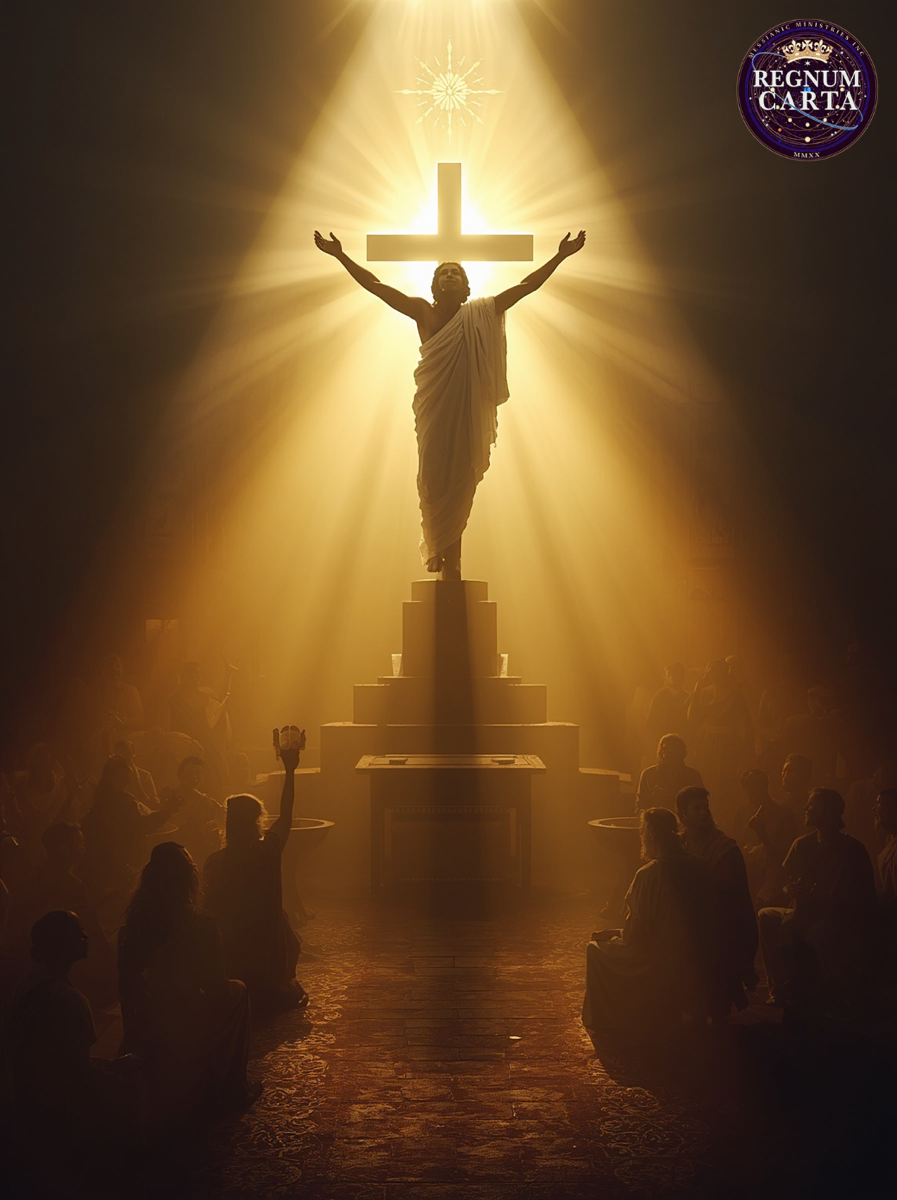
"For the law having a shadow of good things to come, and not the very image of the things..." (Hebrews 10:1)
"Let no man therefore judge you in meat, or in drink, or in respect of an holyday, or of the new moon, or of the sabbath days: Which are a shadow of things to come; but the body is of Christ." (Colossians 2:16-17)
A significant motif in Scripture is the gradual revelation of God's redeeming purpose through shadows, types, and promises that ultimately culminate in Jesus Christ. Hebrews 10:1 and Colossians 2:16-17 serve as compelling testimonies to the coherence of divine revelation. Both verses convey that the institutions, rites, and laws of the Old Covenant were never self-sufficient ends. Instead, they anticipated the arrival of the Messiah, who embodies and realizes every covenant promise.
The author of Hebrews asserts that the Law included "a shadow of good things to come. A shadow possesses shape and meaning, yet it is devoid of materiality. It signifies the existence of a superior reality. The sacrificial system, priesthood, tabernacle worship, festivals, and ceremonial restrictions all prophetically attested to the person and activity of Christ. These institutions were divinely established, yet they were transient and provisional.
Paul instructs the Colossian believers that holy days, dietary laws, new moon festivities, and Sabbath observances were mere foreshadows of forthcoming realities. The entity, therefore, pertains to Christ. The Greek notion of "body" underscores the tangible reality that produces the shadow. Christ is not simply an additional component of God's redemptive plan. He embodies the ultimate realization to which all prior revelations directed.
In the context of covenant theology, these texts demonstrate the continuity and advancement of God's redeeming intentions. The Old Covenant was not designed to offer ultimate redemption through ritualistic practices. Instead, it operated as a covenantal administration, preparing God's people for the imminent Redeemer.
The Abrahamic Covenant pledged blessings to all nations via the lineage of Abraham (Genesis 12:3). The Mosaic Covenant revealed humanity's wicked nature and illustrated the need for atonement. The Davidic Covenant pledged an everlasting King whose dominion would be perpetual (2 Samuel 7:12-16). Each covenant gradually revealed elements of the Messianic expectation that culminated in Jesus Christ.
The New Covenant, established by Christ's blood (Luke 22:20), fulfills what the shadows merely foreshadowed. The offerings were insufficient to eradicate sin forever. The clergy was incapable of offering eternal mediation. The temple was unable to guarantee continuous access to God. Christ fulfills all covenant expectations as the consummate sacrifice, eternal High Priest, and authentic Temple of God's presence.
Consequently, the transition from shadow to substance represents not a repudiation of the Old Testament but its magnificent realization. The promises are reliable as they are affirmed in Christ (2 Corinthians 1:20).
The primary theological focus of these verses is distinctly Christological. Jesus serves as the interpretative key to the entire biblical narrative.
The Passover lamb prefigured Christ's sacrificial death (John 1:29; 1 Corinthians 5:7). The Day of Atonement foreshadowed His singular sacrifice for sin (Hebrews 9:11-14). The manna in the wilderness foreshadowed the Bread of Life (John 6:32-35). The tabernacle prefigured God's presence among humanity via the incarnation (John 1:14).
Every darkness achieves its fulfillment in Him.
This Christocentric interpretation of Scripture was validated by Christ Himself when He stated that Moses wrote about Him (John 5:46). After His resurrection, He elucidated to His followers the matters pertaining to Himself in all the Scriptures (Luke 24:27).
Thus, biblical theology attains its utmost expression when Christ is acknowledged as the focal point of divine revelation and redemptive history.
Multiple verses substantiate this Messianic interpretation.
Luke 24:44 documents Christ's assertion that all that is inscribed in the Law, Prophets, and Psalms regarding Him must be accomplished.
Secondly, John 5:39 instructs that the Scriptures bear witness to Christ, identifying Him as their primary center.
Hebrews 9:24 elucidates that terrestrial sanctuaries were archetypes of celestial truths realized via Christ's sacerdotal service.
Fourth, Galatians 3:24 characterizes the Law as a pedagogical figure guiding Christians to Christ.
Collectively, these witnesses demonstrate that the institutions of the Old Testament served as prophetic indicators guiding God's people toward the anticipated Messiah.
The practical importance of these facts is substantial for contemporary believers.
Our assurance is founded not on religious deeds but on the completed work of Christ. Shadows cannot provide salvation, but the Savior can. Believers are deemed justified due to His impeccable obedience and redemptive sacrifice.
Secondly, these passages promote more profound biblical engagement. Each segment of Scripture contributes to God's cohesive testimony of Christ. The believer need to engage with both Testaments with anticipation, aiming to witness the splendor of the Redeemer.
Third, Christians are urged to oppose legalistic frameworks that prioritize external practices above the adequacy of Christ. The essence must never be substituted by the semblance. Spiritual growth is attained not via ritualistic strictness but through communion with Christ.
Ultimately, these truths foster reverence. The deity who arranged centuries of redemptive history fulfilled every promise exactly in His Son. This loyalty warrants respect, appreciation, and veneration.
Certain contemporary critical perspectives regard the Old Testament chiefly as a distinct theological evolution, separate from Christological realization. Although historical context is crucial for interpretation, such viewpoints frequently neglect the canonical coherence of Scripture and the clear testimony of the New Testament authors.
Orthodox biblical theology asserts that the historical events of the Old Testament hold both immediate relevance and prospective Messianic implications. Hebrews and Colossians assert that the divine purpose of these institutions transcended their initial historical context, culminating in their ultimate fulfillment in Christ.
Consequently, the apostolic interpretation maintains both historical accuracy and theological completeness.
Concluding Encouragement:
Adherent, do not grasp the illusion when the essence has arrived. Do not search in religious practices for what God has completely offered in His Son. The sacrifices, feasts, priesthood, and ceremonies all foreshadowed Jesus Christ, the prophesied Messiah and Mediator of the New Covenant.
Direct your gaze towards Him. Place absolute trust in His completed work. Exult in the fidelity of God, who has realized every promise through His cherished Son. The shadow has fulfilled its function. The illumination has arrived. The substance presents itself in the majesty of Jesus Christ, who remains unchanged yesterday, today, and eternally.
#Allnations #ame #apostolic #baptist #bible #bibleverse #catholic #christianity #christiantok # cme ##cog #cogbf #cogic #fgbcf #fght #foryou ##islam #jesus #messianicministriesinc #paw #prophetic #seventhdayadventist #tiktok #holyspirit #engagement #rastafari