
His Banner Over Me Was Love
Song of Solomon 2:4

“He brought me to the banqueting house, and his banner over me was love.” Song of Solomon 2:4
Song of Solomon 2:4 presents a profound portrait of love, belonging, and relational delight. The Shulammite woman declares that her beloved has brought her into a place of fellowship and established his banner over her in love. Although the immediate literary context celebrates the mutual affection between a bridegroom and his bride, the canonical witness of Scripture permits a responsible theological reflection on the covenantal love of God, ultimately illuminated through the person and work of Jesus Christ.
The verse declares more than emotional affection. It portrays welcome, identification, and the security of belonging. The beloved does not merely speak of love; he creates a setting in which love is experienced. His banner communicates the identity of the one who receives its protection and proclaims the character of the relationship established.
For the Christian believer, this imagery directs our attention toward the redemptive love of Christ, who gathers His people into covenant fellowship and establishes their identity through His saving grace.
The Song of Solomon, also called the Song of Songs, belongs to the Hebrew wisdom tradition and celebrates the beauty, exclusivity, and mutual delight of marital love. Its poetic language employs gardens, vineyards, fragrance, feasting, and royal imagery to communicate affection and relational intimacy.
Song of Solomon 2:4 must first be interpreted within this literary setting. The banqueting house evokes a place of celebration and hospitality, while the banner suggests a visible emblem of identity and allegiance. The expression “his banner over me was love” portrays love as the defining characteristic of the beloved's relationship with the woman.
The passage is not an explicit messianic prediction in the same sense as Isaiah 53:5 or Micah 5:2. Rather, its canonical and theological significance supports a typological reading when interpreted in harmony with the Bible's broader portrayal of covenant love and the relationship between Christ and His Church.
This distinction preserves the integrity of the original text while allowing its imagery to enrich Christian devotion.
The New Testament identifies Jesus Christ as the Bridegroom who loves and sanctifies His people. Ephesians 5:25 declares, “Christ also loved the church, and gave himself for it.” The cross is the supreme manifestation of this covenantal love. Christ's love is neither superficial nor conditional upon human perfection. It is demonstrated through His voluntary self-giving for the redemption of sinners.
In Song of Solomon 2:4, the beloved brings the woman into a place of celebration. In the light of the gospel, this imagery resonates with the invitation of Christ, who welcomes His redeemed people into fellowship with Himself. Revelation 19:7 anticipates the marriage supper of the Lamb, where the covenant relationship between Christ and His redeemed people reaches its eschatological celebration.
The connection is theological and typological rather than a claim that the Song explicitly predicts every detail of the gospel. Nevertheless, the canonical witness establishes a compelling continuity: biblical love moves beyond sentiment into covenant faithfulness, sacrificial commitment, and enduring communion.
Christ's banner over His people is therefore understood devotionally as the declaration of His redeeming love. At Calvary, the Son of God bore the judgment of sin so that those who believe might receive forgiveness, reconciliation, and eternal life.
Biblical covenant theology emphasizes God's gracious initiative in establishing and maintaining a relationship with His people. The covenant is not grounded in human achievement but in the faithfulness of God and, in the new covenant, the mediatorial work of Jesus Christ.
Jeremiah 31:33 anticipates the new covenant in which God declares, “I will be their God, and they shall be my people.” Hebrews 8:6 presents Christ as the mediator of a better covenant established upon better promises. These passages illuminate the theological significance of belonging to God through His redemptive work.
His banner of love does not authorize spiritual presumption or moral indifference. Rather, divine love establishes a new identity that calls for faithful obedience. Those who are received by grace are summoned to walk in holiness, truth, and love.
The believer's security rests not in fluctuating emotions but in God's faithfulness, demonstrated supremely through Christ's finished work. His love comforts the repentant, corrects the wandering, and strengthens the faithful.
Three biblical witnesses reinforce this devotional theme.
1. Romans 8:38-39: Nothing in creation can separate believers from the love of God in Christ Jesus our Lord. This assurance rests in God's saving purpose rather than human circumstances.
2. John 15:9: Jesus commands His disciples to abide in His love. Covenant love is both a gift to receive and a relationship in which believers are called to remain through obedient faith.
3. 1 John 4:10: “Herein is love, not that we loved God, but that he loved us, and sent his Son to be the propitiation for our sins.” The foundation of Christian devotion is God's initiating love, revealed through the atoning sacrifice of Christ.
Together, these witnesses demonstrate that divine love is redemptive, relational, and transformative.
To live beneath the banner of Christ's love is to allow His covenant faithfulness to shape our identity, conduct, and hope.
First, reject the false belief that personal worth depends upon human approval. The believer's deepest identity is grounded in God's grace and the reconciliation accomplished through Christ.
Second, cultivate communion with the Lord through Scripture, prayer, worship, and obedience. John 15:4 teaches that spiritual fruitfulness depends upon abiding in Christ.
Third, extend covenant-shaped love to others. Those who receive mercy must become instruments of mercy, reflecting Christ's patience, truthfulness, forgiveness, and compassion.
Finally, remain steadfast during suffering. God's love does not promise a life without affliction, but it assures believers that suffering cannot overturn His saving purpose. The cross and resurrection establish the foundation of Christian hope.
A responsible interpretation must distinguish the Song's original literary meaning from later theological application. The primary referent of Song of Solomon 2:4 is the beloved's loving reception of the woman within the poem. Identifying the beloved directly and exclusively with Jesus would exceed what the verse explicitly states.
Nevertheless, Christian canonical interpretation may legitimately employ marital imagery in light of Ephesians 5:25-32 and Revelation 19:7-9. These New Testament passages establish the Bridegroom motif within Christian theology. Thus, the verse serves as a devotional analogy of Christ's covenant love, not an isolated proof text establishing a direct messianic prediction.
This approach honors the historical context, preserves orthodox Christology, and permits theological reflection without confusing poetic imagery with explicit prophecy.
VII. Final Word of Exhortation
Beloved, remember that the banner of Christ's love is established through the faithfulness of the crucified and risen Lord. The world may measure you by achievement, status, or usefulness, but the gospel calls you to find your ultimate identity in the grace of God.
When accusation arises, remember the sufficiency of Christ's atonement. When suffering presses upon your spirit, remember the faithfulness of His promises. When success tempts you toward pride, remember that every spiritual blessing comes through grace. When you encounter those who are wounded, extend the love you have received.
His banner is not a declaration that believers will never experience hardship. It is a testimony that Christ has redeemed His people and calls them into enduring fellowship with Himself.
Therefore, abide in His love, walk in His truth, and bear witness to His grace. Let your life proclaim that the love of Christ is stronger than fear, deeper than human failure, and sufficient to sustain the believer through every season.
Prayer: Lord Jesus Christ, thank You for Your covenant faithfulness and the redeeming love revealed at Calvary. Establish my heart in Your truth, teach me to abide in Your presence, and empower me to love others as You have loved me. May my life bear witness to Your grace until the day I see You face to face.
#Allnations #ame #apostolic #baptist #bible #bibleverse #catholic #christianity #christiantok # cme ##cog #cogbf #cogic #fgbcf #fght #foryou ##islam #jesus #messianicministriesinc #paw #prophetic #seventhdayadventist #tiktok #holyspirit #engagement #rastafari #ethiopian #orthodox #eritrean
Let Us Lift Up Our Hearts and Hands
Lamentations 3:41
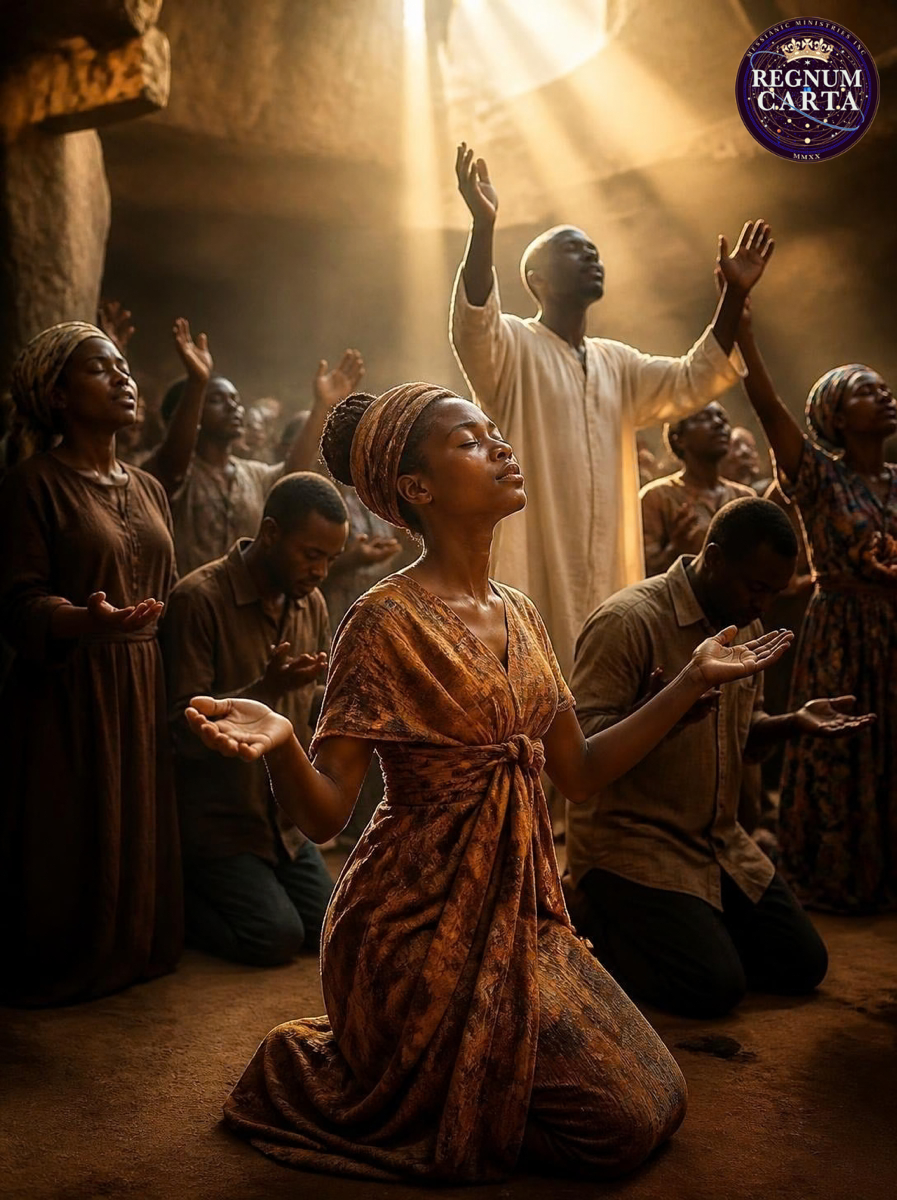
Lamentations 3:41 declares, “Let us lift up our heart with our hands unto God in the heavens.” Within this brief exhortation lies a profound theology of repentance, covenant fidelity, and spiritual restoration. The prophet’s words summon the covenant community to an integrated act of worship in which inward devotion and outward expression converge before the sovereign God of Israel.
The verse emerges from a book traditionally associated with Jeremiah, lamenting Jerusalem’s devastation following the Babylonian destruction of the city and its temple in 586 BC. The catastrophe represented not merely political defeat but a covenantal crisis. The people confronted the consequences of persistent disobedience, the collapse of national security, and the apparent disintegration of their sacred world. Nevertheless, lament does not extinguish hope. It becomes the theological arena in which divine justice, human repentance, and covenant mercy are brought into conversation.
The messianic promise discernible in this passage is that sinners may approach the holy God through sincere repentance and ultimately receive reconciliation through Jesus Christ, the Mediator of the new covenant.
The Hebrew expression translated “lift up” conveys the idea of raising or directing something upward. The heart, represented by the Hebrew lēb, signifies the inner person, including thought, intention, desire, and moral disposition. The hands represent the outward expression of worship, dependence, and supplication.
The verse therefore demands more than ceremonial participation. God requires inward sincerity accompanied by outward obedience. Hands raised without a surrendered heart constitute religious performance; a professed inward devotion that produces no corresponding obedience remains spiritually incomplete.
The plural exhortation, “Let us,” is equally significant. The call addresses the community rather than merely an isolated individual. Israel’s restoration requires corporate acknowledgment of sin and renewed dependence upon God. The concluding designation, “God in the heavens,” establishes the transcendent authority of the One addressed. Though Jerusalem lies devastated, the covenant Lord remains enthroned above its ruins.
Theologically, this verse does not teach that human repentance purchases divine favor. Rather, repentance is the appropriate response of those who recognize God’s holiness, acknowledge their need, and turn toward His mercy.
Lamentations must be interpreted within the covenantal framework of the Hebrew Scriptures. Deuteronomy 28 establishes the relationship between Israel’s covenant obligations and the consequences of disobedience. Jerusalem’s destruction illustrates the seriousness of covenant violation, while the book’s prayers demonstrate that judgment does not invalidate God’s enduring character.
Lamentations 3:22-23 proclaims that the Lord’s mercies are not consumed and His compassions do not fail. Verse 41 follows this declaration within a larger movement toward self-examination, repentance, and renewed hope. The covenant community is summoned to turn toward God rather than surrender to despair.
Yet biblical theology must distinguish Israel’s historical covenant from the new covenant inaugurated through Christ. Jeremiah 31:31-34 promises a new covenant characterized by God’s law written upon the heart and the forgiveness of iniquity. Jesus identifies His sacrificial death with this covenant promise in Luke 22:20.
Consequently, Lamentations 3:41 anticipates a theological reality fulfilled in the redemptive work of Christ: reconciliation requires a genuine turning toward God, while forgiveness ultimately rests upon divine grace rather than human merit.
Lamentations 3:41 does not explicitly identify the Messiah. Its Christological significance emerges through canonical interpretation, which reads the suffering, repentance, and hope of the Old Testament within the larger revelation of God’s redemptive purposes.
Jesus Christ is the righteous Mediator through whom fallen humanity approaches the Father. Hebrews 10:19-22 declares that believers possess confidence to enter God’s presence through the blood of Jesus, drawing near with a true heart in full assurance of faith. The correspondence is striking: Lamentations calls the people to lift their hearts toward God, while Hebrews reveals the redemptive access secured through Christ’s sacrifice.
First Timothy 2:5 identifies Jesus as the one Mediator between God and humanity. Romans 5:1 further declares that justification by faith brings peace with God through our Lord Jesus Christ.
Christ does not eliminate the necessity of repentance; He establishes the redemptive foundation upon which forgiveness and reconciliation are received. At Calvary, divine justice and divine mercy converge. Through His resurrection, Christ confirms the triumph of God’s saving purpose over sin and death.
The believer therefore lifts the heart in repentance and the hands in worship, not to earn acceptance, but in grateful response to the grace made available through the crucified and risen Messiah.
This passage challenges contemporary believers to examine the integrity of their spiritual lives. Are our public expressions of worship consistent with our private conduct? Do our prayers reflect genuine surrender, or merely a desire for divine intervention without moral transformation?
James 4:8 commands believers to draw near to God and cleanse their hands and purify their hearts. The association between hands and hearts reinforces the biblical principle that devotion encompasses both inward purity and outward conduct.
Practically, this means confessing sin honestly, pursuing reconciliation where appropriate, resisting hypocrisy, and demonstrating faith through obedience. In seasons of loss, disappointment, or uncertainty, believers must remember that earthly devastation does not dethrone the heavenly King.
Prayer is not an attempt to manipulate divine power. It is the covenantal response of dependent people who acknowledge God’s sovereignty and trust His revealed character.
A responsible interpretation must avoid treating Lamentations 3:41 as an unconditional promise of immediate prosperity, national restoration, or the fulfillment of every personal desire. Its original setting is communal lament following judgment, and its immediate emphasis is repentance before God.
Nor should its messianic significance be confused with an explicit prediction of Jesus. The Christological reading is canonical and theological: the verse’s call to approach God sincerely finds its fuller redemptive context in Christ’s mediation and the new covenant. This interpretation preserves the historical meaning of the passage while recognizing its place within the unity of Scripture.
Final Word of Exhortation: Lift Both Heart and Hands
Three biblical witnesses strengthen this devotional message. Deuteronomy 4:29 promises that those who seek the Lord with all their heart and soul will find Him. Psalm 24:3-4 connects access to God’s holy presence with clean hands and a pure heart. Hebrews 10:22 calls believers to draw near with a true heart and full assurance of faith.
Together, these witnesses establish a consistent biblical testimony: God desires sincere devotion, moral integrity, and confident approach through His appointed means of grace.
Therefore, lift your heart in repentance, your hands in worship, and your life in obedience. Do not allow sorrow to become spiritual paralysis, nor let religious activity substitute for genuine fellowship with God. The heavenly throne remains occupied, His character remains faithful, and His saving purpose is revealed supremely in Jesus Christ.
The final exhortation is this: Come before God with an undivided heart, trust the finished work of Christ, and let the sincerity of your worship become visible in the holiness of your life.
#Allnations #ame #apostolic #baptist #bible #bibleverse #catholic #christianity #christiantok # cme ##cog #cogbf #cogic #fgbcf #fght #foryou ##islam #jesus #messianicministriesinc #paw #prophetic #seventhdayadventist #tiktok #holyspirit #engagement #rastafari #ethiopian #orthodox #eritrean
The Lord God Will Help Me
Isaiah 50:7
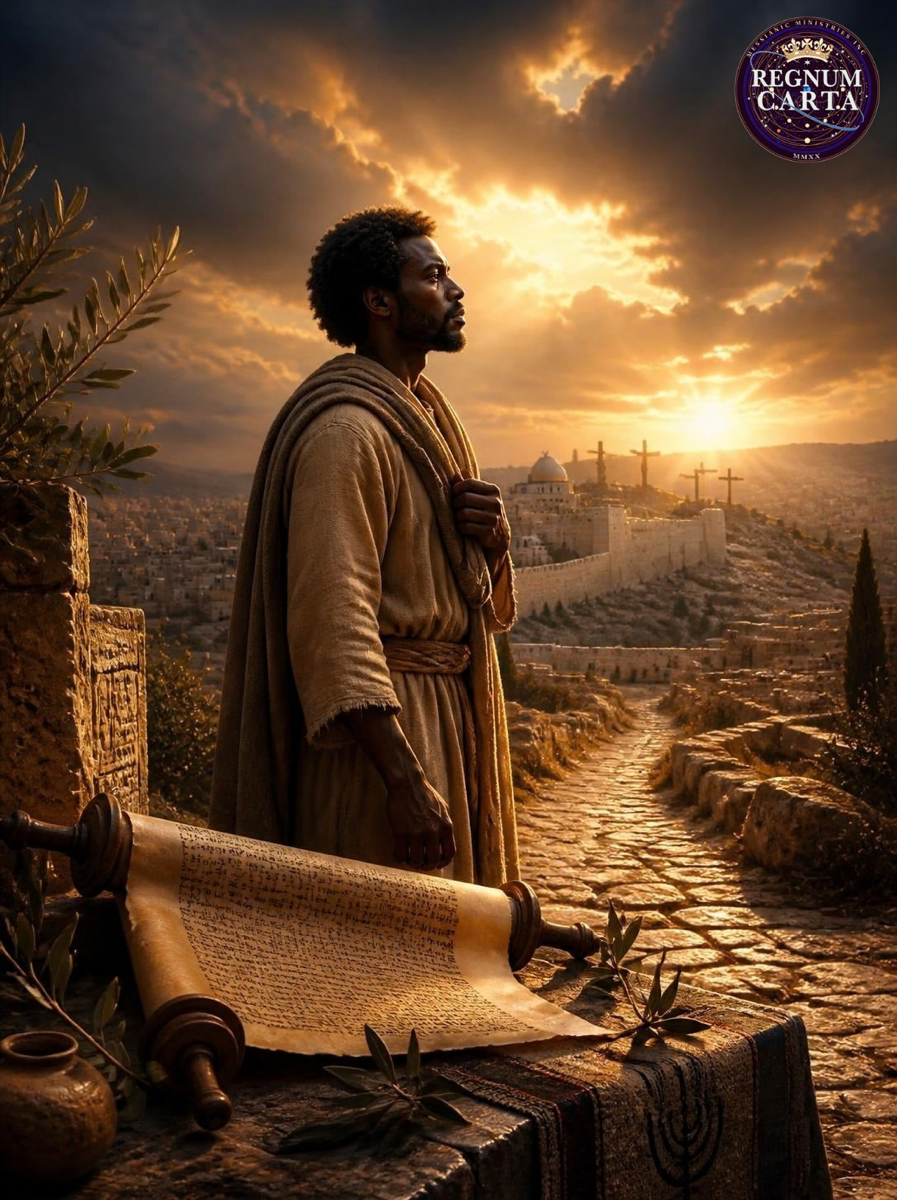
The Lord God Will Help Me
The Right Excellent Ricardo McGee
“For the Lord GOD will help me; therefore shall I not be confounded: therefore have I set my face like a flint, and I know that I shall not be ashamed.” Isaiah 50:7
Isaiah 50:7 stands within the third Servant Song of Isaiah 42 to 53, a prophetic corpus that progressively unveils the identity, obedience, suffering, and vindication of the Servant of the LORD. The speaker declares an unwavering confidence in divine assistance amid rejection and suffering. The theological force of the text is not that the Servant will avoid affliction, but that affliction cannot ultimately defeat the purpose of God.
The phrase, “the Lord GOD will help me,” establishes the foundation of the Servant's confidence. His courage is neither psychological self-reliance nor human optimism. It arises from covenantal dependence upon God. The Hebrew terminology presents the LORD as the One who sustains, strengthens, and vindicates His appointed Servant. The Servant's perseverance is therefore grounded in divine faithfulness.
This promise reaches its fullest Christological expression in Jesus Christ. The New Testament identifies Jesus as the obedient Servant who perfectly fulfills Isaiah's prophetic pattern. His suffering, rejection, obedience, death, resurrection, and exaltation reveal the trajectory anticipated in Isaiah. Christ does not merely resemble the Servant. He embodies the Servant's mission in its climactic and redemptive form.
The words “I have set my face like a flint” communicate deliberate resolve. Flint is hard, resistant, and unyielding. The Servant therefore presents an image of holy determination. He knows the cost of obedience, yet refuses to retreat from the Father's redemptive purpose.
Luke explicitly echoes this Isaianic imagery:
“And it came to pass, when the time was come that he should be received up, he stedfastly set his face to go to Jerusalem.” Luke 9:51
Jesus' journey toward Jerusalem was not accidental. It was covenantally ordained and voluntarily embraced. Jerusalem would bring betrayal, false accusation, crucifixion, and death, yet Christ steadfastly proceeded because His obedience to the Father was inseparable from His saving mission.
Hebrews gives the theological interpretation of this determination:
“Who for the joy that was set before him endured the cross, despising the shame.” Hebrews 12:2
Isaiah 50:7 therefore anticipates the Messiah who possesses invincible confidence in God's ultimate vindication. The cross was not the defeat of the Son. It was the appointed pathway through which the covenant promises would reach their redemptive fulfillment.
Isaiah's Servant theology must be read within the covenantal architecture of Scripture. God promised Abraham that through his seed the nations would be blessed (Genesis 12:1-3; 22:18). Israel was constituted as God's covenant people, yet Israel's vocation ultimately pointed beyond itself toward the Servant who would accomplish what Israel repeatedly failed to accomplish.
Isaiah 49:6 declares that the Servant would be “a light to the Gentiles”, extending God's salvation to the ends of the earth. The New Testament identifies this mission with Christ (Luke 2:32; Acts 13:47).
The covenant therefore moves toward its fulfillment in the Messiah. Christ is the obedient covenant representative, the mediator of the new covenant, and the One through whom God's redemptive purposes extend to Jew and Gentile alike. His perseverance guarantees the certainty of God's covenant promises because salvation ultimately rests upon divine faithfulness rather than human achievement.
Three witnesses particularly reinforce Isaiah 50:7.
First, Psalm 118:6:
“The LORD is on my side; I will not fear.”
The righteous sufferer trusts God's presence despite opposition. Isaiah develops this confidence through the Servant's suffering.
Second, Philippians 2:8-9: Christ “humbled himself, and became obedient unto death, even the death of the cross.” His humiliation is followed by exaltation. This corresponds profoundly with Isaiah's pattern of suffering followed by vindication.
Third, 1 Peter 2:23: When Christ was reviled, “he committed himself to him that judgeth righteously.” Peter reveals the inner posture of the suffering Messiah. Jesus entrusted Himself to the Father rather than retaliating against His persecutors.
These witnesses demonstrate a consistent biblical theology: faithful obedience may pass through suffering, but God's purposes culminate in vindication.
Isaiah 50:7 should not be reduced merely to a motivational statement about personal resilience. Such a reading detaches the verse from its immediate Servant context and diminishes its messianic significance. Neither should the verse be interpreted as promising that every believer will experience immediate earthly vindication.
The primary referent is the Servant of the LORD. The believer's application is therefore derivative. We persevere because we belong to the One who first persevered perfectly. Christ's experience becomes the theological paradigm for Christian discipleship, not merely an inspirational illustration.
Likewise, “I shall not be ashamed” should be understood within the biblical category of divine vindication. The Servant may experience public humiliation, but God's verdict ultimately overturns the world's verdict. The resurrection is the supreme historical demonstration of this principle.
There are seasons when obedience makes us feel exposed, misunderstood, or opposed. Isaiah 50:7 calls the believer to distinguish between present circumstances and God's final verdict.
Your confidence cannot ultimately rest upon public approval. It must rest upon the Lord GOD who helps His servants.
To “set your face like a flint” does not mean becoming harsh, stubborn, or insensitive. Biblical steadfastness is not fleshly obstinacy. It is consecrated resolve to remain faithful to God when obedience becomes costly.
Christ teaches us how to endure. He did not abandon the Father's will when the road led toward suffering. He trusted the Father through the cross and entered resurrection glory.
Therefore, when obedience becomes difficult, remember that divine help does not always remove the trial. Sometimes divine help enables you to endure it faithfully until God's purpose is accomplished.
Final Exhortation
Beloved, set your face toward the assignment God has given you. Do not allow rejection to redefine your calling, opposition to destroy your confidence, or temporary suffering to persuade you that God has abandoned His covenant purposes.
The Servant's confidence was anchored in this declaration: “The Lord GOD will help me.”
That same God has revealed Himself supremely in Jesus Christ, the crucified and risen Messiah. His resurrection declares that shame does not have the final word, suffering does not have the final word, opposition does not have the final word, and death does not have the final word.
God has the final word.
Therefore, stand in covenant faithfulness. Walk in Christological obedience. Trust divine providence. Set your face toward the will of God with holy resolve.
And when the path becomes difficult, remember the promise of Isaiah 50:7:
“The Lord GOD will help me.”
Because He helps His Servant, the mission will prevail. Because Christ has overcome, His people may persevere. Because God is faithful, those who trust Him shall not ultimately be ashamed.
#Allnations #ame #apostolic #baptist #bible #bibleverse #catholic #christianity #christiantok # cme ##cog #cogbf #cogic #fgbcf #fght #foryou ##islam #jesus #messianicministriesinc #paw #prophetic #seventhdayadventist #tiktok #holyspirit #engagement #rastafari #ethiopian #orthodox #eritrean
The Intercession That Precedes Restoration
Job 42:9
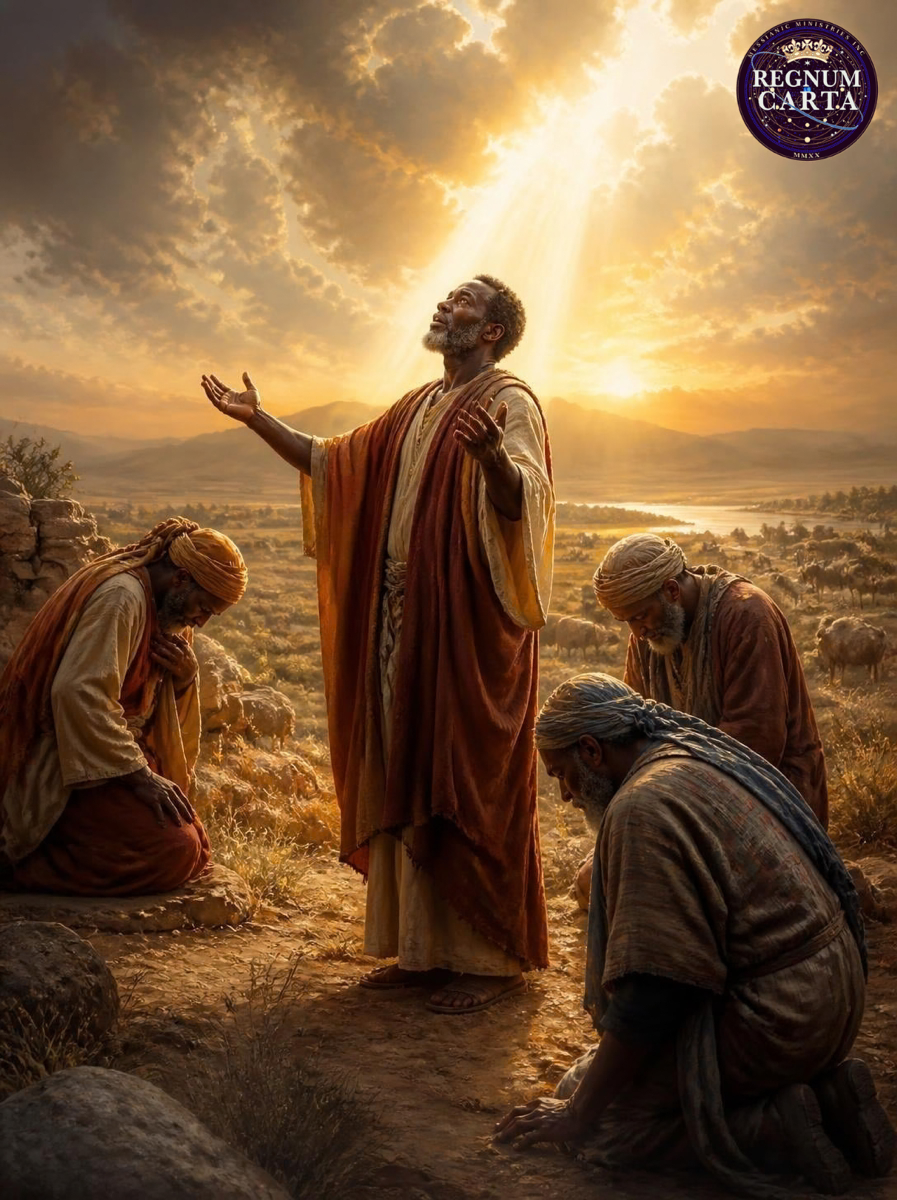
The Intercession That Precedes Restoration
So Eliphaz the Temanite and Bildad the Shuhite and Zophar the Naamathite went, and did according as the LORD commanded them: the LORD also accepted Job.” Job 42:9 KJV
Job 42:9 stands near the theological summit of the book of Job. After prolonged affliction, disputation, divine self-disclosure, and Job's repentance, the LORD commands Eliphaz, Bildad, and Zophar to approach Job and offer sacrifice. The remarkable feature of the text is not merely that the friends are corrected, but that God establishes Job as the intercessory instrument through whom reconciliation becomes visible.
The immediate context is essential. In Job 42:7, the LORD declares that Job has spoken rightly concerning Him, while the friends have not. Their theology had become distorted by an excessively simplistic doctrine of retribution. They assumed that extraordinary suffering necessarily demonstrated extraordinary sin. Job's suffering exposed the inadequacy of that theological paradigm.
Yet divine correction does not terminate in condemnation. God provides a covenantal pathway toward restoration. The friends must bring offerings, and Job must pray for them. The LORD then declares, “the LORD also accepted Job.” The Hebrew concept underlying acceptance conveys divine regard and favorable reception. The movement is therefore from accusation to intercession, from judgment to reconciliation, and from broken fellowship toward restoration.
Here the Christian reader encounters a profound typological trajectory toward Christ.
Job becomes an intercessor for those who had wrongly accused him. He does not merely receive vindication. He participates in the restoration of his adversaries through prayer. This anticipates the greater ministry of Jesus Christ, the righteous sufferer who intercedes for sinners.
Isaiah prophesied concerning the suffering Servant:
“He bare the sin of many, and made intercession for the transgressors.” Isaiah 53:12 KJV
The analogy must not be pressed beyond the text. Job is not a substitute for Christ, nor does Job's suffering accomplish atonement. Nevertheless, the narrative presents a theological pattern that finds its consummation in Christ: the righteous sufferer becomes an instrument of mercy toward those who have opposed him.
Hebrews declares of Christ:
“He ever liveth to make intercession for them.” Hebrews 7:25 KJV
Job prays for his friends. Christ continually intercedes for His people. Job's intercession participates in temporal restoration. Christ's priestly intercession belongs to the eternal economy of redemption.
Job 42:9 also illuminates covenantal realities. Scripture consistently reveals that God's purposes involve mediation, representation, sacrifice, intercession, and reconciliation.
The friends require sacrifice because reconciliation with God cannot be reduced to intellectual acknowledgment. Sin has theological and relational consequences. Yet God Himself provides the means by which reconciliation proceeds.
This anticipates the covenantal structure fulfilled in Christ. The old covenant sacrificial system points beyond itself toward the once-for-all sacrifice of Christ, whose blood establishes the new covenant.
“This cup is the new testament in my blood, which is shed for you.” Luke 22:20 KJV
Theologically, Job 42 points toward a God who not only exposes error but provides a divinely ordained means of restoration.
Three additional witnesses reinforce this theological pattern.
Genesis 20:7 presents Abraham as a prophet who will pray for Abimelech. Intercession becomes an instrument of divine mercy.
Exodus 32:30-32 portrays Moses standing between a sinful Israel and divine judgment, demonstrating covenantal mediation.
John 17:20-21 records Christ interceding for those who would believe through the apostolic witness. The Messiah's ministry includes not only atoning sacrifice but continuing priestly intercession.
Together, these passages establish a recurring biblical witness: God employs righteous mediation within His redemptive purposes, culminating supremely in Jesus Christ.
Job's final chapter challenges the believer to distinguish vindication from vengeance.
Job had endured accusations that were deeply painful. Yet when God restored his friends, Job became part of the process. His spiritual maturity was demonstrated not simply by surviving suffering but by participating in reconciliation.
There is a profound devotional principle here: God may vindicate you without permitting vindictiveness to define you.
The gospel calls believers beyond the desire to see opponents humiliated. Christ teaches His disciples to pray for those who persecute them (Matthew 5:44). Paul likewise commands, “Bless them which persecute you: bless, and curse not”(Romans 12:14).
Intercession is therefore not weakness. It is a theological expression of trust in divine justice and divine mercy.
Critical scholarship rightly observes that Job 42:9 functions within the book's resolution of the friends' inadequate theology. The passage should not be interpreted as teaching that Job's righteousness earned divine favor or that suffering automatically produces superior spirituality.
Theologically, the text also cautions against reading Job as a simplistic prosperity narrative. Job's restoration does not explain the philosophical problem of suffering by saying that faithful people will always receive greater material blessings afterward. The prologue and divine speeches prevent such reductionism.
The central theological movement is instead God's sovereignty, Job's repentance, the friends' correction, sacrificial reconciliation, and divine acceptance.
Final Word of Exhortation
Beloved, Job's story does not end merely because his circumstances change. It ends with restored fellowship and transformed relationships.
The man who was misunderstood becomes an intercessor. The man who suffered becomes an instrument of reconciliation. The man who questioned God encounters the majesty of God and bows before Him.
And beyond Job stands Christ.
Jesus is the greater righteous Sufferer, the perfect Mediator, the covenant Head, the once-for-all Sacrifice, and the eternal Intercessor. Job could pray for his friends, but Christ “ever liveth to make intercession” for His people.
Therefore, when suffering has wounded you, do not permit pain to become the architect of your theology. When others have misunderstood you, entrust vindication to God. When reconciliation is possible, seek it according to truth and holiness. And when you cannot comprehend God's providence, anchor yourself in God's character.
The final word of Job is not that every mystery receives an explanation. It is that the Sovereign God remains worthy of trust.
The righteous sufferer may be misunderstood by men, but he remains known by God. And in Christ, the ultimate Righteous Sufferer, the believer discovers that suffering does not have the final word. Redemption does. Intercession does. Covenant mercy does. Christ does.
#Allnations #ame #apostolic #baptist #bible #bibleverse #catholic #christianity #christiantok # cme ##cog #cogbf #cogic #fgbcf #fght #foryou ##islam #jesus #messianicministriesinc #paw #prophetic #seventhdayadventist #tiktok #holyspirit #engagement #rastafari #ethiopian #orthodox #eritrean
The Mercy That Meets Us at the Altar
Job 42:8
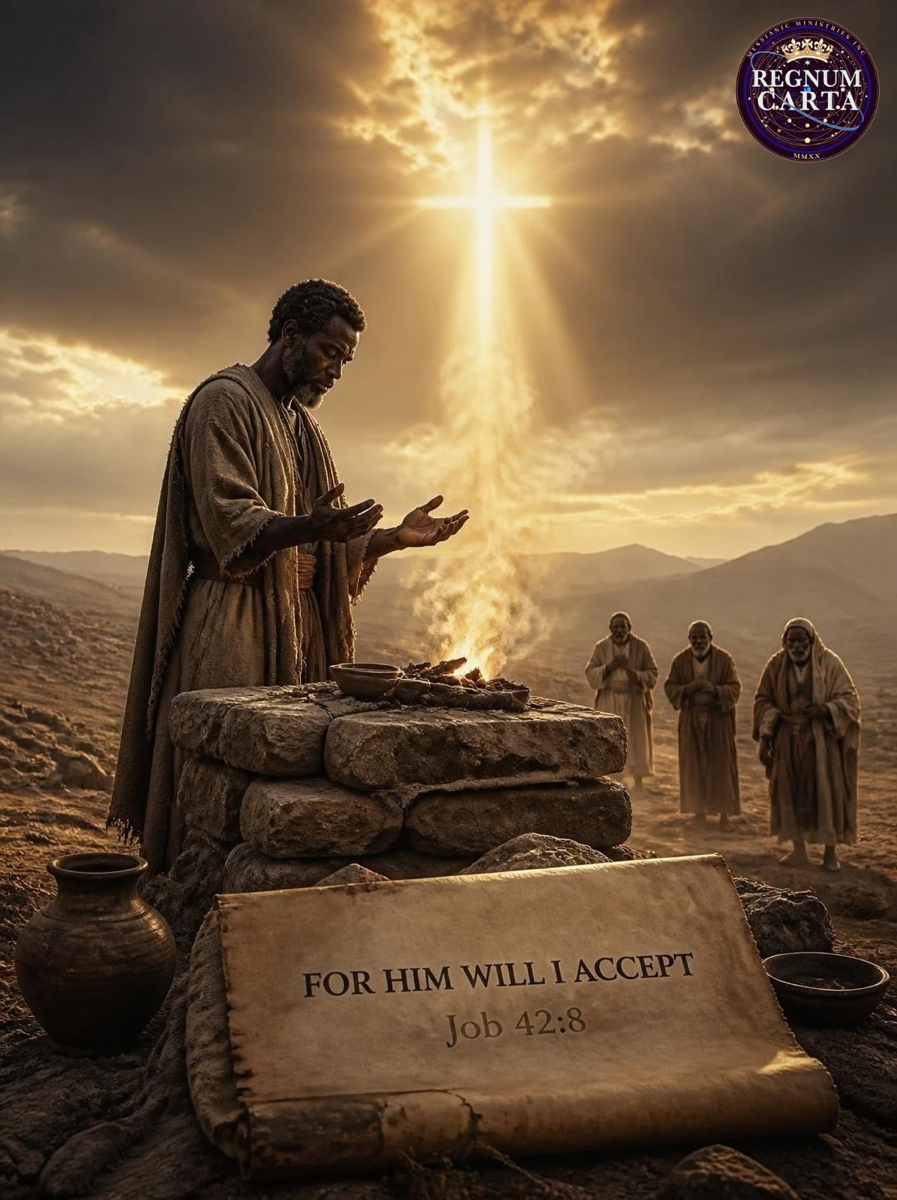
“Therefore take unto you now seven bullocks and seven rams, and go to my servant Job, and offer up for yourselves a burnt offering; and my servant Job shall pray for you: for him will I accept: lest I deal with you after your folly: for ye have not spoken of me the thing which is right, like my servant Job.” Job 42:8
Job 42:8 stands at the convergence of divine justice, human failure, intercession, sacrifice, covenant mercy, and ultimately the Messianic hope. After the long contest of words, God does not merely correct Job's friends. He establishes the necessity of sacrifice and intercession. The men who have spoken wrongly about God must approach Him through an appointed offering, and God declares that He will accept Job's prayer on their behalf.
This is more than the resolution of an ancient dispute. It reveals a theological pattern that reaches its fulfillment in Jesus Christ: sinful people require an acceptable mediator, an appointed sacrifice, and divine mercy.
Job's friends have committed theological error. Their speeches attempted to explain Job's suffering through a simplistic doctrine of retribution: suffering must correspond directly to personal sin. God rejects their representation of Him. Their theology was insufficient because it reduced divine providence to a mechanical formula.
Yet notice God's response. He does not tell them merely to improve their theology. He commands sacrifice.
The burnt offering signifies consecration, atonement, and approach to God through an appointed means. The friends cannot simply presume upon God's mercy. Reconciliation requires God's provision.
This reflects the larger covenant theology of Scripture. From Genesis onward, sinful humanity approaches a holy God through divine provision. The patriarchal sacrifices anticipate the Mosaic sacrificial system, and the Mosaic system itself points beyond animal blood toward the perfect sacrifice of Christ.
Hebrews declares:
“For it is not possible that the blood of bulls and of goats should take away sins” (Hebrews 10:4 KJV).
The sacrifices were therefore signs pointing toward something greater. Their ultimate theological significance is realized in Jesus Christ, whose sacrifice accomplishes what animal sacrifices could only foreshadow.
Job 42:8 contains a remarkable mediatorial pattern.
The friends are guilty.
A sacrifice is required.
Job is appointed to pray.
God promises acceptance.
This pattern anticipates the gospel.
Christ is simultaneously the perfect sacrifice and the perfect Mediator.
Paul writes:
“For there is one God, and one mediator between God and men, the man Christ Jesus” (1 Timothy 2:5 KJV).
Job could pray for his friends, but Job himself was not the final mediator. He was a righteous sufferer within the narrative, yet he remained a fallen human being. Jesus, however, is the sinless Son who possesses perfect righteousness and offers Himself for sinners.
Job intercedes after his suffering. Christ intercedes through His accomplished suffering.
Job's prayer is accepted because God graciously appoints him to intercede. Christ's intercession rests upon His finished redemptive work.
Hebrews therefore announces:
“He ever liveth to make intercession for them” (Hebrews 7:25 KJV).
The movement from Job to Christ is not that Job is Christ. Rather, Job participates in a biblical pattern of righteous suffering and intercession that finds its consummation in the Messiah.
Three major witnesses illuminate Job 42:8.
First, Abraham. In Genesis 18:23-33, Abraham intercedes for others before God. The patriarch stands before God pleading on behalf of people who are not present to plead for themselves.
Second, Moses. In Exodus 32:30-32, Moses intercedes after Israel's grievous sin. He appeals to God's covenant mercy rather than Israel's merit.
Third, Christ. Romans 8:34 declares that Christ “also maketh intercession for us.” What appears in patriarchal and prophetic patterns reaches its fullness in the crucified and risen Son.
The biblical trajectory is unmistakable: God repeatedly reveals His mercy through mediation, intercession, covenant, and sacrifice, culminating in Jesus Christ.
Job 42:8 confronts our tendency to speak confidently about God while understanding Him incompletely.
Job's friends had answers, but they did not have accuracy. They possessed theological vocabulary without adequate theological discernment.
That is a warning to every believer, preacher, teacher, and theologian.
We must never allow our explanation of God to become more rigid than God's revelation of Himself.
The passage also teaches us about forgiveness. God commands the very men who wounded Job with misguided accusations to seek reconciliation. Remarkably, Job becomes part of their restoration through prayer.
This is gospel-shaped spirituality.
Sometimes God heals relational wounds not by allowing us to vindicate ourselves, but by transforming us into intercessors.
The mature believer does not merely ask, “Who was wrong?” The deeper question is, “How can God's mercy be manifested here?”
Job 42:8 should not be interpreted as teaching that Job possessed intrinsic priestly power or that human beings can independently mediate salvation. The text explicitly grounds acceptance in God's declaration: “for him will I accept.”
Job's intercession is therefore derivative, not autonomous.
Likewise, the passage should not be used to establish a simplistic doctrine that every righteous person will receive material restoration in this life. Job's restoration belongs to the narrative's particular resolution and must be interpreted within the book's broader theology of suffering, divine sovereignty, and human limitation.
Most importantly, Job must not be treated as the final answer to Job. The book ultimately leaves the reader looking beyond human wisdom toward God's revelation. Canonically, that trajectory finds its fullness in Christ.
Job 42:8 whispers the gospel before the gospel is fully unveiled.
There is guilt.
There is sacrifice.
There is intercession.
There is acceptance.
There is mercy.
At Calvary, these realities converge.
Christ becomes the Lamb who bears sin, the Mediator who represents His people, the High Priest who intercedes, and the covenant sacrifice through whom sinners are reconciled to God.
The Father does not accept us because our arguments are perfect, our righteousness is sufficient, or our spiritual performance is impressive. We are accepted in the Beloved (Ephesians 1:6).
The message of Job 42:8 therefore moves from an ancient altar to the cross, from Job's intercession to Christ's eternal priesthood, and from temporary sacrificial provision to everlasting redemption.
Final Exhortation
Do not trust your own wisdom more than God's revelation.
Do not allow suffering to convince you that God has abandoned His covenant purposes.
Do not permit theological knowledge to become detached from humility, mercy, and love.
And do not approach God on the basis of your own merit.
Come through Christ.
He is the greater Mediator. He is the better Sacrifice. He is the righteous Sufferer. He is the covenant Son. He is the One whose blood speaks better things than the blood of Abel (Hebrews 12:24).
Job's friends needed an acceptable sacrifice and an intercessor. So do we.
But the good news of the New Covenant is that God Himself has provided both.
Jesus Christ is our accepted offering, our righteous Mediator, our faithful Intercessor, and our everlasting covenant hope.
Therefore, when your understanding is limited, trust Him. When your suffering is unexplained, trust Him. When others have wounded you, seek grace to intercede. And when you stand before a holy God, rest entirely in the finished work of Jesus Christ.
“For him will I accept.”
In Christ, that divine acceptance becomes the believer's living hope.
#Allnations #ame #apostolic #baptist #bible #bibleverse #catholic #christianity #christiantok # cme ##cog #cogbf #cogic #fgbcf #fght #foryou ##islam #jesus #messianicministriesinc #paw #prophetic #seventhdayadventist #tiktok #holyspirit #engagement #rastafari #ethiopian #orthodox #eritrean
Divine Providence in the Field of Redemption
Ruth 2:3
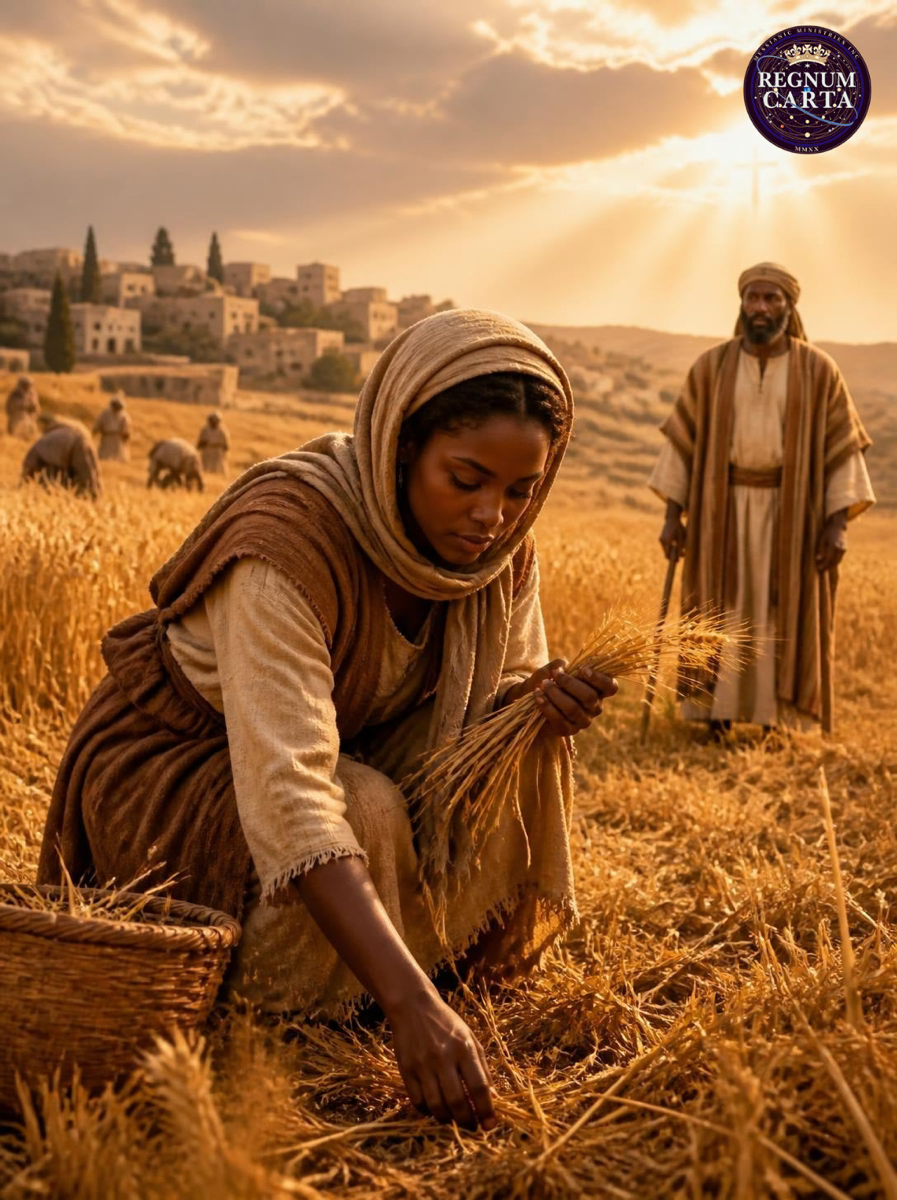
“And she went, and came, and gleaned in the field after the reapers: and her hap was to light on a part of the field belonging unto Boaz, who was of the kindred of Elimelech.”
Ruth 2:3
There are instances in the Scriptures where what seems to be mere chance is shown as divine intervention. Ruth 2:3 documents a particular instance. Ruth, a widow from Moab, ventures into the fields to gather leftover crops for her and Naomi's sustenance. From a human viewpoint, she only coincidentally reaches the field owned by Boaz. Biblical theology instructs us to interpret the underlying story within the story. What Ruth perceived as a mundane passage across a commonplace field was, in the divine plan of God, a pivotal advancement toward salvation.
The expression, “her hap was to light,” does not imply that God was lacking or that Ruth's destiny was dictated by randomness. The narrative conveys the occurrence from Ruth's constrained human viewpoint. The storyteller has already revealed an important detail: Boaz belonged to the lineage of Elimelech. That aspect underscores the theological importance of the interaction. The area was not solely a site for farming activities. It was the designated location where divine intervention would commence revealing a covenantal intention.
Ruth's narrative is profoundly intertwined with the divine intentions of the covenant. The Lord instituted His covenant with Israel via Abraham, Isaac, Jacob, and eventually Moses. The assurances regarding seed, territory, favor, and salvation were not only abstract theological ideas. They functioned within the tangible circumstances of human history.
Ruth joins this covenant narrative as a Moabite. Her presence is noteworthy due to her heritage linked to a group historically characterized by resistance to Israel. Nevertheless, by her trust and commitment to the covenant, Ruth proclaims, “your people will be my people, and your God will be my God” (Ruth 1:16).
Her presence in Boaz's field illustrates that divine grace transcends human ethnicity, social standing, widowhood, or previous identity. The agreement established by God incorporates a foreign woman into the redemptive lineage that will eventually culminate in David and, as per the genealogy in Matthew 1, in Jesus Christ.
The area thereby transforms into a locus of covenant convergence. Ruth's necessity, Naomi's void, Boaz's virtue, Israel's covenantal statutes, and God's salvific intention converge under divine oversight.
Boaz represents one of the most important archetypes of Christ in the Old Testament. He is a commendable individual endowed with the capability and desire to atone. He is connected to the family in distress and demonstrates kindness towards the disadvantaged.
However, Boaz is not the Messiah. He directs attention beyond himself to Christ.
Theologically, Boaz's function as a kinsman-redeemer foreshadows the incarnational enigma of the gospel. The Redeemer must have a connection to those He redeems. Hebrews 2:14 states that Christ engaged in human flesh and blood. He genuinely embraced humanity, experiencing our state without succumbing to sin. The everlasting Son assumed our kinship in the flesh.
Boaz had the ability to restore Ruth's worldly situation. Christ liberates transgressors from iniquity, mortality, condemnation, and enslavement.
Boaz was able to provide Ruth accommodation in Israel. Christ incorporates adherents into the family of God.
Boaz had the ability to ensure Ruth's future by marrying her. Christ guarantees the everlasting inheritance of His redeemed followers.
Consequently, Ruth 2:3 transcends being simply a narrative about discovering a field. It is a fortuitous progression towards a savior, and ultimately towards the Savior.
The domain of Boaz directs us to the profound reality that God perpetually orchestrates history in favor of Jesus Christ.
The principle of providence is continually upheld in the entirety of Scripture.
Proverbs 16:9 states, “A man's heart plans his path: yet the LORD guides his movements.” Ruth selects her destination, yet God determines her final outcome.
Romans 8:28 conveys that “everything collaborates for the benefit of those who love God, to those who are chosen according to His design.” Ruth was unable to discern the objective, yet divine providence was already at work.
Galatians 4:4 states, “when the fullness of time arrived, God dispatched his Son.” The embodiment illustrates that salvation transpires in accordance with celestial timing. The deity that orchestrated the timing of Christ's advent likewise regulated the apparently mundane events that led up to His emergence.
Matthew 1:5 recognizes Ruth in the lineage of Jesus Christ. The woman who previously seemed to be an outsider transformed into an ancestor of the Messiah.
The divine testimony is clear: God orchestrates mundane occurrences to achieve remarkable salvific objectives.
Ruth 2:3 profoundly addresses individuals who perceive their current situations as trivial.
Ruth was collecting remnants. She was not delivering sermons to countries. She was not positioned within a palace. She was merely laboring to acquire sustenance.
Nevertheless, the divine was operating through her mundane compliance.
This represents a significant spiritual tenet. Divine guidance frequently manifests through mundane fidelity. The domain may appear ordinary, yet the divine intention could be everlasting. The task may seem minor, yet adherence positions us on the route to divine intention.
Do not disdain the position in which God has situated you.
Do not presume that lack of visibility equates to lack of importance.
Do not confuse quiet with the absence of the divine.
Ruth was unaware that her actions were leading her to Boaz. Boaz had not yet grasped the complete importance of Ruth's presence. Naomi was unable to perceive the complete redemptive narrative. However, the Divine was aware.
Belief relies on the deity who perceives what remains unseen to us.
A thorough analysis should recognize that Ruth 2:3 utilizes terminology that may be interpreted as relating to fortune or coincidence. The account does not refute human unpredictability. Ruth sincerely took a decision and authentically pursued a specific domain. Within Ruth's theological perspective, human agency and divine intervention are not mutually exclusive interpretations.
Theologically, the passage encourages acknowledgment of divine sovereignty while maintaining human accountability. Theologically negligent interpretations may diminish the text to mere fatalism or chance. The scriptural stance is more profound: God sovereignly operates through genuine human choices, commonplace situations, and historical developments to fulfill His covenant objectives.
The passage thus urges us to have faith in providence without assuming we have complete understanding of God's concealed intentions.
Concluding Encouragement
Cherished, Ruth 2:3 illustrates that the Divine can direct an individual's path into a field that serves as the portal to their fate.
Ruth sought sustenance, although God was guiding her towards salvation.
She pursued sustenance, although the Divine was orchestrating a lineage.
She stepped inside a domain, however the Divine was progressing a pact.
She met Boaz, although divine providence was steering history towards Christ.
Consequently, continue to advance in faith. Continue to gather diligently. Continue to comply even when the future is obscured. Maintain your faith even when situations seem coincidental. The deity of Ruth embodies providence, covenant, and redemption.
Above all, keep in mind that every authentic action of Scripture ultimately culminates in Jesus Christ. The realm of Boaz signifies a connection to the crucifixion of Christ, where the genuine Kinsman-Redeemer selflessly sacrificed Himself for His followers.
Ruth 2:3 instructs us to have faith in the God who directs our paths, maintains His covenant, and orchestrates history until every promise is fulfilled in Jesus Christ.
You could be unaware of the reasons God has placed you in your current profession. This season may appear mundane, challenging, or enigmatic to you. However, stay loyal. The deity that guided Ruth's journey continues to operate with sovereignty.
What appears to be coincidence to us might be divine intervention orchestrated by God. Where divine guidance directs, salvation is always within reach.
#Allnations #ame #apostolic #baptist #bible #bibleverse #catholic #christianity #christiantok # cme ##cog #cogbf #cogic #fgbcf #fght #foryou ##islam #jesus #messianicministriesinc #paw #prophetic #seventhdayadventist #tiktok #holyspirit #engagement #rastafari
The God of Great Counsel and Mighty Deeds
Jeremiah 32:19
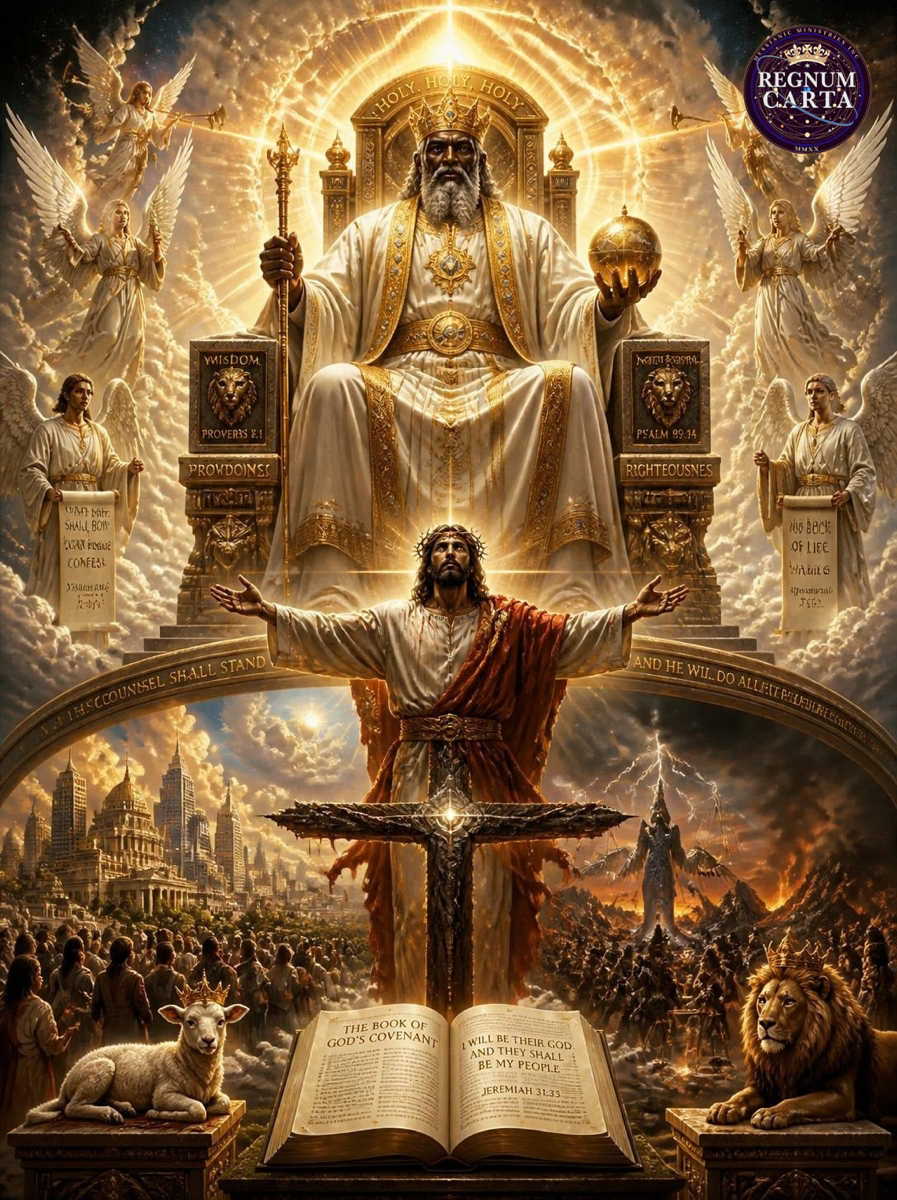
Jeremiah 32:19 evokes the majestic image of the sovereign Lord enthroned above all creation, His eyes surveying every path of humanity with perfect knowledge and unwavering justice. His throne is established upon wisdom and righteousness, while His mighty hand governs history according to His eternal counsel. The imagery portrays God as the omniscient King whose providence directs nations and individuals alike, rewarding righteousness and judging evil. In its messianic fulfillment, this vision points to Christ, the eternal Wisdom of God, who perfectly reveals the Father's counsel, accomplishes redemption through the cross, and reigns as the righteous Judge and covenant King over His redeemed people.
Jeremiah's plea in chapter 32 emerges from one of the most somber periods in Judah's history. Jerusalem was besieged by Babylon, judgment was manifesting as prophesied by God, however the prophet had complied with the Lord's command by acquiring a field as a prophetic indication of future restoration. In this context, Jeremiah proclaims that the Lord is "big in counsel and mighty in activity. His confession is grounded not in advantageous conditions but in the immutable nature of God. The Lord's wisdom directs events, and His sovereign authority fulfills all that He has decreed.
This verse reveals God's omniscience, sovereignty, justice, and covenant fidelity. The God of Israel observes every course pursued by mankind. No detail eludes His observation, and no obstacle hinders His everlasting intent. His advice is always adequate, His actions are infallible, and His decisions are entirely just. This reality offers solace to the devout and a grave admonition to the defiant.
This magnificent painting ultimately achieves its complete manifestation in Jesus Christ, the foretold Messiah. The New Testament presents Christ as the eternal Wisdom of God, through whom all creation exists and by whom all things are sustained. The individual whose guidance is flawless is the incarnate Son, who fully discloses the Father's intentions and fulfills the Father's redemptive scheme. Jeremiah commemorates God's formidable deeds, culminating in the death, resurrection, and exaltation of Jesus Christ. At Calvary, celestial wisdom and divine strength converged in flawless accord. What seemed to be defeat became the mechanism via which God attained eternal salvation for His covenant people.
Jeremiah's proclamation is situated within the context of covenant theology. Israel transgressed the Mosaic Covenant and consequently endured the covenantal curses stipulated in Deuteronomy. Nevertheless, divine judgment does not invalidate God's covenant commitments. Jeremiah thereafter announces the promise of a New Covenant wherein God will pardon transgressions, inscribe His law upon the hearts of His people, and create an eternal relationship with them. The deity who observes all human conduct is likewise the deity who benevolently offers a covenant Mediator. Jesus Christ establishes the New Covenant via His own blood, fulfilling divine justice while offering covenant mercy to all who repent and believe.
This text serves as a reminder to believers that God's providence is consistently purposeful. His guidance orchestrates every aspect of history in accordance with His sacred design. Periods of affliction, discipline, uncertainty, and perceived postponement are nonetheless subject to His sovereign authority. What believers currently fail to comprehend, God has eternally decreed in accordance with His boundless wisdom. His formidable deeds frequently beyond human anticipation, yet they invariably fulfill His just intentions.
The assertion that God provides "everyone according to his ways" emphasizes His impeccable justice. Divine judgment is never hasty nor misinformed. God's omniscient gaze scrutinizes not just external deeds but also the reasons and purposes of the heart. This reality humbles every transgressor before a divine deity. If left to our own devices, none could endure such meticulous examination. Every heart is laid bare before the Arbiter of the entire world.
The gospel radiates with exceptional radiance. Christ endured the judgment warranted by His people, ensuring that those who are linked to Him through faith are no longer subject to condemnation. The justice articulated in Jeremiah is completely fulfilled in the substitutionary atonement of Christ. God's righteousness remains intact while His mercy abundantly emanates from the completed work of His Son. The Christian approaches God with assurance, not because to personal merit, but because Christ has satisfied all covenant obligations on our behalf.
Multiple passages corroborate this profound fact. Isaiah 55:8-9 emphasizes that God's thoughts and methods vastly exceed our own, underscoring the magnificence of His guidance. Romans 11:33 extols the inscrutable wisdom and knowledge of God, proclaiming His judgments as beyond human understanding. Ephesians 1:11 asserts that God orchestrates all events in accordance with His divine will, illustrating the extensive nature of His sovereign providence. Colossians 2:3 designates Christ as the One in whom the treasures of wisdom and knowledge are concealed, affirming the christological realization of Jeremiah's declaration.
From a critical standpoint, certain contemporary interpretations diminish Jeremiah's prayer to merely a historical commentary on Judah's national predicament. The historical context is essential for accurate interpretation, yet such reductionism neglects the canonical progression of Scripture. Jeremiah's theology continually foresees God's more significant restorative endeavor through the anticipated New Covenant. The authors of the New Testament clearly designate Jesus Christ as the realization of these covenant anticipations. A christological interpretation does not impose external significance on the text but acknowledges its role within the progression of redemptive history.
Jeremiah 32:19 provides enduring encouragement for contemporary believers. In perplexing situations, divine guidance remains impeccable. When human strength is inadequate, God's powerful deeds persist relentlessly. When injustice appears to dominate, God's just judgment will not falter. When guilt weighs on the conscience, Christ has ensured forgiveness via His covenant blood. The deity who presided over Judah's history persists in guiding the lives of His rescued individuals with impeccable wisdom and steadfast love.
Concluding Encouragement:
Let every heart repose assuredly in the Lord, whose guidance is unassailable and whose formidable actions are unimpeded. Have faith in His providence, even when His intentions are obscured. Walk in sanctity, for His gaze observes every pathway. Rejoice in Christ, for divine justice has been fulfilled and covenant mercy has been eternally guaranteed. The deity who assured restoration via Jeremiah has realized His paramount promise in His Son, and He will diligently fulfill every subsequent promise until His kingdom is unveiled in its entirety. Let this confidence strengthen your faith, deepen your worship, and inspire steadfast obedience as you anticipate the joyful return of the King who is great in wisdom and mighty in work.
#Allnations #ame #apostolic #baptist #bible #bibleverse #catholic #christianity #christiantok # cme ##cog #cogbf #cogic #fgbcf #fght #foryou ##islam #jesus #messianicministriesinc #paw #prophetic #seventhdayadventist #tiktok #holyspirit #engagement #rastafari
The Sun and Shield of the Covenant
Psalm 84:11 ERV

Central Text: Psalm 84:11 (ERV)
"The LORD God is like a sun and shield. The LORD gives us kindness and honor. He does not hold back anything good from those who live right."
Psalm 84 is regarded as one of the most significant pilgrimage psalms in Scripture. It commemorates the unparalleled delight of residing in God's presence and concludes with the covenantal promise of Psalm 84:11. The psalmist utilizes profound theological imagery by depicting Yahweh as both "sun" and "shield," illustrating Him as the origin of life, direction, protection, covenant fidelity, and eternal blessing. Although these metaphors directly relate to Israel's covenant experience, they eventually foreshadow its complete fulfillment in the Messiah, Jesus Christ, through whom every divine promise attains its culmination (2 Corinthians 1:20). Consequently, Psalm 84:11 serves not just as an encouragement for ancient pilgrims but also as a Messianic promise that reaches its full realization in Christ.
The assertion that "the LORD God is akin to a sun" is noteworthy, as Israel infrequently linked Yahweh with solar symbolism, partially to differentiate Him from neighboring pagan solar gods. In this context, the metaphor underscores that God is the one origin of spiritual enlightenment, covenant existence, and sustaining grace. Similar to how the sun eradicates darkness and sustains creation, God enlightens the hearts of His followers with truth and justice.
This imagery culminates in its Christological apex in Jesus Christ. He proclaimed, "I am the illumination of the world. “Whoever adheres to my teachings will not traverse in obscurity but will possess the illumination of existence” (John 8:12). Christ embodies the luminous essence of the Father's splendor (Hebrews 1:3), flawlessly disclosing the nature of God. The illumination foretold in Psalm 84 is completely realized in the person and work of Christ, who redeems humanity from the darkness of sin and guides believers into everlasting communion with God.
The subsequent metaphor depicts the Lord as a "shield. In the Old Testament, the shield represents divine protection inside the covenant partnership. Abraham initially received this promise when God proclaimed, "Do not fear, Abram. I am your shield" (Genesis 15:1). David consistently affirmed that God served as his protector during trials (Psalm 3:3; Psalm 18:2).
This promise is amplified in Christ. Believers attain complete spiritual security through His substitutionary atonement, resurrection, and ongoing intercession. Paul asserts that no charge can finally succeed against God's chosen, as Christ Himself intercedes on their behalf (Romans 8:33 and 34). The Messiah serves as both Protector and Savior, safeguarding His followers from punishment and ensuring their everlasting inheritance.
The promise persists by stating that "the LORD bestows upon us kindness and glory. The Hebrew notions behind these phrases convey covenantal grace and celestial splendor. Grace invariably precedes glory in God's redemptive framework. Depraved humanity offers no contribution to salvation. The favor of God derives solely from His covenantal mercy.
This development is exquisitely realized in the gospel. Adherents obtain grace by Christ's salvific sacrifice and are fated to partake in His glory (Romans 8:29 and 30). Peter similarly instructs that believers are summoned into God's everlasting glory through Christ (1 Peter 5:10). The Messiah forgives sinners and restores their dignity, enveloping them in His righteousness and preparing them for eternal relationship with God.
The most reassuring assertion is that God "withholds no good gift from those who lead a righteous life. This statement should never be construed as advocating for a merit-based system of works. Scripture consistently asserts that no individual is righteous without God's grace (Romans 3:10-24). Those who "live rightly" are individuals who walk by faith within God's covenant, trusting His promises and submitting to His transformative activity.
The New Testament indicates that this holiness is attainable just via communion with Christ. Believers are justified solely by faith and increasingly sanctified through the Holy Spirit. Thus, every genuine gift originates from the Father through the Son. James asserts that every beneficial and flawless gift originates from above (James 1:17), whereas Paul reminds the faithful that God "has already bestowed upon us all things in conjunction with Christ" (Romans 8:32). The paramount "good" assured in Psalm 84:11 is not material wealth but the unparalleled gift of Christ Himself and all spiritual blessings inherent in Him (Ephesians 1:3).
This promise also possesses deep eschatological significance. The blessings mentioned are partially enjoyed now but anticipate their fulfillment in the forthcoming reign of Christ. The depiction of divine illumination culminates in the New Jerusalem, where "the city requires neither the sun nor the moon to illuminate it. The splendor of God is its illumination, and the Lamb serves as its lamp" (Revelation 21:23). The Sun of Psalm 84 transforms into the everlasting light of the redeemed creation. The Protector who safeguards His people across history will be among them eternally, eliminating every danger, every sorrow, and every repercussion of sin.
Critical scholarship often understands Psalm 84 chiefly as a liturgical pilgrimage hymn that extols worship in the Jerusalem Temple. This historical analysis is significant as it underscores the psalm's original covenant context and its focus on temple theology. Nonetheless, a solely historical approach insufficiently addresses the canonical evolution of biblical revelation. The New Testament frequently depicts Christ as the authentic Temple (John 2:19-21), the manifestation of God's presence, and the consummation of Israel's worship. Therefore, Psalm 84 must be interpreted within the larger context of redemptive history, where its depictions of divine presence, protection, grace, and glory culminate in the figure of Jesus Christ. This canonical and Christocentric reading maintains the historical integrity of the psalm and its theological realization.
Concluding Encouragement
Psalm 84:11 encourages all believers to repose assuredly on the adequacy of God's covenant fidelity manifested through Jesus Christ. He is the genuine Sun that illuminates every heart, the impeccable Shield that protects every believer, the benevolent Savior who grants unmerited grace, and the illustrious King who will fulfill the job He has initiated. Consequently, the Christian existence is maintained not via human endeavor but through constant reliance on the Messiah, who grants no genuine good to His rescued followers.
In times of uncertainty, rely on His illumination. In perilous situations, take refuge behind His shield. In moments of vulnerability, accept His grace. In all situations, place your trust in Christ, for every divine promise is unequivocally affirmed in Him. The faithful individual who lives by conviction can assert with assurance that the Lord's benevolence is inexhaustible, His safeguarding is infallible, His kindness is unwavering, and His glory will ultimately be completely manifested in those who are united with His Son.
#Allnations #ame #apostolic #baptist #bible #bibleverse #catholic #christianity #christiantok # cme ##cog #cogbf #cogic #fgbcf #fght #foryou ##islam #jesus #messianicministriesinc #paw #prophetic #seventhdayadventist #tiktok #holyspirit #engagement #rastafari
The Shepherd King Who Crowns His Redeemed
Zechariah 9:16

The Shepherd King Who Crowns His Redeemed
"And the LORD their God shall save them in that day as the flock of his people: for they shall be as the stones of a crown, lifted up as an ensign upon his land." (Zechariah 9:16, KJV)
Zechariah offers a striking prophetic depiction of the forthcoming Messiah by interlacing themes of divine sovereignty, covenantal salvation, pastoral symbolism, and eschatological anticipation. Chapter 9 transitions from the declaration of God's sovereign judgment upon the nations to the magnificent arrival of Zion's modest King, who approaches "lowly, and riding upon an ass" (Zechariah 9:9), a prophecy distinctly realized in Jesus Christ during His triumphant entry into Jerusalem (Matthew 21:1-11). In this messianic context, Zechariah 9:16 discloses the covenantal blessing destined for God's rescued individuals. Salvation is not solely liberation from earthly adversaries but the benevolent act of God uniting His covenant community under the authority of His promised Shepherd King.
The verse commences with a clear assertion of divine agency: "The LORD their God shall preserve them. Salvation is solely the prerogative of God. In Scripture, redemption arises from the sovereign grace of Yahweh, not from human merit or capability. This assertion foresees the completeness of the Gospel, wherein God's salvific intent reaches its zenith in the incarnation, redemptive death, and triumphant resurrection of Christ. The covenant Lord who liberated Israel from Egypt ultimately fulfills the bigger Exodus through the crucifixion, rescuing His people from sin, death, and divine wrath.
The phrase "in that day" possesses deep prophetic importance. This term consistently indicates, within the prophetic corpus, a transcendent divine intervention in redemptive history, beyond immediate historical contexts. Although Zechariah's audience expected national restoration after exile, the New Testament indicates that the ultimate realization commences with Christ's first appearance and culminates in His triumphal return. The kingdom established by Christ will ultimately be revealed in its entirety when every covenant promise attains perfect fulfillment.
The depiction of God rescuing His people "as the flock of His people" presents one of Scripture's most profound theological images. God has consistently engaged with His covenant community as a steadfast Shepherd. David acknowledged, "The LORD is my shepherd" (Psalm 23:1). The prophets consistently foretold the arrival of a Shepherd who would unite the dispersed sheep of Israel (Ezekiel 34:23 and Micah 5:4). Christ unequivocally defined Himself as the prophesied fulfillment when He said, "I am the good shepherd: the good shepherd lays down his life for the sheep" (John 10:11). Zechariah thus indicates a focus beyond political restoration, directing attention to the Messiah whose sacrificial service ensures permanent redemption for His followers.
The concluding image is exceptionally exquisite: "they shall be as the stones of a crown. Ancient crowns showcased gemstones that symbolized the king's honor and majesty. Zechariah inverts the imagery by depicting God's redeemed individuals as the gems of His sovereign diadem. They are valued, exhibited, and revered due to their association with Him. This picture foreshadows the New Testament doctrine that believers are God's valued possession, acquired by the precious blood of Christ (1 Peter 2:9 and 1 Peter 1:18-19). Their value originates not from inherent virtue but from the covenant grace granted through relationship with Christ.
The expression "elevated as a standard upon his territory" further underscores public testimony. The redeemed individuals of God serve as tangible manifestations of His salvific power. They exist to manifest His splendor to the nations. The Church, in union with Christ, accomplishes her mission by declaring the virtues of the One who summoned people from darkness into His wondrous light (1 Peter 2:9). Each converted believer serves as a testament to the victory of divine grace.
From the standpoint of covenant theology, Zechariah 9:16 eloquently illustrates the continuity of God's redemptive design. The promises of the covenant offered to Abraham, reinforced by Moses, and elaborated upon by David culminate in Christ. The covenant Shepherd unites a redeemed populace from all tribes, nations, and languages into the blessings attained via His mediatorial efforts. The Church does not supplant God's redemptive purpose but engages in its realization through the New Covenant instituted by Christ's blood (Luke 22:20). The unwavering faithfulness of God's promise serves as the steadfast foundation of the believer's assurance.
From a Christological perspective, every aspect of this verse culminates in Jesus Christ. He is the celestial Savior who delivers His people. He is the Benevolent Shepherd who sacrifices His life for the flock. He is the Davidic King whose crown is embellished with redeemed sinners transformed by grace. He is the forthcoming King who will assemble every believer into the eternal kingdom, where no sheep shall ever stray or perish again. The splendor foretold by Zechariah ultimately pertains to Christ, yet in remarkable grace, He bestows His glory upon those He has redeemed.
A concise critical analysis reveals the extraordinary coherence of this prophetic text. Certain scholars have largely interpreted Zechariah 9 in the context of the historical challenges faced by the postexilic community, highlighting themes of national restoration and political liberation. The historical context is crucial for accurate interpretation, yet this method is inadequate if detached from the canonical evolution of Scripture. The New Testament uniformly elucidates Zechariah's regal and pastoral imagery in relation to the person and mission of Christ. An orthodox hermeneutic acknowledges both the historical context and its eventual messianic realization. The prophesy attains its complete significance not only in Israel's restoration but also in the salvific rule of the crucified and resurrected Messiah.
This assurance encourages believers to repose assuredly on God's covenant fidelity. The Shepherd who acquired His sheep will never forsake them. Individuals redeemed by Christ retain their value in His eyes, even in the face of adversity, persecution, or personal frailty. Their identity is characterized not by terrestrial shortcomings but by celestial benevolence. As gems in the King's crown, they are summoned to embody His sanctity, disseminate His Gospel, and anticipate His magnificent return with unwavering hope.
May each believer discover renewed confidence in this splendid promise. The Lord continues to deliver His people. The Shepherd continues to assemble His flock. The King continues to cherish His redeemed. Consequently, proceed steadfastly under His sovereign protection, delight in His covenantal love, and exist as a tangible testament to His redemptive grace until the day the Crowned King returns to collect His cherished people into eternal glory. Amen.
#Allnations #ame #apostolic #baptist #bible #bibleverse #catholic #christianity #christiantok # cme ##cog #cogbf #cogic #fgbcf #fght #foryou ##islam #jesus #messianicministriesinc #paw #prophetic #seventhdayadventist #tiktok #holyspirit #engagement #rastafari
The Narrow Gate and the Promised Messiah
St Matthew 7:13-14

The statements of Christ in Matthew 7:13–14 provide one of the most explicit exhortations to covenant fidelity in the Gospels. At the conclusion of the Sermon on the Mount, Jesus presents each listener with an inescapable choice. There exist merely two gates, two paths, two fates, and finally two reactions to the Messiah. This excerpt transcends mere moral education. It is a Messianic invitation based on the promises of God realized in Jesus Christ. The narrow gate is not merely a challenging way of living. The Messiah Himself is the exclusive conduit through which sinners attain the covenant privileges of eternal life.
Throughout redemptive history, God pledged to furnish a Deliverer who would rectify the curse of sin. Scripture consistently indicates Christ as the sole Mediator between God and humanity, from the promise of the woman's Seed in Genesis 3:15, through the Abrahamic Covenant, the Davidic Covenant, and the prophetic proclamations of Isaiah and Jeremiah. Jesus asserts that access to God's kingdom is attained just through the narrow gate, as He uniquely fulfills every covenant promise.
Christ unequivocally articulates this reality when He asserts, "I am the way, the truth, and the life: no man cometh unto the Father, but by me" (Gospel of John 14:6). The small doorway signifies salvation via relationship with the crucified and resurrected Messiah, rather than through human endeavor. The challenge lies not in the inadequacy of grace, but in the resistance of sinful humanity to relinquish pride, self-righteousness, and worldly attachments in order to fully accept Christ.
Covenant theology enhances our comprehension of this passage. Within the Covenant of Grace, God's people are redeemed only by His benevolent provision in Christ. The small gate signifies entry into the covenant through faith rather than through deeds. Similar to how Noah accessed the ark by a designated entrance, and Israel obtained covenant inheritance by relying on God's promises, contemporary believers attain eternal life solely through Jesus Christ. The uniqueness of the gate signifies the exclusivity of God's covenant Mediator.
The broad path represents humanity's inherent defiance of divine authority. It is appealing due to its support for self-determination, religious pluralism, and moral autonomy. Scripture continually cautions that "There is a way that appears right to a man, but its end is the way of death" (Book of Proverbs 14:12). The wide path provides fleeting solace while obscuring everlasting ruin. In contrast, the narrow path frequently entails repentance, self-denial, persecution, and steadfast obedience, ultimately resulting in eternal communion with God.
The Messianic promise illuminates this admonition distinctly. The One who commands entry via the narrow gate is the embodiment of God's promise to assemble a redeemed populace from all nations. Isaiah prophesied the Servant who would serve as "a light to the Gentiles" and God's salvation "unto the end of the earth" (Book of Isaiah 49:6). Jesus accomplishes this goal by granting access to the Father through His redemptive sacrifice. His demise fulfills divine justice, His resurrection guarantees eternal life, and His continuous priestly ministry safeguards every believer who approaches through Him.
The believer's assurance is founded not alone on human endurance but on the fidelity of the covenant-keeping God. Individuals who enter via Christ are assured of their security, as the Good Shepherd neither forsakes nor loses His sheep. The narrow path may provide challenges, yet each step is upheld by divine grace and guided by the Holy Spirit.
Numerous biblical testimonies corroborate this magnificent reality. Genesis 6 indicates that there was an only divinely designated door to Noah's ark, exemplifying God's unique provision for salvation. Secondly, John 10:9 has Jesus proclaiming, "I am the door: by me if any man enter in, he shall be saved," designating Himself as the sole access to God's fold. Acts 4:12 asserts that there is no other name under heaven given to humanity by which we must be saved, emphasizing the sole sufficiency of Christ for salvation.
Contemporary readings sometimes construe the narrow path as merely ethical conduct or personal discipline, thereby diminishing the Christological focus of the text. Others see the broad and narrow paths as just emblematic of psychological well-being or social duty. Such interpretations neglect to consider the immediate context of the Sermon on the Mount and the overarching testimony of Scripture. Jesus does not offer a singular religious choice among numerous alternatives. He is proclaiming the unique requirements of the kingdom founded via His Messianic mission. Orthodox Christian theology accurately interprets these verses as an invitation to covenant faith manifested via repentance, faith, and exclusive obedience to Christ.
Every believer must consistently assess which route directs the heart. The narrow path urges us to renounce cultural conformity and adopt unwavering loyalty to Christ. It encourages daily contrition, steadfast faith in God's assurances, diligent contemplation of His Word, and joyful compliance facilitated by the Holy Spirit. Despite the challenges of the journey, it is characterized by divine fellowship, covenant fidelity, and the assured expectation of eternal glory.
When the world presents wider paths characterized by compromise and self-aggrandizement, recall that the narrow gate leads to boundless life, since Christ Himself resides there as both Shepherd and Savior. His grace is adequate for every traveler who adheres to Him in trust.
Final Exhortation: Do not procrastinate at the juncture of choice. The Messiah continues to beckon, "Enter through the narrow entrance. Disavow the illusory simplicity of the wide path and accept the covenantal grace manifested in Jesus Christ. Traverse the narrow route with assurance, recognizing that the One who has kept every divine promise will steadfastly guide His chosen into the eternal kingdom. Focus on Christ, rely on His completed work, and persist in steadfast obedience until faith transforms into sight and the covenant's promises are completely shown in His magnificent presence.
#Allnations #ame #apostolic #baptist #bible #bibleverse #catholic #christianity #christiantok # cme ##cog #cogbf #cogic #fgbcf #fght #foryou ##islam #jesus #messianicministriesinc #paw #prophetic #seventhdayadventist #tiktok #holyspirit #engagement #rastafari
The Shadow and the Substance: Christ the Fulfillment of God’s Redemptive Purpose
Hebrews 10:1; Colossians 2:16-17
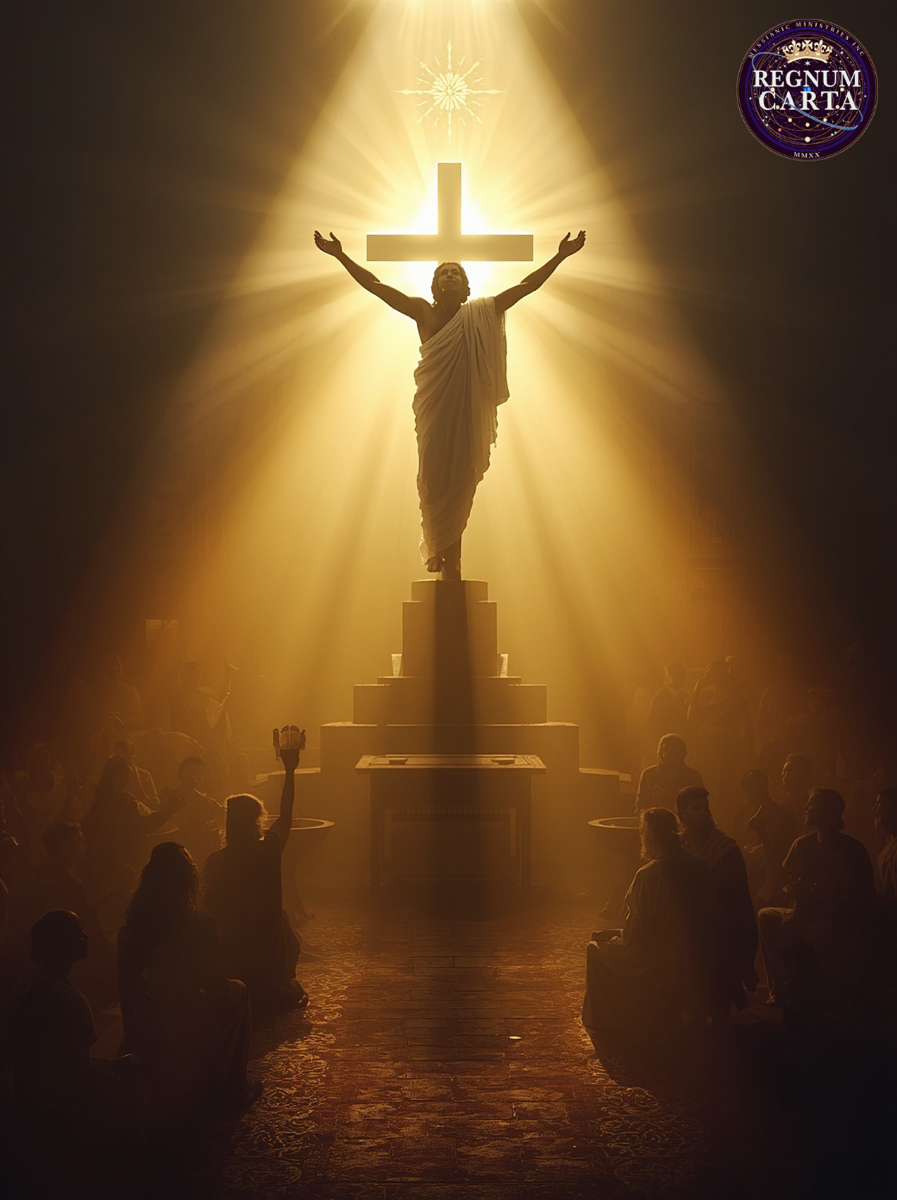
"For the law having a shadow of good things to come, and not the very image of the things..." (Hebrews 10:1)
"Let no man therefore judge you in meat, or in drink, or in respect of an holyday, or of the new moon, or of the sabbath days: Which are a shadow of things to come; but the body is of Christ." (Colossians 2:16-17)
A significant motif in Scripture is the gradual revelation of God's redeeming purpose through shadows, types, and promises that ultimately culminate in Jesus Christ. Hebrews 10:1 and Colossians 2:16-17 serve as compelling testimonies to the coherence of divine revelation. Both verses convey that the institutions, rites, and laws of the Old Covenant were never self-sufficient ends. Instead, they anticipated the arrival of the Messiah, who embodies and realizes every covenant promise.
The author of Hebrews asserts that the Law included "a shadow of good things to come. A shadow possesses shape and meaning, yet it is devoid of materiality. It signifies the existence of a superior reality. The sacrificial system, priesthood, tabernacle worship, festivals, and ceremonial restrictions all prophetically attested to the person and activity of Christ. These institutions were divinely established, yet they were transient and provisional.
Paul instructs the Colossian believers that holy days, dietary laws, new moon festivities, and Sabbath observances were mere foreshadows of forthcoming realities. The entity, therefore, pertains to Christ. The Greek notion of "body" underscores the tangible reality that produces the shadow. Christ is not simply an additional component of God's redemptive plan. He embodies the ultimate realization to which all prior revelations directed.
In the context of covenant theology, these texts demonstrate the continuity and advancement of God's redeeming intentions. The Old Covenant was not designed to offer ultimate redemption through ritualistic practices. Instead, it operated as a covenantal administration, preparing God's people for the imminent Redeemer.
The Abrahamic Covenant pledged blessings to all nations via the lineage of Abraham (Genesis 12:3). The Mosaic Covenant revealed humanity's wicked nature and illustrated the need for atonement. The Davidic Covenant pledged an everlasting King whose dominion would be perpetual (2 Samuel 7:12-16). Each covenant gradually revealed elements of the Messianic expectation that culminated in Jesus Christ.
The New Covenant, established by Christ's blood (Luke 22:20), fulfills what the shadows merely foreshadowed. The offerings were insufficient to eradicate sin forever. The clergy was incapable of offering eternal mediation. The temple was unable to guarantee continuous access to God. Christ fulfills all covenant expectations as the consummate sacrifice, eternal High Priest, and authentic Temple of God's presence.
Consequently, the transition from shadow to substance represents not a repudiation of the Old Testament but its magnificent realization. The promises are reliable as they are affirmed in Christ (2 Corinthians 1:20).
The primary theological focus of these verses is distinctly Christological. Jesus serves as the interpretative key to the entire biblical narrative.
The Passover lamb prefigured Christ's sacrificial death (John 1:29; 1 Corinthians 5:7). The Day of Atonement foreshadowed His singular sacrifice for sin (Hebrews 9:11-14). The manna in the wilderness foreshadowed the Bread of Life (John 6:32-35). The tabernacle prefigured God's presence among humanity via the incarnation (John 1:14).
Every darkness achieves its fulfillment in Him.
This Christocentric interpretation of Scripture was validated by Christ Himself when He stated that Moses wrote about Him (John 5:46). After His resurrection, He elucidated to His followers the matters pertaining to Himself in all the Scriptures (Luke 24:27).
Thus, biblical theology attains its utmost expression when Christ is acknowledged as the focal point of divine revelation and redemptive history.
Multiple verses substantiate this Messianic interpretation.
Luke 24:44 documents Christ's assertion that all that is inscribed in the Law, Prophets, and Psalms regarding Him must be accomplished.
Secondly, John 5:39 instructs that the Scriptures bear witness to Christ, identifying Him as their primary center.
Hebrews 9:24 elucidates that terrestrial sanctuaries were archetypes of celestial truths realized via Christ's sacerdotal service.
Fourth, Galatians 3:24 characterizes the Law as a pedagogical figure guiding Christians to Christ.
Collectively, these witnesses demonstrate that the institutions of the Old Testament served as prophetic indicators guiding God's people toward the anticipated Messiah.
The practical importance of these facts is substantial for contemporary believers.
Our assurance is founded not on religious deeds but on the completed work of Christ. Shadows cannot provide salvation, but the Savior can. Believers are deemed justified due to His impeccable obedience and redemptive sacrifice.
Secondly, these passages promote more profound biblical engagement. Each segment of Scripture contributes to God's cohesive testimony of Christ. The believer need to engage with both Testaments with anticipation, aiming to witness the splendor of the Redeemer.
Third, Christians are urged to oppose legalistic frameworks that prioritize external practices above the adequacy of Christ. The essence must never be substituted by the semblance. Spiritual growth is attained not via ritualistic strictness but through communion with Christ.
Ultimately, these truths foster reverence. The deity who arranged centuries of redemptive history fulfilled every promise exactly in His Son. This loyalty warrants respect, appreciation, and veneration.
Certain contemporary critical perspectives regard the Old Testament chiefly as a distinct theological evolution, separate from Christological realization. Although historical context is crucial for interpretation, such viewpoints frequently neglect the canonical coherence of Scripture and the clear testimony of the New Testament authors.
Orthodox biblical theology asserts that the historical events of the Old Testament hold both immediate relevance and prospective Messianic implications. Hebrews and Colossians assert that the divine purpose of these institutions transcended their initial historical context, culminating in their ultimate fulfillment in Christ.
Consequently, the apostolic interpretation maintains both historical accuracy and theological completeness.
Concluding Encouragement:
Adherent, do not grasp the illusion when the essence has arrived. Do not search in religious practices for what God has completely offered in His Son. The sacrifices, feasts, priesthood, and ceremonies all foreshadowed Jesus Christ, the prophesied Messiah and Mediator of the New Covenant.
Direct your gaze towards Him. Place absolute trust in His completed work. Exult in the fidelity of God, who has realized every promise through His cherished Son. The shadow has fulfilled its function. The illumination has arrived. The substance presents itself in the majesty of Jesus Christ, who remains unchanged yesterday, today, and eternally.
#Allnations #ame #apostolic #baptist #bible #bibleverse #catholic #christianity #christiantok # cme ##cog #cogbf #cogic #fgbcf #fght #foryou ##islam #jesus #messianicministriesinc #paw #prophetic #seventhdayadventist #tiktok #holyspirit #engagement #rastafari
The Sufficiency of the Covenant King
Deuteronomy 33:25

Deuteronomy 33:25 is regarded as one of the most treasured covenant promises in Scripture, spoken among Moses' final blessings prior to his demise. This pronouncement, specifically directed at the tribe of Asher, transcends tribal wealth and encompasses the overarching concept of God's covenant fidelity. The promise unveils a God who not only designates the course for His people but also provides the requisite power for each step of that trip. This blessing reaches its culmination in Jesus Christ, the Mediator of the New Covenant and the wellspring of boundless spiritual strength for His redeemed followers.
The depiction of "iron and brass" footwear symbolizes resilience, steadfastness, and safeguarding. In the ancient Near Eastern setting, footwear symbolized preparedness for journeying, combat, and toil. Moses depicts God's covenant people as prepared for challenging landscapes and arduous conditions. The assurance is not that adherents will evade adversity, but that they will receive divine sustenance adequate to withstand it. The grace of the covenant does not eradicate the wilderness. It possesses inherent strength.
The subsequent clause reinforces this assurance: "as thy days, so shall thy strength be. The Hebrew notion conveys proportional elegance. Divine providence does not bestow strength beyond requirement nor deny it in moments of need. Divine providence aligns impeccably with the need of each day. This illustrates a consistent biblical premise that God's grace is determined by His sovereign wisdom and covenantal love.
This promise foreshadows the ministry of Christ from a Christological viewpoint. The Old Testament repeatedly signifies the Messiah as the manifestation of God's covenant fidelity. Isaiah foretold about Him: "He grants power to the weary; and to those lacking strength, He amplifies their vigor" (Isaiah 40:29). In the New Testament, Christ realizes this expectation by serving as the live source of spiritual life for His followers. He asserts, "Without me you can accomplish nothing" (John 15:5). The strength assured in Deuteronomy ultimately derives from communion with the resurrected Christ.
Covenant theology elucidates this text further. In Scripture, God commits Himself to His people through covenantal vows. The covenants culminate in the New Covenant instituted by the blood of Christ (Luke 22:20). Through this covenant, believers obtain not just external rewards but also the internal presence of the Holy Spirit. Consequently, the assurance of strength transcends a mere national boon for Israel and has become a spiritual actuality for all who are in Christ.
The Apostle Paul presents a notable New Covenant parallel by documenting the Lord's declaration: "My grace is sufficient for you, for my strength is made perfect in weakness" (2 Corinthians 12:9). Paul saw that supernatural strength is revealed not via human autonomy but through reliance on Christ. The believer's assurance is founded not on individual fortitude but on the boundless provisions of the covenant King.
Multiple biblical testimonies validate this fundamental reality. Psalm 84:7 states, "They progress from strength to strength; each one appears before God in Zion. The pilgrim's journey is continually bolstered by renewed strength from the Lord. Isaiah 41:10 assures, "Do not fear; for I am with you. The divine presence serves as the foundation for divine enablement. Third, Philippians 4:13 asserts, "I can do all things through Christ who strengthens me. The apostle identifies all spiritual resilience and efficacy in Christ Himself.
The spiritual importance of this pledge is substantial. Contemporary adherents frequently endure the weight of uncertainty, pain, ministerial obligations, familial duties, and spiritual conflict. The inclination is to assess tomorrow's difficulties using today's resources. However, Deuteronomy 33:25 alters our viewpoint. God did not intend for His people to bear future burdens with current strength. He assures adequate grace on the designated day.
This reality fosters patient reliance. The believer should not fret over gathering emotional or spiritual resources for unforeseen challenges. Each day serves as an opportunity to encounter new expressions of covenant kindness. Just as Israel collected manna each day in the wilderness, Christians receive daily grace from Christ. The Lord who provided yesterday remained steadfast today and will continue to be so tomorrow.
Certain commentators confine Deuteronomy 33:25 solely to material affluence and military protection for the tribe of Asher. Although the historical context undoubtedly encompasses temporal advantages, this interpretation remains insufficient. The authoritative evolution of Scripture illustrates that covenant promises often include typological aspects that achieve fuller realization in Christ. A purely material reading neglects the overarching biblical narrative of divine strength bestowed upon God's people throughout redemptive history. The New Testament consistently utilizes Old Testament covenant patterns to inform the spiritual life of the Church, hence endorsing a christological interpretation of the passage.
Concluding Encouragement
Believer, your strength does not reside in your discipline, experience, resources, or resolve. Your power resides in Christ, who impeccably accomplishes every covenant promise of God. The journey ahead may be arduous, yet your footwear is crafted by celestial favor. The forthcoming days may provide challenges, although divine provision has been predetermined in accordance with celestial wisdom.
Consequently, proceed with assurance in covenant faith. Have confidence in the adequacy of your Savior. Find solace in the fidelity of the Father. Rely on the strength of the Holy Spirit. The deity who predetermined your days has likewise determined your power. As your days progress, His grace will meet every requirement, and Christ will consistently be more than adequate for each phase of the trip.
#Allnations #ame #apostolic #baptist #bible #bibleverse #catholic #christianity #christiantok # cme ##cog #cogbf #cogic #fgbcf #fght #foryou ##islam #jesus #messianicministriesinc #paw #prophetic #seventhdayadventist #tiktok #holyspirit #engagement #rastafari
The Messiah Who Breaks the Weapons of War
Psalm 76:3
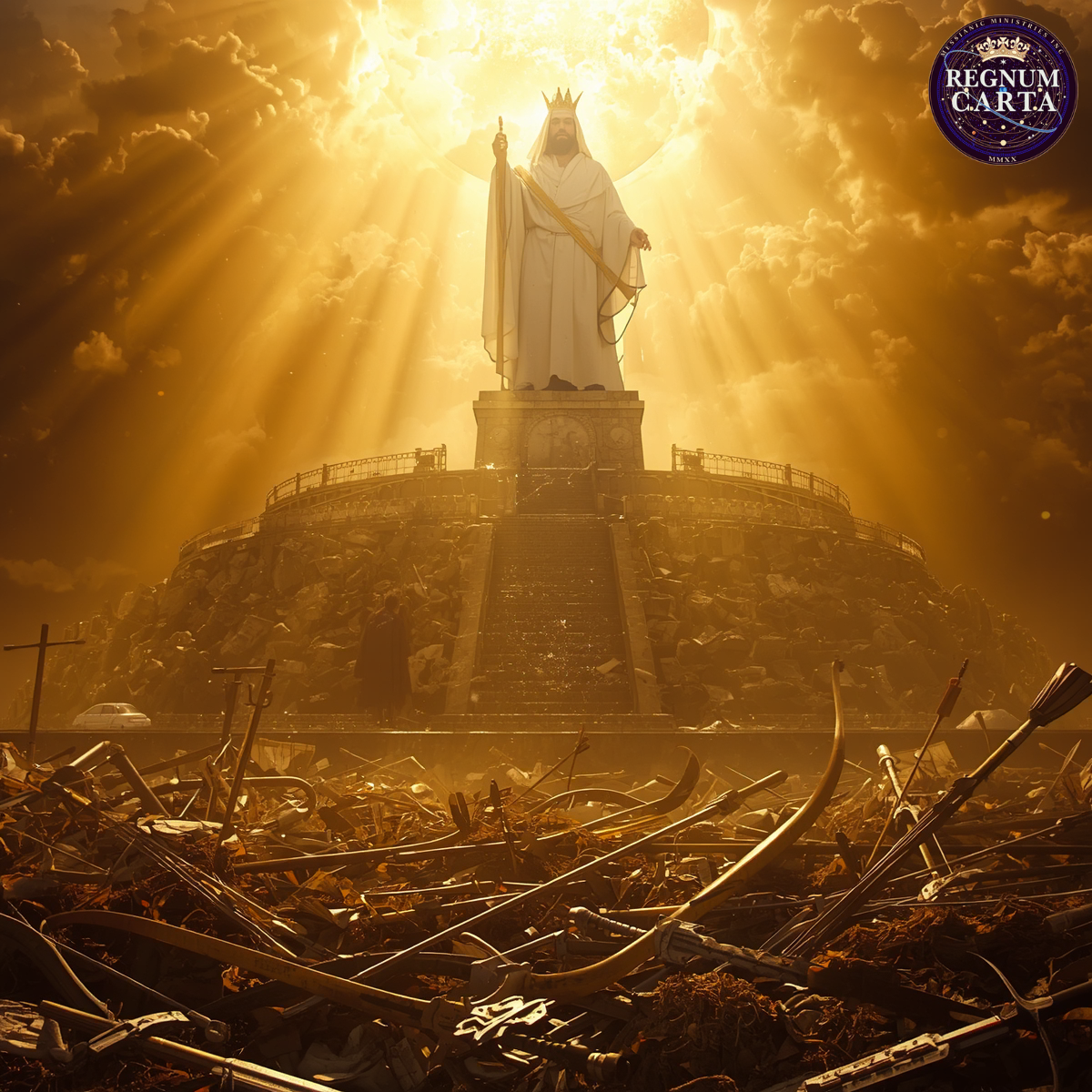
Psalm 76 is a grand anthem that extols the sovereign authority of God over the nations. The psalm, set against the backdrop of divine salvation, exalts Yahweh as the Warrior King who vanquishes His adversaries and ensures tranquility for His covenant people. Verse 3 constitutes the theological nucleus of this triumphant proclamation: "There he shattered the arrows of the bow, the shield, the sword, and the battle. Selah. The imagery is striking. God transcends the opposition of adversarial forces. He obliterates the fundamental tools of combat. The triumph is so absolute that even the apparatus of warfare is rendered impotent.
This verse, within the context of redemptive history, foreshadows the Messiah whose kingdom will be established not solely via military victory, but through the definitive triumph over sin, death, Satan, and all opposing forces to God's covenant objectives.
The site of this triumph is crucial. In the preceding verses of the psalm, God's abode is associated with Zion, the location of His covenant presence. In Scripture, Zion serves as a theological figure that transcends earthly Jerusalem, signifying the rule of the Messiah. The covenantal God who resided with Israel ultimately manifested among humanity in the figure of Jesus Christ. The battlefield of Psalm 76 ultimately culminates in the work of Christ.
From a Christological viewpoint, Psalm 76:3 attains its utmost significance at Calvary. What seemed to be the victory of malevolence was, in fact, the annihilation of the adversary's armaments. By His death and resurrection, Christ neutralized the forces of darkness. Paul states, "Having disarmed principalities and powers, he publicly displayed them, triumphing over them in it" (Colossians 2:15). The cross emerged as the locus where God dismantled the arrows of accusation, the shield of self-righteous defiance, and the sword of judgment.
The covenantal importance of this victory is paramount. According to the Covenant of Grace, God pledged from the first to send the Seed of the woman who would defeat the snake (Genesis 3:15). Each covenant administration increasingly unveiled this promise. The Abrahamic Covenant foresaw global blessings through an anticipated descendant. The Davidic Covenant assured an everlasting monarch whose reign would remain unassailable. Psalm 76 engages in this covenantal theme by depicting the heavenly Warrior whose triumph ensures peace for His people.
Jesus Christ impeccably fulfills these covenant promises. He is the greater David who triumphs not only over terrestrial nations but also over the profound adversaries of God's people. His realm progresses via redemption instead of coercion. His triumph establishes enduring peace by confronting the fundamental cause of conflict, specifically humanity's insurrection against God.
This truth possesses deep religious importance. Adherents frequently encounter challenges that appear insurmountable. Spiritual warfare, temptation, hardship, persecution, and internal conflicts may seem unyielding. Psalm 76:3 emphasizes that our assurance lies not in our capacity to combat but in Christ's consummated triumph. The Lord who shattered the armaments of historical adversaries persists in governing every power that challenges His followers.
The New Testament consistently validates this truth. Hebrews 2:14 states that via His death, Christ annihilated "him who possessed the power of death, namely, the devil. 1 John 3:8 asserts that "the Son of God was revealed, so that he might annihilate the deeds of the devil. The Book of Revelation depicts the resurrected Christ as the triumphant King whose sovereignty concludes with the ultimate vanquishing of all malevolence. These texts function as biblical testimonies affirming the messianic expectation inherent in Psalm 76.
Moreover, the obliteration of weaponry signifies the fulfillment of Christ's reign. The prophets foresaw a time when countries would cease to engage in warfare (Isaiah 2:4). The Messiah's dominion finally engenders universal tranquility. Psalm 76, which commemorates historical deliverance, transforms into a global reality in the new heavens and new earth. The instruments of warfare will be irrevocably eradicated as the Prince of Peace will govern without competition.
Scholars typically analyze Psalm 76 as a historical account of military salvation, perhaps associated with God's triumph against foreign aggressors menacing Jerusalem. Such historical analyses appropriately recognize the psalm's initial context and literary purpose. Nevertheless, a solely historical view inadequately addresses the canonical evolution of Scripture. The New Testament regularly demonstrates that acts of supernatural deliverance in the Old Testament function as typological foreshadowings of Christ's redemptive mission. A christological interpretation does not supplant the historical significance but rather elevates it to its utmost theological articulation. The triumph commemorated in Psalm 76 serves as a prophetic foreshadowing of the more significant victory achieved via the Messiah.
Concluding Encouragement:
In moments of dread and heightened spiritual conflict, recall that the ultimate triumph has already been achieved. The weapons designed against God's people cannot ultimately succeed, as Christ has dismantled the forces of darkness by His crucifixion and resurrection. Find solace in the steadfast fidelity of God. Place your faith in the sovereignty of the resurrected King. Proceed with assurance in the tranquility attained through His sacrifice.
The same Lord who shattered the bow, the shield, the sword, and the conflict itself is sovereign today. His triumph is assured, His promise is steadfast, and His dominion will remain unassailable. Consequently, direct your gaze towards Christ, the celestial Warrior and Sovereign of Peace, and discover renewed confidence in His victory. The conflict is the Lord's, and through Him, His followers remain eternally triumphant.
#Allnations #ame #apostolic #baptist #bible #bibleverse #catholic #christianity #christiantok # cme ##cog #cogbf #cogic #fgbcf #fght #foryou ##islam #jesus #messianicministriesinc #paw #prophetic #seventhdayadventist #tiktok #holyspirit #engagement #rastafari
Strong and Courageous in the Promise
Joshua 1:7-9

"Only be thou strong and very courageous, that thou mayest observe to do according to all the law, which Moses my servant commanded thee: turn not from it to the right hand or to the left, that thou mayest prosper whithersoever thou goest. This book of the law shall not depart out of thy mouth; but thou shalt meditate therein day and night, that thou mayest observe to do according to all that is written therein: for then thou shalt make thy way prosperous, and then thou shalt have good success. Have not I commanded thee? Be strong and of a good courage; be not afraid, neither be thou dismayed: for the Lord thy God is with thee whithersoever thou goest." Joshua 1:7-9
Joshua 1:7-9 transpires at a critical juncture in redemptive history. Moses has passed away, and Joshua is appointed to guide Israel into the Promised Land. God's directive to Joshua to be "strong and very courageous" transcends mere military guidance; it becomes a covenantal invitation. Strength and courage are rooted in adherence to the Mosaic Law, which anticipate the final realization of the covenant in the Messiah.
In a Christological context, Joshua exemplifies a type of Christ, the steadfast leader who directs God's people towards their inheritance. While Joshua's valor relies on God's constant presence, Christ exemplifies flawless obedience and bravery, fully embracing the inheritance of salvation for God's people. In Christ, the law is internalized rather than an external imposition; He contemplates and fulfills the law impeccably, granting His followers triumph over sin and death.
These verses are imbued with covenantal meaning. God reaffirms His covenantal pledge through the directive to comply rigorously with the law. Obedience is closely linked to the blessings of the covenant: wealth, success, and the presence of the Lord. Joshua is reminded that the covenant is not solely historical or ceremonial but nevertheless relational and pragmatic; God's presence accompanies steadfast obedience.
The covenant attains its ultimate completion via Christ. Jesus exemplifies the law's flawless adherence and serves as the mediator through whom all covenant blessings are guaranteed. The "promised land" transforms into an eschatological reality for His believers—a realm of spiritual repose, triumph over sin, and everlasting communion with God.
Textual experts see the recurrence of “strong and courageous” as a literary and theological strategy that underscores dependence on God rather than human competence. The Hebrew word for "prosper" encompasses both success and fruitfulness, associating obedience with concrete results in God's providential framework. Certain scholars emphasize that the exhortation to refrain from deviating "to the right hand or to the left" denotes a commitment to covenantal integrity that is ethical, legal, and relational.
The historical background highlights Joshua's military leadership, while the religious significance transcends mere nation-building. It signifies God's immutable summons to His people to trust, obey, and exist in covenantal reliance, eventually realized in Christ.
Endorsing Scriptural Testimony
1. Psalm 1:2-3 – Contemplation of God's law results in prosperity and productivity.
Isaiah 41:10 – God fortifies His servant, reiterating the summons to bravery in divine presence.
Matthew 28:18-20 – Christ’s final commissioning parallels Joshua’s call, assuring presence and enablement in the execution of God’s mission.
These verses affirm that covenantal integrity, obedience, and dependence on God yield spiritual prosperity, protection, and the realization of divine promises.
Joshua's exhortation to bravery is likewise our summons. on the presence of dread, uncertainty, or opposition, believers are called to ground themselves on God's Word. Adherence to Scripture is not a matter of legalism but of relationship; contemplation of it fosters insight, assurance, and discernment.
Spiritually, we attain our promised inheritance through Christ by adhering to obedience, fostering bravery, and fighting divergence from God’s revealed will. Each struggle transforms into a chance to encounter God's sustaining presence. Similar to Joshua's reliance on the Lord, our courage is upheld by the indwelling Spirit, who enables us to act with audacity and conviction.
* Courage is a mandated obligation, not discretionary.
*Obedience to God's Word constitutes both the origin and manifestation of supernatural strength.
* The presence of God serves as the paramount reassurance against terror.
*Meditation on Scripture converts fear into resolute action.
Dearly beloved, exhibit strength and profound courage in your spiritual odyssey. Do not permit the pressures of this world to distract you from the Word of God. Allow it to influence your choices, mold your character, and enhance your confidence. Recall that Christ has already attained victory and assured His presence in all acts of faith. Remain steadfast, engage in daily meditation, adhere diligently, and the Lord will ensure your success and direct your path.
Conclusion: Joshua 1:7-9 urges us to exhibit courage, adhere to obedience, and maintain covenantal loyalty. In Christ, the consummate Joshua, we receive the promise of God completely fulfilled. May this text instill confidence, rooted in the Word, invigorated by the Spirit, and guided by Christ, enabling us to traverse in triumph, faith, and covenantal blessing.
#Allnations #ame #apostolic #baptist #bible #bibleverse #catholic #christianity #christiantok # cme ##cog #cogbf #cogic #fgbcf #fght #foryou ##islam #jesus #messianicministriesinc #paw #prophetic #seventhdayadventist #tiktok #holyspirit #engagement #rastafari
The Strong Tower of the Covenant King
Psalm 61:3

Psalm 61 arises from a period of turmoil in David's life. The king laments from the farthest reaches of the land, beset with anguish and yearning for divine guidance to elevate him to a better refuge. During his petition, David acknowledges a significant covenantal truth: “For you have been a refuge for me, and a fortified tower against the adversary.” This witness transcends a mere memory of prior deliverances. It is a proclamation of assurance rooted in the unwavering covenant fidelity of God.
The imagery is profound and highly theological. A shelter offers protection from peril. A robust tower symbolizes safety, prominence, and protection against adversarial entities. In the Old Testament, God consistently manifests Himself as the guardian of His covenant people. He provided refuge to Noah during the flood, safeguarded Israel through the Red Sea, and protected Jerusalem from its adversaries. These historical events signify a more profound reality realized in Jesus Christ.
From a Christological viewpoint, Psalm 61 is most fully realized in the Messiah. Christ is the genuine Rock who surpasses our stature. He is the perpetual sanctuary in which sinners discover protection from divine retribution and the attacks of malevolence. David underwent temporary salvation, however believers enjoy eternal security through their unity with Christ. The refuge that David commemorated is embodied in the Son of God.
The New Testament continually depicts Jesus as the supreme sanctuary for God's followers. He beckons the fatigued and encumbered to approach Him and discover solace (Matthew 11:28). He asserts that no one can remove His flock from His grasp (John 10:28). By His death and resurrection, He triumphed over every adversary opposing His people, encompassing sin, death, and Satan himself. The formidable tower of Psalm 61 is not only a location. It is essentially an individual.
Covenant theology enhances our comprehension of this promise. God's safeguarding of David was not capricious. It emanated from His covenantal obligation. The Lord has committed Himself to His people by promises guaranteed by His own fidelity. The covenant of grace develops progressively throughout redemptive history until its realization in Christ, the Mediator of the New Covenant.
Due to Christ's flawless obedience to the Father and the fulfillment of redemption, believers now exist under the assurance of covenant grace. Our solace is rooted not in our achievements but in the completed work of Jesus. The refuge stays secure due to the covenant Head's fidelity. Every divine promise is affirmed with a "Yes" and "Amen" in Him (2 Corinthians 1:20).
The believer's assurance is founded not on favorable conditions but on the immutable nature of God as disclosed through Christ. In the face of adversaries, be they spiritual, emotional, or situational, the Christian may resonate with David's declaration. The Lord has served as our refuge. He continues to be our formidable bastion.
The biblical testimony consistently affirms this truth. Proverbs 18:10 states, “The name of the LORD is a fortified tower: the righteous seek refuge in it and are secure.” This wording reflects Psalm 61 and emphasizes the covenantal assurance inherent in God's disclosed nature. Similarly, Psalm 46:1 asserts, “God is our refuge and strength, a readily available aid in times of distress.” The prophet Isaiah anticipates the Messianic kingdom, depicting the Lord as “a refuge from the storm” and “a shadow from the heat” (Isaiah 25:4). Every passage centers on the redemptive act of Christ, who represents God's safeguarding presence among His followers.
This chapter prompts contemporary believers to assess the sources of their security. Human strength, financial security, political power, and personal accomplishments frequently transform into illusory edifices. However, all terrestrial sanctuaries ultimately succumb. Economic systems disintegrate. Human partnerships are often disappointing. Physical strength declines. Only Christ remains steadfast.
When fear assails the heart, the believer is urged to seek refuge once more in the stronghold. Prayer serves as an act of covenant recollection. Worship serves as a recognition of divine fidelity. Faith is grounded not in observable results but in the assurance that Christ governs and advocates for His followers.
This truth is particularly valuable during periods of hardship. David's testimony arose not from comfort but from anguish. Similarly, the most profound feelings of divine protection frequently arise during adversity. The Lord does not always eliminate the storm instantaneously, but He steadfastly safeguards His people during it. The cross exemplifies this pattern. From perceived failure emerged ultimate triumph. Redemption emerged from suffering. Resurrection life emerged from death.
Historically, several commentators have confined Psalm 61 to David's individual circumstances and political conflicts. Although the historical context is significant, this limitation neglects the wider canonical development of Scripture. The psalm engages with the Messianic anticipation that permeates the Psalter. David serves as the covenant monarch whose experiences foreshadow the superior Son of David. A Christological interpretation does not disregard the original context but rather elucidates it within the comprehensive theological framework of redemptive history.
Believer, regardless of the adversary you face today, bear in mind that your assurance lies in the covenantal fidelity of God manifested in Jesus Christ. The shelter continues to operate. The robust tower remains intact. Christ has not forsaken His followers, nor will He ever disappoint those who place their faith in Him. Approach Him in supplication. Trust in His assurances. Remain steadfast in His grace.
The same Lord who safeguarded David, realized His covenant through Christ, and supported the saints throughout history remains your refuge today. Elevate your gaze beyond all terrestrial apprehensions and derive your assurance from the resurrected Sovereign. In Him, every promise is assured, every adversary is eventually vanquished, and every believer is eternally safeguarded.
#allnations #ame #apostolic #baptist #bible #bibleverse #catholic #christianity #christiantok # cme ##cog #cogbf #cogic #fgbcf #fght #foryou ##islam #jesus #messianicministriesinc #paw #prophetic #seventhdayadventist #tiktok #holyspirit #engagement #rastafari
Blessed, Lifted, and Triumphant
Psalm 68:19-23

Blessed be the Lord, who daily loadeth us with benefits, even the God of our salvation. Selah.
He that is our God is the God of salvation; and unto GOD the Lord belong the issues from death.
But God shall wound the head of his enemies, and the hairy scalp of such a one as goeth on still in his trespasses.
The Lord said, I will bring again from Bashan, I will bring my people again from the depths of the sea:
That thy foot may be dipped in the blood of thine enemies, and the tongue of thy dogs in the same. Psalm 68:19-23
God as Salvation: The Psalmist praises God as the salvation of His people.
Burden of Life: Humans are burdened with various anxieties, sorrows, and responsibilities.
God’s Help: God strengthens humans to bear their burdens through sympathy, instruction, and inspiration. Vs
God’s Deliverance from Perils: God delivers people from various dangers and troubles, either by removing the dangers, keeping them safe amidst dangers, or granting victory over dangers.
God’s Ways of Escape from Death: God provides ways of deliverance from death, including rescuing from imminent death, delivering from the fear of death, and giving complete victory over death.
Victory Over Death: For believers, God takes away the sting of death, making it a messenger of life and blessedness, culminating in the resurrection of the body.
God’s Character: God is portrayed as a powerful defender of His people, capable of delivering them from their enemies.
Enemies of God: Those who oppose God and His people are considered His enemies, regardless of their actions.
Consequence of Enmity: Persisting in wickedness and opposing God leads to a terrible fate.
Inevitable Destruction: God will bring complete and unavoidable destruction upon those who persist in wickedness.
No Escape from Judgment: Neither strength nor flight can save the wicked from God’s judgment.
Extent of Judgment: God will seek out and destroy His enemies, no matter where they hide.
Consequence of Sin: Punishment and destruction are certain for those who sin and refuse to repent.
Divine Declaration: God’s statements about punishing the wicked are not empty threats but declarations from a holy and unchanging God.
Call to Repentance: The wicked are urged to repent and seek mercy through Jesus Christ to avoid ruin.
#Allnations #ame #apostolic #baptist #bible #bibleverse #catholic #christianity #christiantok # cme ##cog #cogbf #cogic #fgbcf #fght #foryou ##islam #jesus #messianicministriesinc #paw #prophetic #seventhdayadventist #tiktok #holyspirit #engagement #rastafari
The Messianic Promise of a Christ-Centered Life
Colossians 3:17

Colossians 3:17 serves as an eloquent encapsulation of the believer's covenantal life under the authority of the Messiah. The Apostle Paul articulates a holistic perspective of redeemed existence, wherein each utterance and action derives its significance, authority, and purpose from the name of the Lord Jesus Christ. This exhortation transcends ethical instruction, serving as a profound articulation of the believer's communion with the resurrected Messiah and involvement in the joys of the New Covenant.
The expression "in the name of the Lord Jesus" possesses profound theological importance. In biblical ideology, a name signifies character, power, identity, and covenantal relationship. To operate in Christ's name is to exist under His sovereign authority, embodying His essence and promoting His kingdom objectives. This life is attainable solely because the prophesied Messiah has met the covenant requirements that sinners could never achieve independently.
Throughout redemptive history, God pledged the arrival of a Redeemer who would restore His people to covenant communion. The prophets foretold a Servant-King who would flawlessly adhere to God's plan and institute a new covenant marked by renewed hearts and steadfast obedience. By means of His incarnation, impeccable existence, redemptive death, and triumphant resurrection, Jesus Christ actualized these promises. The believer's capacity to live for God's glory is thus rooted not in human endeavor but in engagement with the completed work of the covenant Mediator.
The directive in Colossians 3:17 emanates directly from this Messianic truth. Christ is not merely a model to emulate. He is the living Leader of His redeemed followers. Believers, linked with Him by faith, attain both justification and sanctification. His righteousness is attributed to them, and His Spirit operates within them to generate obedience. Every facet of Christian existence manifests as a manifestation of covenantal relationship with the Messiah.
The covenantal structure of Scripture elucidates the profundity of this text. Under the Covenant of Works, Adam's failure to achieve complete obedience resulted in humanity's doom. God, however, pledged a covenant Redeemer who would triumph where Adam faltered. Jesus Christ, the final Adam, accomplished all righteousness and attained eternal redemption for His followers.
As participants in the New Covenant, believers are no longer seeking to attain divine acceptance. They operate from a position of acceptance previously conferred via Christ. Consequently, Paul does not distinguish worship from everyday life. Each discussion, choice, and act of service constitutes a precious offering made through the Messiah.
This truth reflects the assurance of Jeremiah 31:33: "I will place my law within them and inscribe it upon their hearts. Covenant grace alters the believer's internal disposition, rendering obedience the appreciative response of a redeemed heart. Thanksgiving inherently entails such obedience, as every blessing is transmitted via Christ, the Mediator of the New Covenant.
The Scriptures continually affirm this Messianic truth. John 15:5 documents Christ's assertion: "I am the vine, you are the branches. Productive existence stems from a sustained connection with the Messiah. Without Him, believers are incapable of achieving any enduring spiritual significance.
Hebrews 13:15 instructs believers that suitable worship is rendered via Christ: "By him then let us consistently offer the sacrifice of praise to God. Each expression of gratitude is directed to the Father through the mediatorial role of the Son.
1 Corinthians 10:31 further substantiates Paul's doctrine: "Whether, therefore, you eat or drink, or whatever you do, do all for the glory of God. Everyday activities attain sanctity when conducted under the authority of Christ.
These verses collectively demonstrate that the Christian life is inherently Christological. Believers exist in Christ, for Christ, and for the glory of God via Christ.
The practical ramifications of Colossians 3:17 are both probing and uplifting. This lyric contests the fabricated division between sacred and secular endeavors. The believer honors Christ not only in corporate worship but in all aspects of life.
Discourse in private talks ought to embody the essence of the Savior's character. Business decisions should reflect integrity that upholds His name. Familial acts of service should exemplify His sacrificial love. Even mundane tasks transform into opportunities for covenant fidelity.
Additionally, Paul associates obedience with gratitude. Gratitude protects the heart against self-sufficiency and arrogance. When believers acknowledge that all benevolent gifts are bestowed through Christ, gratitude permeates the essence of devout existence.
The verse offers a potent antidote to spiritual fragmentation. Numerous individuals find it challenging to incorporate faith into their everyday existence. Paul presents a cohesive principle: conduct all actions in the name of the Lord Jesus. Christ serves as the focal point from which every thought, word, and deed draws its orientation and intent.
Contemporary interpretations simplify Colossians 3:17 to a broad guideline of ethical conduct or affirmative religious attitude. Such interpretations neglect to see the deeply Christological and covenantal framework of Paul's appeal. The apostle is not promoting mere ethical enhancement. He elucidates the existence of those who have perished and resurrected with Christ, as underscored in the adjacent chapter.
Similarly, interpretations that regard Jesus just as an inspirational figure neglect His function as covenant Mediator and exalted Lord. Christian obedience is not an independent moral endeavor but rather the result of communion with the crucified and resurrected Messiah.
Orthodox biblical theology interprets this verse as a manifestation of covenant existence, invigorated by grace and wholly focused on the person and work of Jesus Christ.
The Messiah who saved you now governs every aspect of your existence. His authority transcends the sanctuary, permeating every dialogue, choice, obligation, and connection. Having fulfilled the covenant on your behalf and ensured your acceptance before the Father, you are liberated to serve Him with joy and appreciation.
May each word attest to His veracity. May every action embody His sanctity. May each act of service manifest His love. May gratitude perpetually emanate from your heart through the esteemed Mediator of the New Covenant.
The Messiah's promise extends beyond the forgiveness of sinners; it encompasses the transformation of individuals into a community dedicated wholly to His glory. Consequently, in all your actions and speech, conduct everything in the name of the Lord Jesus, expressing gratitude to God the Father via Him. The covenant promises of God manifest visibly in the daily existence of the redeemed.
#Allnations #ame #apostolic #baptist #bible #bibleverse #catholic #christianity #christiantok # cme ##cog #cogbf #cogic #fgbcf #fght #foryou ##islam #jesus #messianicministriesinc #paw #prophetic #seventhdayadventist #tiktok #holyspirit #engagement #rastafari
Strength for the High Places
2nd Samuel 22:33-34

“God is my strength and power: and he maketh my way perfect.
He maketh my feet like hinds’ feet: and setteth me upon my high places.”
The song of deliverance in 2 Samuel 22 is one of Scripture’s most magnificent royal songs. David proclaims himself the covenant king, delivered from enemies, sustained by divine power, and established by Yahweh. This anthem transcends David’s personal experience, pointing to the Messiah, the greater Son of David, who perfectly embodies the victory of God’s anointed King.
David declares, “God is my strength and power.” The Hebrew imagery portrays God as the warrior’s refuge, moral support, and enduring might. His victories were not the fruit of human skill but covenantal gifts from the Lord, who pledged faithful loyalty to David’s house. This illustrates covenant theology: God’s servants endure not by their own strength, but by grace sustained within the covenant.
Jesus Christ fulfills this promise. He perfectly relied on the Father, becoming the steadfast covenant representative who drew all strength from heaven. David’s song anticipates the Messiah’s triumph over sin, death, and hell through obedient suffering and resurrection glory.
“He maketh my way perfect” carries rich theological weight. “Perfect” implies wholeness, stability, and covenant assurance, not sinless moral achievement. God guides His servant’s journey toward divine completion. In Christ’s life, the Father perfected the Son’s redemptive path through suffering. Hebrews affirms Christ was made “perfect through sufferings” to lead His people to salvation. The cross was no accident but the ordained route to covenant victory, culminating in Christ’s exaltation at the right hand of God.
Verse 34 intensifies the picture: “He makes my feet like hinds’ feet.” The deer symbolizes agility and sure footing on treacherous heights. David stands for spiritual stability during peril. God grants His servant skill where others stumble.
This image foreshadows Christ’s ministry. Despite temptation, betrayal, opposition, and the agony of Golgotha, He remained steadfast. Where Adam fell, Christ stood firm. The Father upheld Him in covenant faithfulness as He climbed the hill of ultimate trial.
Believers now share this covenant reality through union with Christ. The same God who strengthened David and upheld Jesus empowers the church. Spiritual endurance is not born from human willpower but from fellowship with the risen Savior. In Him, Christians find covenant security.
Scripture confirms this truth: Habakkuk 3:19 declares, “The Lord God is my strength, and He will make my feet like those of a deer.” Isaiah 40:31 speaks of renewed strength for those who wait on the Lord. Philippians 4:13 affirms, “I can do all things through Christ who strengthens me.” All testify that heavenly strength sustains covenant believers.
Scholars classify 2 Samuel 22 as a royal thanksgiving psalm, parallel to Psalm 18. While historical study notes its liturgical and monarchical context, reducing it to ancient war poetry misses its canonical and messianic dimensions. The Davidic covenant in 2 Samuel 7 plants enduring hope, realized in Christ, the true King.
This passage comforts weary believers facing instability, suffering, and spiritual struggle. God never abandons His covenant people. He steadies trembling hearts with His Word, Spirit, and promises. In Scripture, “high places” symbolize both danger and victory. God not only sustains His people in valleys; He lifts them to former places of fear, transforming trials into sanctifying ascent.
This pledge does not foster self-reliance but calls for deep trust in covenant grace. Christ is the steadfast King who scaled the mountain of sacrifice and triumphed over death. His followers can face every trial with confidence.
Final exhortation: Trust the God who steadies your path. When the climb is steep and strength fails, remember covenant faithfulness rests not on your grip on God but His grip on you in Christ. The Lord who upheld David, sustained the Messiah, and raised Him will preserve all who belong to Him. Remain steadfast, for those fortified by grace will not fall.
#Allnations #ame #apostolic #baptist #bible #bibleverse #catholic #christianity #christiantok # cme ##cog #cogbf #cogic #fgbcf #fght #foryou ##islam #jesus #messianicministriesinc #paw #prophetic #seventhdayadventist #tiktok #holyspirit #engagement #rastafari
Established in Grace and Guarded in Truth
2nd Peter 3:17-18

Scriptural Text: 2 Peter 3:17–18
“Therefore, beloved, knowing these things before, be on your guard lest you also, being led astray by the error of the wicked, fall from your own steadfastness. But grow in grace, and in the knowledge of our Lord and Savior Jesus Christ. To him be glory both now and forever. Amen.”
Central Message: Believers are called to mature in Christ through grace and truth, with the promise of preservation until eternal glory.
Call to Action: Believers are urged to grow in grace and knowledge of Jesus Christ, remaining vigilant against error and deception.
Source of Steadfastness: Spiritual steadfastness comes from covenant union with Jesus Christ, the foundation stone.
Spiritual Growth as a Testament to Union with Christ: Spiritual maturity is not optional but a sign of living union with Christ.
Grace and Knowledge as Manifestations of Growth: Growth is seen in deepening dependence on Christ’s work (grace) and experiential knowledge of Him.
Christ as the Fulfillment of Divine Promises: Christ is the central focus of divine promises, and the church actively participates in His life.
Central Theme: Spiritual growth and maturity are achieved through a deeper understanding and adoration of Jesus Christ.
Christ’s Role: Jesus Christ is both the Savior who redeems sinners and the sustaining Lord who preserves believers in covenant faithfulness.
Biblical Support: Colossians 2:6-7, Hebrews 13:9, and Ephesians 4:13-15 emphasize the importance of remaining rooted in Christ and avoiding false teachings.
Spiritual Maturity: Christ-centered and truth-governed, requiring continual growth in grace and doctrinal stability.
Spiritual Discernment: Essential for navigating confusion and false teachings, achieved through disciplined communion with God and a deep understanding of Christ.
Final Exhortation: Guard against spiritual drift, pursue deeper faith, and offer eternal glory to the Shepherd who guides and preserves.
#Allnations #ame #apostolic #baptist #bible #bibleverse #catholic #christianity #christiantok # cme ##cog #cogbf #cogic #fgbcf #fght #foryou ##islam #jesus #messianicministriesinc #paw #prophetic #seventhdayadventist #tiktok #holyspirit #engagement #rastafari
The Covenant of Greater Love
St John 15:13

Central Scripture: John 15:13
“Greater love hath no man than this, that a man lay down his life for his friends.”
Gospel of John 15:13
Divine Love and Sacrifice: Jesus’ words in John 15:13 define love as voluntary self-sacrifice, culminating in His crucifixion as a redemptive act.
Fulfillment of Prophecy: The act of Jesus laying down His life fulfills prophecies from the Hebrew Scriptures about a suffering servant and a shepherd struck for the sheep.
Reconciliation with Humanity: Jesus’ love extends to humanity, even in its fallen and rebellious state, demonstrating initiating grace.
Friendship with Christ: Christ elevates believers to covenant companions who share in His intimacy and sacrificial love.
Transformative Power of the Cross: Christ’s sacrifice calls believers to imitate His self-giving love, dismantling selfishness and establishing sacrificial living.
Resurrection and Victorious Love: The resurrection validates Christ’s victory over sin and death, demonstrating the strength of divine love.
Theological Reconciliation: Sound doctrine should reconcile the penal and relational aspects of Christ’s sacrifice, acknowledging both divine justice and affection.
Interpretation of John 15:13: The most comprehensive interpretation of John 15:13 encompasses sacrificial atonement, covenant friendship, messianic fulfillment, and resurrection triumph.
Call to Action for Believers: Believers are urged to live in, proclaim, and reflect the love demonstrated by Christ’s sacrifice on the cross.
#Allnations #ame #apostolic #baptist #bible #bibleverse #catholic #christianity #christiantok # cme ##cog #cogbf #cogic #fgbcf #fght #foryou ##islam #jesus #messianicministriesinc #paw #prophetic #seventhdayadventist #tiktok #holyspirit #engagement #rastafari